Lent Homestead and Cemetery

Why it's listed
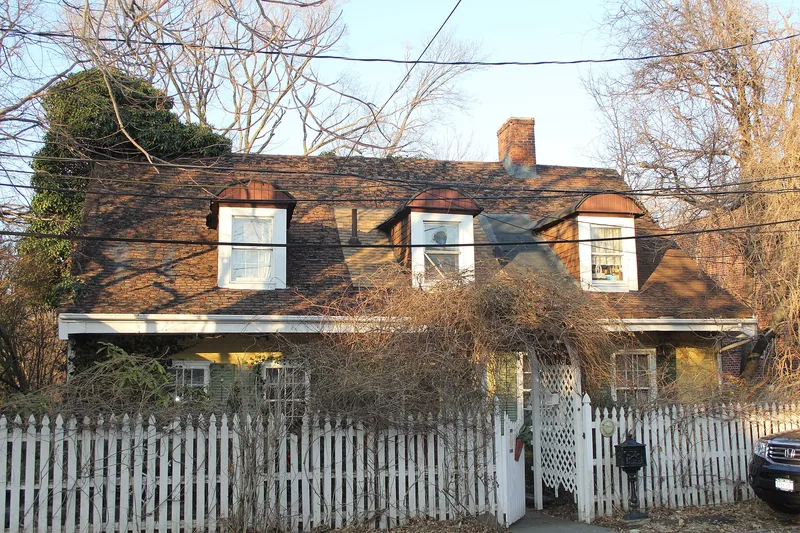
Overlooking Bowery Bay on the East River in Steinway, Queens, this farmhouse began in 1729 as a one-room stone house with a large fireplace and loft, built by Abraham Lent. Later in the eighteenth century a second stone room nearly doubled its size. Around 1800, probably under the Rapalyea family, a large wooden frame section with a center hall was added and the front was covered in beaded-edge clapboards to unite old and new. The sweeping gabled roof with wide overhanging eaves gives the whole building the look of a Dutch Colonial farmhouse. Interiors in the stone section are plain, while the later rooms keep Federal woodwork, carved mantels and back-to-back fireplaces. Beside the house, the Riker-Lent Cemetery is enclosed by high brick walls and holds graves from 1746, including Abraham Lent and his son Andrew. The property was listed as a rare surviving Dutch Colonial farmhouse in New York City.
Significance in brief: The nomination calls it a rare, distinctive surviving example of Dutch Colonial architecture in New York City, with random stone masonry bearing walls and a flared gabled roofline. It reflects North European farmhouse traditions and shows building practices of the first settlement period on Long Island. The adjoining Riker-Lent Cemetery holds graves of the Riker and Lent families from 1746.
Machine-generated summary. This summary was generated by a language model from the official nomination document and has not been reviewed line by line by an editor. It may contain errors. Check the source document before relying on any detail. Source: nomination document (PDF) · National Archives catalog entry. NRHP reference 84002918, listed February 2, 1984. Summary generated October 2026 (model claude-sonnet-5-5, prompt v1.0-2026-10-29, confidence high).
Key facts
| Address | 78-03 19th Rd., New York |
|---|---|
| County | Queens |
| Listed | February 2, 1984 |
| Reference number | 84002918 |
| Resource type | Building |
| Period of significance | 1700-1799, 1800-1899 |
| Architect / builder | Unknown; original stone house built by Abraham Lent in 1729 |
| Architectural style | Dutch Colonial (with simple vernacular Federal interiors in the c.1800 addition) |
| Areas of significance | Exploration/Settlement, Architecture |
| Level of significance | Local |
| Status (as stated in the nomination) | Described as in nearly original condition and occupied as a private residence; the cemetery is in city ownership, and one cemetery wall on the west side has collapsed, burying several gravestones. |
| Acreage | 1 |
| Coordinates | 40.77322, -73.89166 (NPS GIS) |
What listing means for this property
For a publicly owned building or structure, listing mainly matters when federal funds, permits or licences are involved: projects then go through Section 106 review so effects on the property are considered. Listing also strengthens applications for preservation grants and, for leased income-producing uses, can enable the federal rehabilitation tax credit.
General information, not legal or tax advice. Rules change; confirm with your State Historic Preservation Office or a qualified adviser.
Sources and further reading
- National Park Service, National Register of Historic Places database (snapshot May 2026), reference 84002918.
- Nomination form (PDF, National Archives) — catalog entry
- Wikipedia article (used for cross-checking only; text not reproduced here)
- Wikidata Q6523299
- This listing as JSON
Last updated October 2026. Found an error? See the editorial policy for how to report it.