Dorchester Pottery Works

Why it's listed
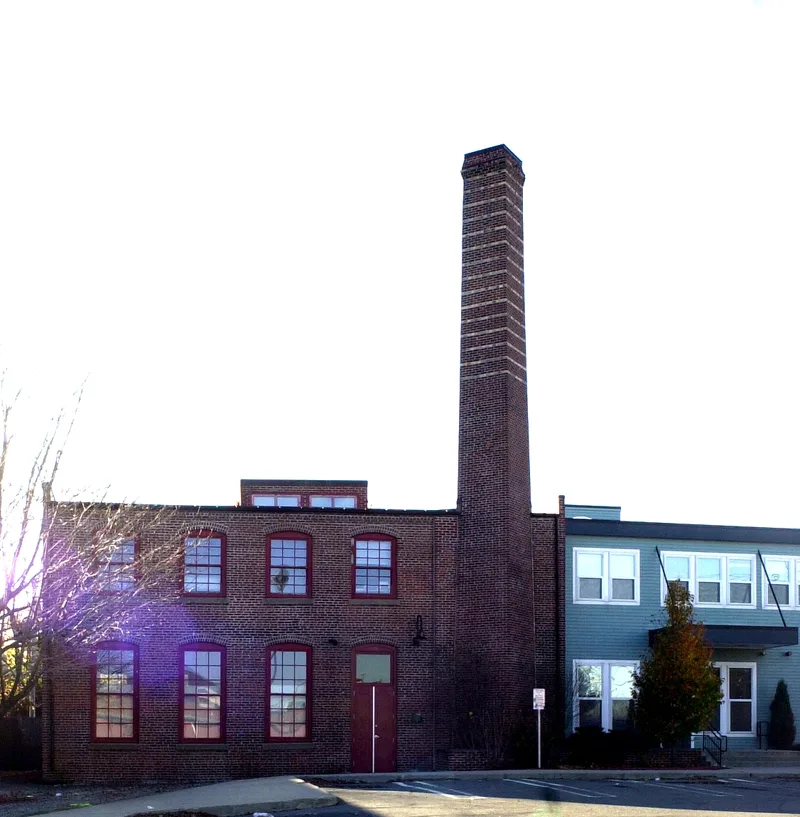
Brick walls in Dorchester, Boston, enclose a monumental beehive kiln, the only structure left from the Dorchester Pottery Works. George Henderson founded the pottery in 1895 and built the two-story brick kiln house around 1914 as business grew. The kiln is about 30 feet across, with iron bands that allow for expansion and contraction during firing. It burned coal and wood, and its last firing took place in 1965. Beehive kilns were usually freestanding and used for brick, which needs lower temperatures; this one was built inside a building and fired stoneware at 2,300 to 3,000 degrees Fahrenheit. The nomination describes it as one of the few such industrial kilns remaining in the country and as evidence of handcrafted pottery production continuing into the 1950s and 1960s. The works closed in 1979, and the nearby frame factory and Henderson House were later destroyed. Boston designated the site a Landmark in 1980.
Significance in brief: The nomination argues the kiln is one of the few remaining industrial beehive kilns in the country and documents early twentieth-century pottery-making technology. It is unusual for being housed inside a building and for firing stoneware at very high temperatures. It was fired until 1965, showing continuity of nineteenth-century methods.
Machine-generated summary. This summary was generated by a language model from the official nomination document and has not been reviewed line by line by an editor. It may contain errors. Check the source document before relying on any detail. Source: nomination document (PDF) · National Archives catalog entry. NRHP reference 85000318, listed February 21, 1985. Summary generated October 2026 (model claude-sonnet-5-5, prompt v1.0-2026-10-29, confidence high).
Key facts
| Address | 101-105 Victory Rd., Boston |
|---|---|
| County | Suffolk County |
| Listed | February 21, 1985 |
| Reference number | 85000318 |
| Resource type | Building |
| Period of significance | 1914 |
| Architect / builder | Builder/Architect unknown (the kiln was reportedly built after George Henderson's own designs) |
| Criteria |
|
| Areas of significance | Industry, Historic - Non-Aboriginal, Art, Architecture |
| Level of significance | State, Local |
| Status (as stated in the nomination) | The kiln building had been vacant for several years and boarded up until its recent rehabilitation. The frame industrial building and the Henderson House were destroyed. |
| Acreage | 0.5 |
| Coordinates | 42.29713, -71.05080 (NPS GIS) |
What listing means for this property
For an income-producing building, listing (individually or as a contributing building in a district) is the gateway to the 20% federal rehabilitation tax credit on qualified rehabilitation costs, often stackable with state credits. Work claiming the credit must follow the Secretary of the Interior's Standards and be approved in advance.
Listing does not restrict a private owner acting without federal money or permits; where federal funding or licensing is involved, Section 106 review applies.
General information, not legal or tax advice. Rules change; confirm with your State Historic Preservation Office or a qualified adviser.
Sources and further reading
- National Park Service, National Register of Historic Places database (snapshot May 2026), reference 85000318.
- Nomination form (PDF, National Archives) — catalog entry
- Wikipedia article (used for cross-checking only; text not reproduced here)
- Wikidata Q5297617
- This listing as JSON
Last updated October 2026. Found an error? See the editorial policy for how to report it.