Sargent's Pond

Why it's listed
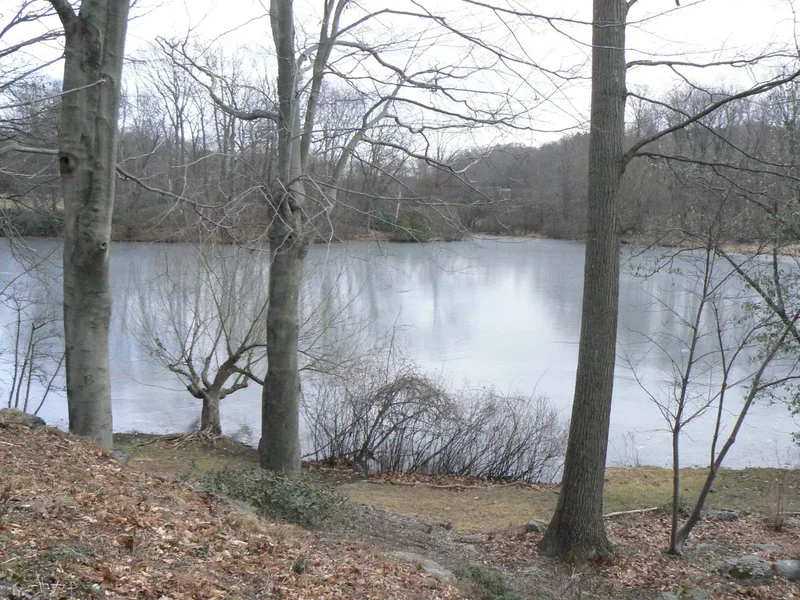
Sargent's Pond is a three-acre artificial pond in a residential part of Brookline, Massachusetts. Charles Sprague Sargent created it in the late 1870s by excavating a basin and damming a small natural brook. It was meant as a major focal point of Holm Lea, the 150-acre family estate he managed for his father, Ignatius. Holm Lea was known for rolling meadows, rare American and exotic trees, broad lawns and carefully planned vistas, and thousands of visitors came on Rhododendron Sunday. The estate was subdivided in the late 1920s and early 1930s, and the pond is among the few remaining pieces of it. Plantings around the pond, including irises, remain informal and naturalistic, though sketches and photographs suggest there was once more landscaping. Sargent, an advocate of naturalistic design, also founded the Arnold Arboretum. The pond was listed for its link to the estate and to his landscape philosophy.
Significance in brief: The pond is one of the few surviving elements of the Sargent Estate, probably the most famous 19th-century country estate in Brookline. It reflects the naturalistic landscape philosophy of Charles Sprague Sargent, a renowned horticulturist and founder of the Arnold Arboretum. The nomination cites criteria A, B and C.
Machine-generated summary. This summary was generated by a language model from the official nomination document and has not been reviewed line by line by an editor. It may contain errors. Check the source document before relying on any detail. Source: nomination document (PDF) · National Archives catalog entry. NRHP reference 85003314, listed October 17, 1985. Summary generated October 2026 (model claude-sonnet-5-5, prompt v1.0-2026-10-29, confidence medium).
Key facts
| Address | Sargent Rd., Brookline |
|---|---|
| County | Norfolk County |
| Listed | October 17, 1985 |
| Reference number | 85003314 |
| Resource type | Structure |
| Architect / builder | Charles Sprague Sargent (Charles Sprague) |
| Criteria |
|
| Areas of significance | Landscape Architecture |
| Level of significance | National, State, Local |
| Status (as stated in the nomination) | Current condition recorded as good in 1983; a small concrete maintenance building/pump house stands nearby, and some original rhododendron and landscaping have been lost. |
| Acreage | 3 |
| Coordinates | 42.32047, -71.12726 (NPS GIS) |
What listing means for this property
National Register listing is honorary: it recognises significance and does not restrict what a private owner may do without federal money or permits. It unlocks the 20% federal rehabilitation tax credit for income-producing buildings, state credits in many states, and Section 106 review when federal agencies are involved. See what listing means in practice.
General information, not legal or tax advice. Rules change; confirm with your State Historic Preservation Office or a qualified adviser.
Sources and further reading
- National Park Service, National Register of Historic Places database (snapshot May 2026), reference 85003314.
- Nomination form (PDF, National Archives) — catalog entry
- Wikipedia article (used for cross-checking only; text not reproduced here)
- Wikidata Q7423921
- This listing as JSON
Last updated October 2026. Found an error? See the editorial policy for how to report it.