Myrtle Baptist Church Neighborhood Historic District
Also known as: Village, The; Curve Street

Why it's listed
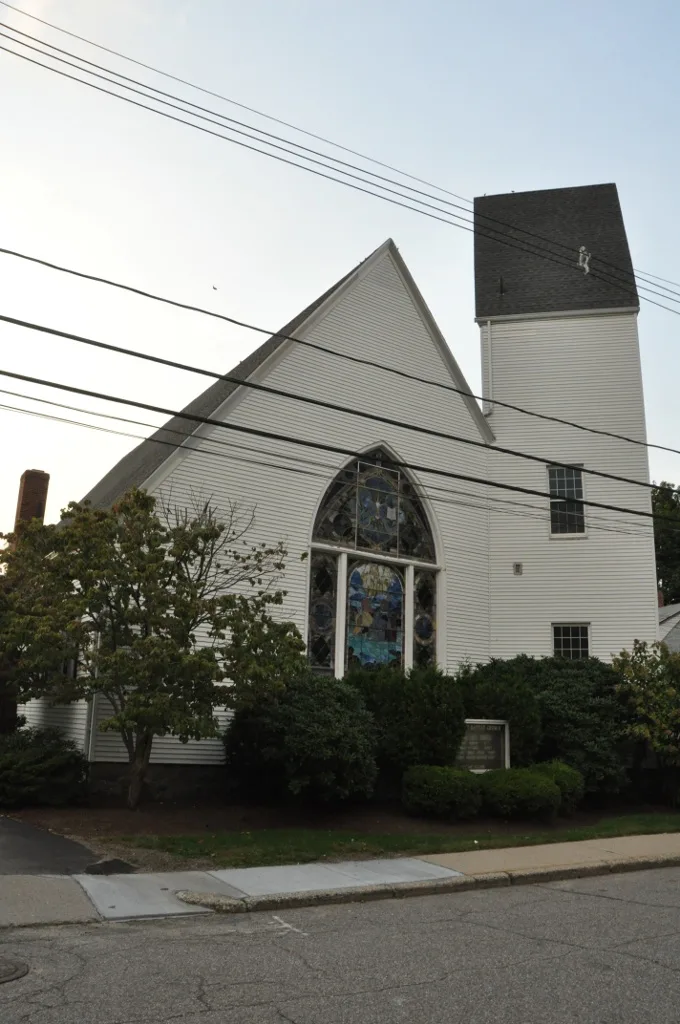
Tucked behind Newton's main thoroughfares in West Newton, this 6.5-acre district grew up around Myrtle Baptist Church, founded in 1874. It contains 26 contributing resources: the church, a parish house, twenty-two houses, a business and outbuildings, mostly built between the 1880s and 1929. The current wood-framed church opened in 1898, a year after fire destroyed the first building, and was designed and built by its African-American congregants. Its stained-glass windows include one showing Philip baptizing the Ethiopian eunuch. Houses range from modest workers' housing to a Second Empire building with a cupola, and include Queen Anne, Italianate and Colonial Revival examples plus a triple-decker. The area was Newton's only historically African-American neighborhood, and families often took in boarders or shared houses. In 1963 the Massachusetts Turnpike extension destroyed about half of the neighborhood, leaving this surviving portion. Many buildings now have synthetic siding but retain their original scale and massing.
Significance in brief: The district is the surviving half of Newton's only historically African-American neighborhood, which grew around Myrtle Baptist Church after its 1874 founding. It documents patterns of African-American homeownership, boarding and community life, and the church was a center for local organizations. About half of the original neighborhood was lost to the 1963 Massachusetts Turnpike extension.
Machine-generated summary. This summary was generated by a language model from the official nomination document and has not been reviewed line by line by an editor. It may contain errors. Check the source document before relying on any detail. Source: nomination document (PDF) · National Archives catalog entry. NRHP reference 08001178, listed December 11, 2008. Summary generated October 2026 (model claude-sonnet-5-5, prompt v1.0-2026-10-29, confidence medium).
Key facts
| Address | Roughly Curve St. and Prospect St., Newton |
|---|---|
| County | Middlesex County |
| Listed | December 11, 2008 |
| Reference number | 08001178 |
| Resource type | District |
| Architect / builder | J.G. McCraw (John G. McCraw), listed as architect of Myrtle Baptist Church and builder of 9 Curve Street; church designed and built by its African-American congregants |
| Architectural style | Late Victorian (Italianate, Second Empire, Queen Anne, Victorian Eclectic) and Colonial Revival |
| Areas of significance | Community Planning and Development, Black, Social History |
| Level of significance | State, Local |
| Status (as stated in the nomination) | The church, parish house and houses remain in use; most houses are covered in aluminum or vinyl siding, and the district keeps its original rooflines, scale and massing. |
| Acreage | 6.5 |
| Coordinates | 42.34581, -71.23581 (NPS GIS) |
What listing means for this property
This is a historic district. Buildings within its boundary are either contributing (they add to the district's significance) or non-contributing. Owners of contributing income-producing buildings can claim the 20% federal rehabilitation tax credit; homeowners should look at state credits. National Register districts impose no design review by themselves; a local historic district ordinance, if one exists, does (the difference explained).
General information, not legal or tax advice. Rules change; confirm with your State Historic Preservation Office or a qualified adviser.
Sources and further reading
- National Park Service, National Register of Historic Places database (snapshot May 2026), reference 08001178.
- Nomination form (PDF, National Archives) — catalog entry
- Wikipedia article (used for cross-checking only; text not reproduced here)
- Wikidata Q6948588
- This listing as JSON
Last updated October 2026. Found an error? See the editorial policy for how to report it.