Salem Common Historic District (Boundary Increase)

Why it's listed
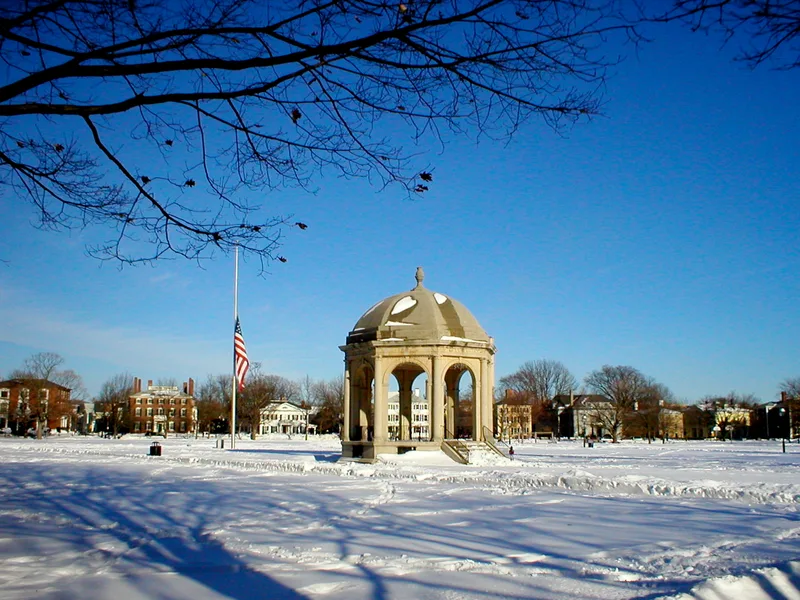
Pleasant Street's northern end, covering numbers 3 to 25, was added to the Salem Common Historic District, bringing the total to 282 properties. The 16 added properties, one of them non-contributing, are mainly houses built between 1809 and 1909. The oldest is the John Rhodes House of 1809, a gambrel-roofed Federal dwelling. Others include the Greek Revival David Lord Double House, two Second Empire houses, several Italianate houses, a Queen Anne house of 1889 and a double house of 1909. Many were built for local carpenters, tradespeople and long-established neighborhood families, and a few buildings housed small grocery stores, a bakery and a fish market. Some have been altered with vinyl or aluminum siding and replacement windows, but they remain similar in period, style and scale to the original district. The area was also judged to have a high potential for historic archaeological resources, including outbuildings and household features, and a low to moderate potential for Native American sites. The period of significance runs from 1725 to 1920.
Significance in brief: The added properties are significant as an integral part of one of the centers of Salem's early development and for retaining classic examples of architectural styles spanning more than two centuries. They match the original district in period, style and scale. The area also has archaeological potential for historic and, to a lesser degree, Native American resources.
Machine-generated summary. This summary was generated by a language model from the official nomination document and has not been reviewed line by line by an editor. It may contain errors. Check the source document before relying on any detail. Source: nomination document (PDF) · National Archives catalog entry. NRHP reference 02000694, listed June 27, 2002. Summary generated October 2026 (model claude-sonnet-5-5, prompt v1.0-2026-10-29, confidence medium).
Key facts
| Address | 3-25 Pleasant St., Salem |
|---|---|
| County | Essex County |
| Listed | June 27, 2002 |
| Reference number | 02000694 |
| Resource type | District |
| Period of significance | 1725-1920 |
| Architectural style | Italianate, Greek Revival, Second Empire, Federal, Queen Anne |
| Criteria |
|
| Areas of significance | Architecture, Community Planning and Development |
| Level of significance | Local |
| Status (as stated in the nomination) | Mostly residential; 5 Pleasant Street was converted to commercial use about 1960, and 3 Pleasant Street has long served commercial purposes (an upholstery and furniture store is in operation). |
| Acreage | 5 |
| Coordinates | 42.52741, -70.88983 (NPS GIS) |
What listing means for this property
This is a historic district. Buildings within its boundary are either contributing (they add to the district's significance) or non-contributing. Owners of contributing income-producing buildings can claim the 20% federal rehabilitation tax credit; homeowners should look at state credits. National Register districts impose no design review by themselves; a local historic district ordinance, if one exists, does (the difference explained).
General information, not legal or tax advice. Rules change; confirm with your State Historic Preservation Office or a qualified adviser.
Sources and further reading
- National Park Service, National Register of Historic Places database (snapshot May 2026), reference 02000694.
- Nomination form (PDF, National Archives) — catalog entry
- Wikipedia article (used for cross-checking only; text not reproduced here)
- Wikidata Q7404077
- This listing as JSON
Last updated October 2026. Found an error? See the editorial policy for how to report it.