Essex Insitiute Historic District

Why it's listed
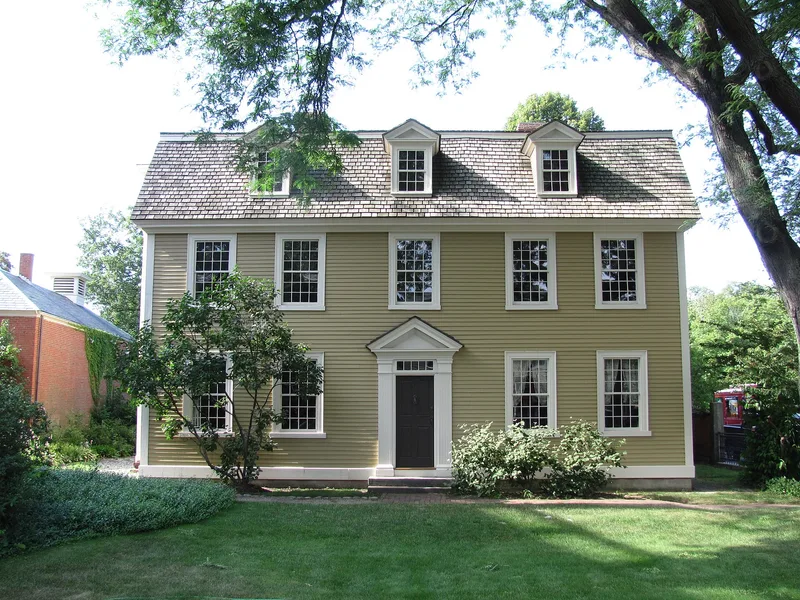
Salem's Essex Institute Historic District covers about two acres along Essex Street and Washington Square West. At its center are the Institute's red brick museum (1857) and library (1851), joined by a 1907 entrance link. Beside them stand the Gardner-Pingree House of 1804, designed by Samuel McIntire in the Federal style, the 1727 Crowninshield-Bentley House, and the brick Andrew-Safford House of 1818, built for a merchant in the Russian fur trade. Behind them, in landscaped gardens, are the 1684 John Ward House, the Vaughan Doll House and the Lyle-Tapley Shoe Shop, which represents the local handcrafted shoe industry. The Institute was founded in 1848 from two county societies and holds books, manuscripts, portraits, furniture and period houses documenting Essex County history. Reverend William Bentley, whose diary the Institute published, boarded in the Crowninshield-Bentley House. The Ward and Gardner-Pingree houses are National Historic Landmarks.
Significance in brief: The district holds the Essex Institute's collections of books, manuscripts, furniture and period houses, which the nomination says provide more materials for the history of Essex County than any other single place. It also includes outstanding examples of Federal and earlier architecture, including the Samuel McIntire-designed Gardner-Pingree House and the John Ward House, both National Historic Landmarks.
Machine-generated summary. This summary was generated by a language model from the official nomination document and has not been reviewed line by line by an editor. It may contain errors. Check the source document before relying on any detail. Source: nomination document (PDF) · National Archives catalog entry. NRHP reference 72000147, listed June 22, 1972. Summary generated October 2026 (model claude-sonnet-5-5, prompt v1.0-2026-10-29, confidence medium).
Key facts
| Address | 134-132, 128, 126 Essex St. and 13 Washington Sq. W., Salem |
|---|---|
| County | Essex County |
| Listed | June 22, 1972 |
| Reference number | 72000147 |
| Resource type | District |
| Architect / builder | Samuel McIntire (Gardner-Pingree House, 1804); John Ward (Ward House, 1684) |
| Architectural style | Italian Villa influence (1857 building); Renaissance Revival (1851 library); Federal style (Gardner-Pingree and Andrew-Safford Houses); gambrel-roofed 18th-century house; 17th-century Ward House |
| Areas of significance | Education, Architecture |
| Level of significance | National |
| Status (as stated in the nomination) | Condition is marked excellent, altered, with some buildings moved; the Crowninshield-Bentley House was moved in 1960, the Vaughan Doll House in 1860, and the shoe shop in 1910. The Institute's buildings serve as a museum and library. |
| Acreage | 2 |
| Coordinates | 42.52231, -70.89200 (NPS GIS) |
What listing means for this property
This is a historic district. Buildings within its boundary are either contributing (they add to the district's significance) or non-contributing. Owners of contributing income-producing buildings can claim the 20% federal rehabilitation tax credit; homeowners should look at state credits. National Register districts impose no design review by themselves; a local historic district ordinance, if one exists, does (the difference explained).
General information, not legal or tax advice. Rules change; confirm with your State Historic Preservation Office or a qualified adviser.
Sources and further reading
- National Park Service, National Register of Historic Places database (snapshot May 2026), reference 72000147.
- Nomination form (PDF, National Archives) — catalog entry
- Wikipedia article (used for cross-checking only; text not reproduced here)
- Wikidata Q5399747
- This listing as JSON
Last updated October 2026. Found an error? See the editorial policy for how to report it.