County Street Historic District
Also known as: See Also: Willia J. Rotch Gothic Cottage NHL

Why it's listed
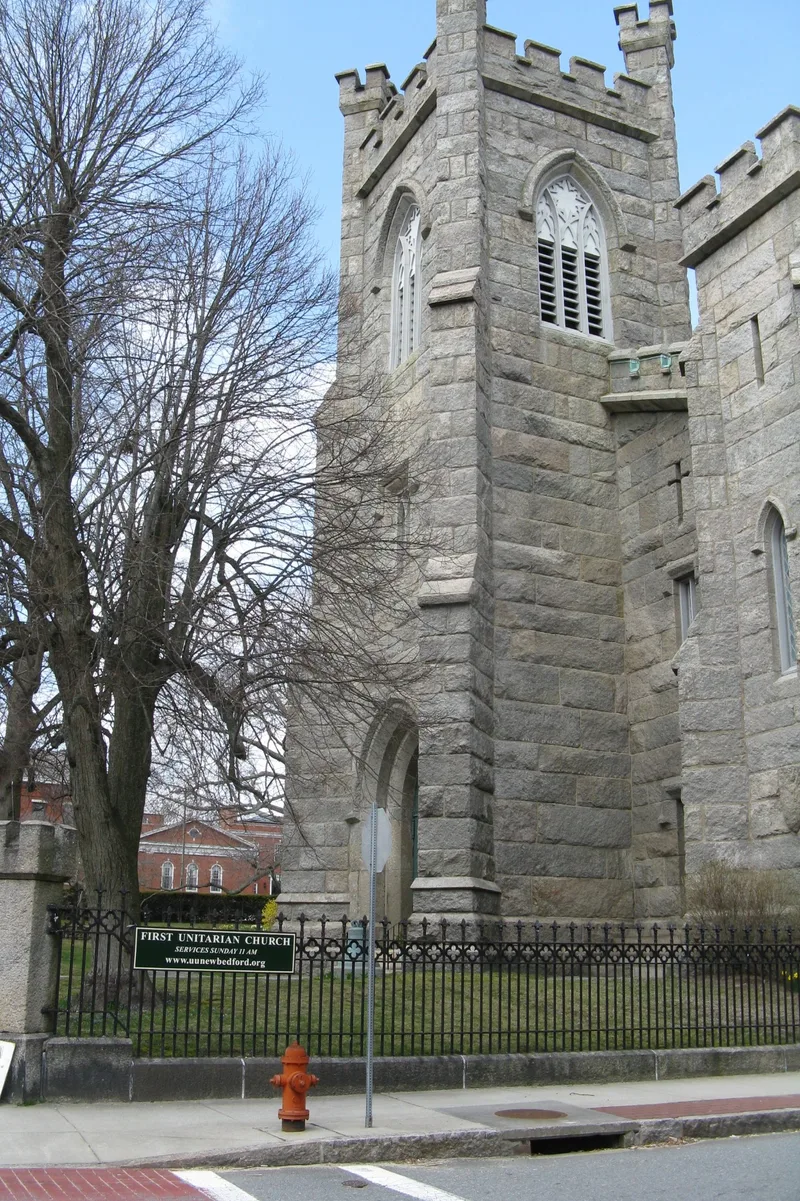
This New Bedford district of about 1,000 properties traces the city's residential growth from roughly 1780 to 1890. The oldest homes, dating from 1780 to 1820, lie in the southeast near Pleasant, Purchase and Acushnet Streets, while Federal brick houses stand along Sixth and Seventh Streets. County Street, developed between 1825 and 1850, holds Greek Revival mansions built for whaling merchants, including the William Rotch Rodman House of 1833, designed by Russell Warren. Land to the west filled with Gothic Revival, Italianate, Mansard and Queen Anne houses as whaling gave way to textile manufacturing. Smaller gable-end houses sheltered mill workers and white-collar staff. Many early merchants were Quakers, and their plain five-bay houses reflect a wish to avoid ostentation. The district was recognized as an area where architectural development can be followed in a logical sequence and where the wealth of the whaling era remains visible. Urban renewal removed nearby blocks in the 1960s, but the district itself stayed largely intact.
Significance in brief: The nomination argues the district shows the logical development of New England architecture from 1780 to 1890. It is also significant for its ties to the prosperous merchants and whalers who shaped Massachusetts in the first half of the nineteenth century. Its three growth phases, east of, along and west of County Street, reflect whaling wealth and later textile prosperity.
Machine-generated summary. This summary was generated by a language model from the official nomination document and has not been reviewed line by line by an editor. It may contain errors. Check the source document before relying on any detail. Source: nomination document (PDF) · National Archives catalog entry. NRHP reference 76000229, listed August 11, 1976. Summary generated October 2026 (model claude-sonnet-5-5, prompt v1.0-2026-10-29, confidence medium).
Key facts
| Address | Roughly bounded by Acushnet, Page, Middle, and Bedford Sts. (both sides), New Bedford |
|---|---|
| County | Bristol County |
| Listed | August 11, 1976 |
| Reference number | 76000229 |
| Resource type | District |
| Period of significance | 1780-1890 |
| Architect / builder | Russell Warren (William Rotch Rodman House); A.J. Davis and William R. Emerson (William J. Rotch House); Levi Standish (Standish House) |
| Architectural style | Greek Revival, Federal, Gothic Revival, Italianate, Mansard, Queen Anne and other nineteenth-century styles |
| Areas of significance | Architecture, Commerce, Community Planning and Development, Maritime History, Conservation |
| Level of significance | State, Local |
| Status (as stated in the nomination) | Described as still distinctly residential and largely intact, though some sections have deteriorated and modern commercial and apartment intrusions exist along County Street. |
| Acreage | 100 |
| Coordinates | 41.63228, -70.93001 (NPS GIS) |
What listing means for this property
This is a historic district. Buildings within its boundary are either contributing (they add to the district's significance) or non-contributing. Owners of contributing income-producing buildings can claim the 20% federal rehabilitation tax credit; homeowners should look at state credits. National Register districts impose no design review by themselves; a local historic district ordinance, if one exists, does (the difference explained).
General information, not legal or tax advice. Rules change; confirm with your State Historic Preservation Office or a qualified adviser.
Sources and further reading
- National Park Service, National Register of Historic Places database (snapshot May 2026), reference 76000229.
- Nomination form (PDF, National Archives) — catalog entry
- Wikipedia article (used for cross-checking only; text not reproduced here)
- Wikidata Q5177765
- This listing as JSON
Last updated October 2026. Found an error? See the editorial policy for how to report it.