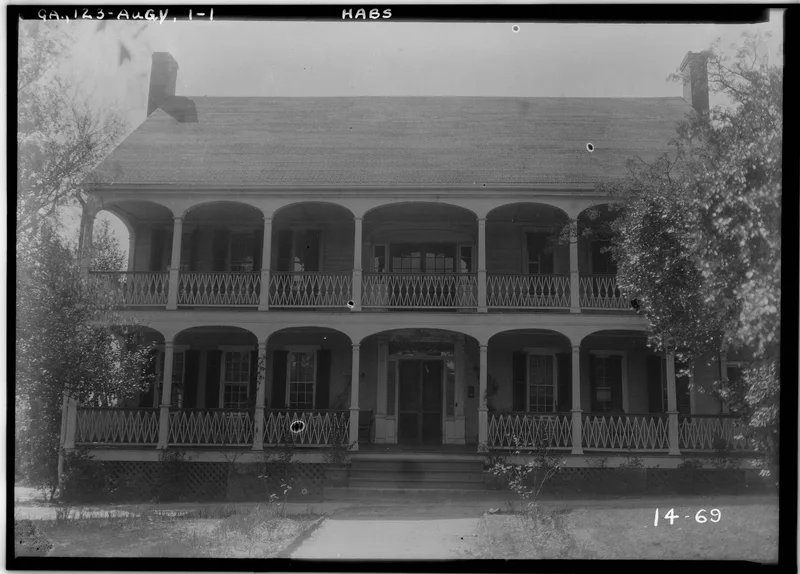
College Hill
Also known as: George Walton House; Harper House; Walton-Harper House
College Hill is a building in Augusta, Richmond County, Georgia, listed on the National Register of Historic Places on November 11, 1971 (reference number 71000287). It is also a National Historic Landmark, designated November 11, 1971. The National Park Service records its significance in Politics/Government at the national level.
Facts from the NPS National Register database (). Last updated . Sources for each fact.
Approximate location: the National Park Service places this pin arbitrarily within the property, not at a surveyed point (stated accuracy ±12 m).
Why it's listed
No readable nomination text is available for this listing yet. The facts below come from the National Park Service database.
Key facts
| Official database NPS National Register database, ref. 71000287 , checked | |
|---|---|
| Address | 2116 Wrightsboro Rd., Augusta |
| County | Richmond County |
| Listed | November 11, 1971 |
| Reference number | 71000287 |
| Resource type | Building |
| Areas of significance | Politics/Government |
| Level of significance | National |
| National Historic Landmark | Yes, designated November 11, 1971 |
| Acreage | 6 |
| Official dataset NPS cultural-resource GIS (NRHP locations) | |
| Coordinates | 33.46680, -82.01345 |
What listing means for this property
For a publicly owned building or structure, listing mainly matters when federal funds, permits or licences are involved: projects then go through Section 106 review so effects on the property are considered. Listing also strengthens applications for preservation grants and, for leased income-producing uses, can enable the federal rehabilitation tax credit.
General information, not legal or tax advice. Rules change; confirm with your State Historic Preservation Office or a qualified adviser.
Sources and further reading
- National Park Service, National Register of Historic Places database (snapshot May 2026), reference 71000287.
- Wikipedia article (used for cross-checking only; text not reproduced here)
- Wikidata Q5146424
- This listing as JSON
Last updated October 2026. Found an error? See the editorial policy for how to report it.