Pemberton House
Also known as: See also:Columbus Historic District

Why it's listed
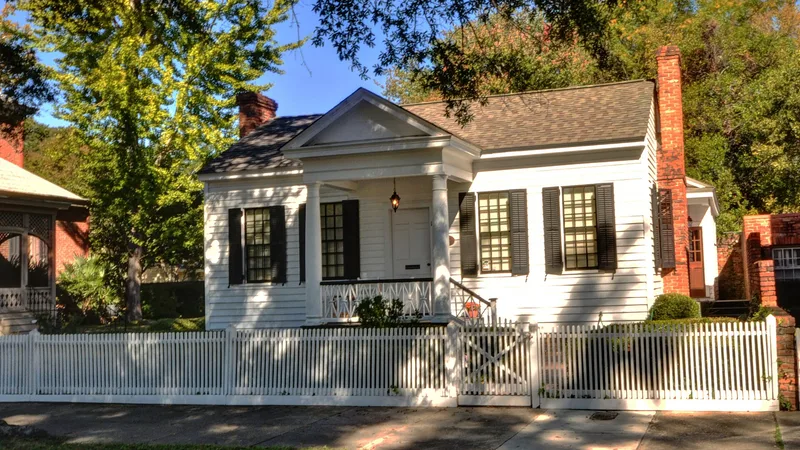
This small one-story frame cottage in Columbus, Georgia, was the home of pharmacist Dr. John Styth Pemberton from 1855 to 1860. Pemberton later originated the formula for Coca-Cola, and the nomination presents the house as a landmark of that story, calling Columbus the birthplace of the cola industry. The white clapboard house has two end gables, a gabled front porch, a brick foundation and a cedar shake roof. Inside are four rooms: a parlor, a dining room and two bedrooms. A small outbuilding behind it served as a kitchen and the place where Pemberton is thought to have developed patent medicines. A fire had badly altered the interior, so restoration aimed to return the house to its 1855-1860 look, including removal of gingerbread trim added in the late 1880s. The house was moved from Third Avenue, where businesses were crowding in, to Seventh Street inside the city's historic district. Historic Columbus Foundation planned to operate it as a house museum.
Significance in brief: The nomination argues the house is significant as the home from 1855 to 1860 of Dr. John Styth Pemberton, originator of the Coca-Cola formula. It claims Columbus is the birthplace of the cola industry and that the house is of international importance. It also notes the cottage's simple architecture, restored to its 1855-1860 appearance.
Machine-generated summary. This summary was generated by a language model from the official nomination document and has not been reviewed line by line by an editor. It may contain errors. Check the source document before relying on any detail. Source: nomination document (PDF) · National Archives catalog entry. NRHP reference 71000283, listed September 28, 1971. Summary generated October 2026 (model claude-sonnet-5-5, prompt v1.0-2026-10-29, confidence medium).
Key facts
| Address | 11 7th St., Columbus |
|---|---|
| County | Muscogee County |
| Listed | September 28, 1971 |
| Reference number | 71000283 |
| Resource type | Building |
| Period of significance | 1855-1860 |
| Areas of significance | Industry, Commerce |
| Level of significance | State |
| Status (as stated in the nomination) | Under restoration by Historic Columbus Foundation, which owns it, and scheduled to operate as a house museum; the interior had been altered by a fire and the 1880s Victorian gingerbread was removed. |
| Acreage | 0.1 |
| Within district | Columbus Historic District |
| Coordinates | 32.45933, -84.99263 (NPS GIS) |
What listing means for this property
National Register listing is honorary for a privately owned home: it does not by itself restrict what an owner may do with their own money, and it does not require public access. Restrictions come from local landmark or historic-district ordinances, which are separate (how they differ).
Owner-occupied houses are not eligible for the 20% federal rehabilitation tax credit, which applies to income-producing buildings, but many states offer credits for homeowners. Listing also opens the door to preservation easements and to buying a plaque. Start with what listing means for homeowners, renovating a listed house and selling one.
General information, not legal or tax advice. Rules change; confirm with your State Historic Preservation Office or a qualified adviser.
Sources and further reading
- National Park Service, National Register of Historic Places database (snapshot May 2026), reference 71000283.
- Nomination form (PDF, National Archives) — catalog entry
- Wikipedia article (used for cross-checking only; text not reproduced here)
- Wikidata Q16932266
- This listing as JSON
Last updated October 2026. Found an error? See the editorial policy for how to report it.