Means Street Historic District

Why it's listed
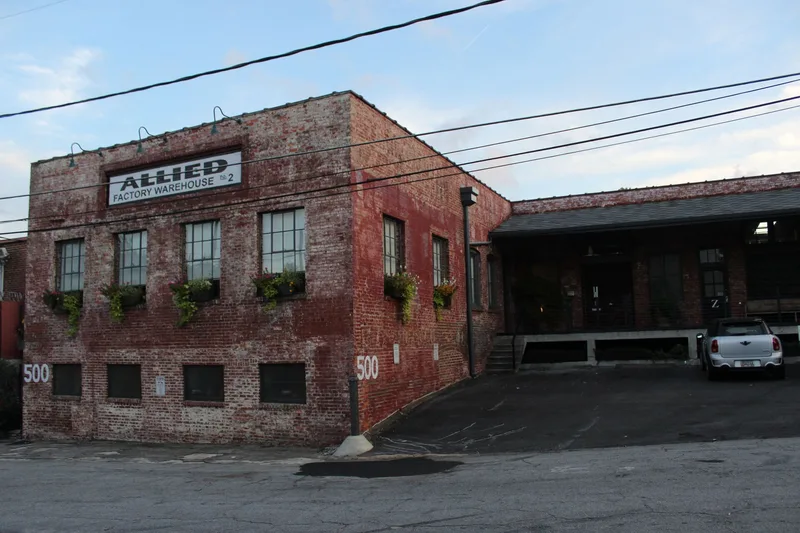
Means Street is a narrow lane northwest of downtown Atlanta, lined with large brick warehouses and factories set close to the street and backing onto the rail line. The 8.5-acre district also takes in two commercial buildings on Marietta Street. W. B. Bass laid out the street in 1869. Standard Oil began oil storage and a cooper shop there around 1888, and furniture, buggy and candy manufacturers followed in the early 1900s. Loading docks facing the railroad survive, along with some stone walls and a stretch of cobblestone paving. On Marietta Street, the 1921 H.B. Davis Building, later the Hotel Roxy, and a c.1930 five-and-ten-cent store reflect the merchants who dominated that corridor. The district was listed for its architecture, commerce, industry, and community planning. It is one of the best-preserved remnants of the Marietta Street industrial corridor, most of which has been lost. Many buildings now serve as offices, lofts, studios and an arts center.
Significance in brief: The district is one of the most intact sections of the Marietta Street industrial corridor, which has lost nearly seventy percent of its historic resources. It represents utilitarian industrial and commercial building types once common in Atlanta, and the commerce and industry of the corridor. Its street plan and rail-side loading docks reflect the city's development along the Western and Atlantic Railroad.
Machine-generated summary. This summary was generated by a language model from the official nomination document and has not been reviewed line by line by an editor. It may contain errors. Check the source document before relying on any detail. Source: nomination document (PDF) · National Archives catalog entry. NRHP reference 01000648, listed June 14, 2001. Summary generated October 2026 (model claude-sonnet-5-5, prompt v1.0-2026-10-29, confidence high).
Key facts
| Address | Bounded by Marietta St., Bankhead and Ponders Aves., and the Southern rail line, Atlanta |
|---|---|
| County | Fulton County |
| Listed | June 14, 2001 |
| Reference number | 01000648 |
| Resource type | District |
| Period of significance | 1869-c.1950 |
| Architectural style | Other: commercial eclectic |
| Criteria |
|
| Areas of significance | Architecture, Commerce, Industry, Community Planning and Development |
| Level of significance | Local |
| Status (as stated in the nomination) | Buildings have been adapted to new uses including offices, lofts and artist studios, an arts center, a restaurant, and shops. One building between the Block Candy and Carriage Works buildings was recently demolished for structural deterioration. |
| Acreage | 8.5 |
| Coordinates | 33.77142, -84.40459 (NPS GIS) |
What listing means for this property
This is a historic district. Buildings within its boundary are either contributing (they add to the district's significance) or non-contributing. Owners of contributing income-producing buildings can claim the 20% federal rehabilitation tax credit; homeowners should look at state credits. National Register districts impose no design review by themselves; a local historic district ordinance, if one exists, does (the difference explained).
General information, not legal or tax advice. Rules change; confirm with your State Historic Preservation Office or a qualified adviser.
Sources and further reading
- National Park Service, National Register of Historic Places database (snapshot May 2026), reference 01000648.
- Nomination form (PDF, National Archives) — catalog entry
- Wikipedia article (used for cross-checking only; text not reproduced here)
- Wikidata Q6804082
- This listing as JSON
Last updated October 2026. Found an error? See the editorial policy for how to report it.