Valley Railway Historic District

Why it's listed
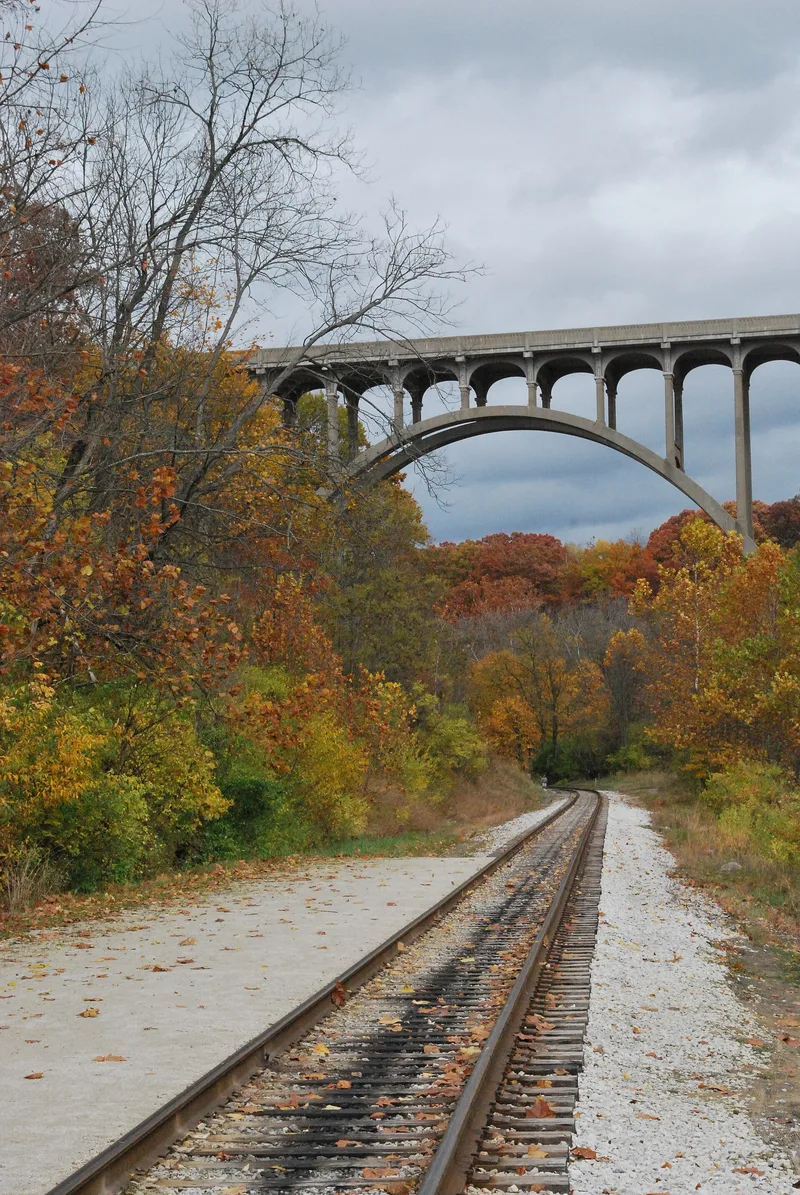
This 24.5-mile stretch of single-track railway follows the Cuyahoga Valley from Rockside Road in Independence to Howard Street in Akron, Ohio. Built from 1878 as the Valley Railway and later reorganized as the Cleveland, Terminal and Valley, it carried coal from east central Ohio to Cleveland's steel industry and became a primary Cleveland-Akron route after connecting with the Baltimore & Ohio. The line follows the route of the earlier Ohio Canal and shows how successive transportation modes served the same region. Unlike many railroads, it was never double-tracked, and its right-of-way remained virtually unaltered, with no interstate highways running alongside it. Contributing features include the right-of-way and five bridges, among them two steel plate-girder crossings of the Cuyahoga River near Peninsula. The district was recognized for its role in northern Ohio's industry and transportation, and for the unusual integrity of its nineteenth century character. Excursion trains to Hale Farm and Village have run on it since 1975.
Machine-generated summary. This summary was generated by a language model from the official nomination document and has not been reviewed line by line by an editor. It may contain errors. Check the source document before relying on any detail. Source: nomination document (PDF) · catalog entry. Generated October 2026 (model claude-sonnet-5-5, prompt v1.0-2026-10-29).
| Period of significance | 1871-1915 |
|---|---|
| Areas of significance | Transportation |
| Acreage | 178 |
| Boundary source | NPS cultural-resource GIS polygon |
| Full listing page | Valley Railway Historic District (property record) |
What listing means for this property
This is a historic district. Buildings within its boundary are either contributing (they add to the district's significance) or non-contributing. Owners of contributing income-producing buildings can claim the 20% federal rehabilitation tax credit; homeowners should look at state credits. National Register districts impose no design review by themselves; a local historic district ordinance, if one exists, does (the difference explained).
General information, not legal or tax advice. Rules change; confirm with your State Historic Preservation Office or a qualified adviser.