Upper East Side Historic District (Boundary Increase)

Why it's listed
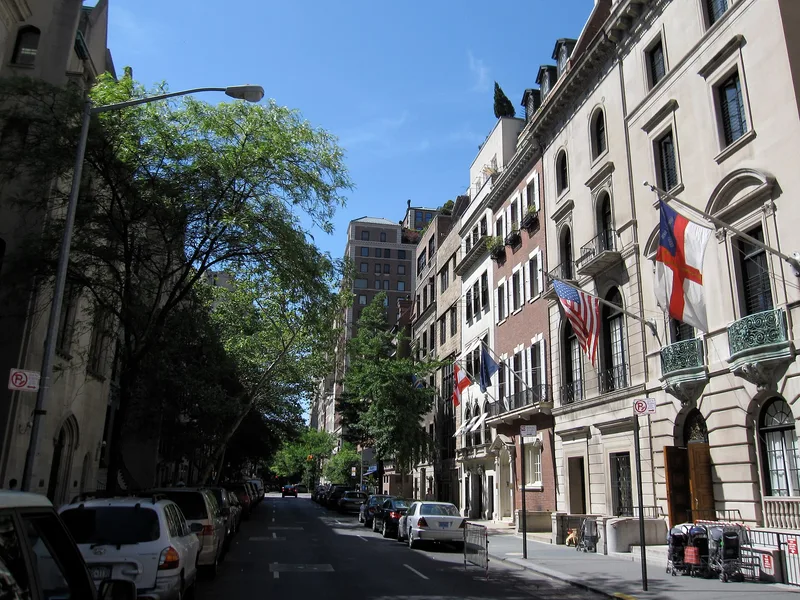
This amendment enlarges a Manhattan historic district on the Upper East Side by adding portions of 17 blocks east of the original boundary, mostly along Lexington Avenue and the side streets between East 60th and East 75th Streets. The added area holds 163 contributing and 34 non-contributing buildings. Most are four- and five-story rowhouses built largely in the 1870s as brownstones in Italianate and Neo-Grec styles, many later rebuilt in Neo-Georgian, Neo-Federal or Tudor Revival dress or fitted with shops. Apartment houses of six to 15 stories, mostly from the 1920s, line Park and Lexington Avenues and East 72nd Street. The 25-story Barbizon Hotel, built in 1925 as a women's residence, is also included. The amendment extends the period of significance to 1956 and reclassifies several postwar buildings as contributing. Three Modern landmarks receive separate recognition: Asia House by Philip Johnson, the Whitney Museum building by Marcel Breuer, and a townhouse by Paul Rudolph.
Machine-generated summary. This summary was generated by a language model from the official nomination document and has not been reviewed line by line by an editor. It may contain errors. Check the source document before relying on any detail. Source: nomination document (PDF) · catalog entry. Generated October 2026 (model claude-sonnet-5-5, prompt v1.0-2026-10-29).
| Period of significance | 1862-1956 (plus 1959, 1966 and 1968 for three individual buildings) |
|---|---|
| Styles | Late Victorian (Italianate, Neo-Grec); Late 19th and 20th Century Revivals; Modern Movement (Art Deco, Moderne, International Style) |
| Areas of significance | Architecture, Community Planning and Development |
| Acreage | 13 |
| Boundary source | NPS cultural-resource GIS polygon |
| Full listing page | Upper East Side Historic District (Boundary Increase) (property record) |
What listing means for this property
This is a historic district. Buildings within its boundary are either contributing (they add to the district's significance) or non-contributing. Owners of contributing income-producing buildings can claim the 20% federal rehabilitation tax credit; homeowners should look at state credits. National Register districts impose no design review by themselves; a local historic district ordinance, if one exists, does (the difference explained).
General information, not legal or tax advice. Rules change; confirm with your State Historic Preservation Office or a qualified adviser.