Glimmerglass Historic District

Why it's listed
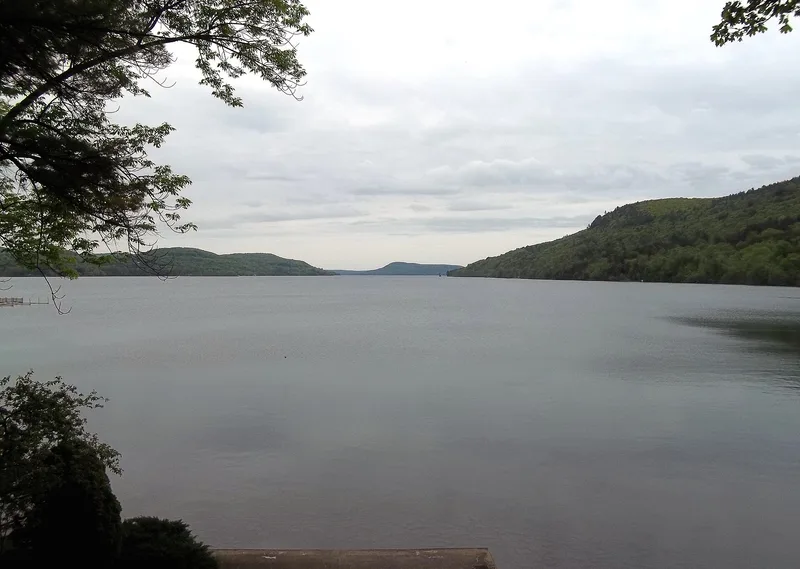
Otsego Lake, a long, narrow glacial lake in Otsego County, New York, anchors a 15,000-acre district that includes the village of Cooperstown and parts of three surrounding towns. Ridgelines on all sides frame the landscape, and the area contains farmsteads, lakeside estates, camps, docks, boathouses, gardens, monuments, museums and a dense village center. Land patterns trace to eighteenth-century patent surveys, with long strip lots running from shore to ridge on the west and north. The area is tied to novelist James Fenimore Cooper, whose Leatherstocking Tales and residence drew summer visitors from the mid-nineteenth century. Resort development was slow because of poor roads and limited lodging. The Clark family later bought and reforested much of the east shore and consolidated farms and estates, keeping the scenery that attracted early tourists. The district replaces the earlier Cooperstown Historic District listing and includes Hyde Hall, an early nineteenth-century estate house, with a period of significance from about 1785 to 1949.
Machine-generated summary. This summary was generated by a language model from the official nomination document and has not been reviewed line by line by an editor. It may contain errors. Check the source document before relying on any detail. Source: nomination document (PDF) · catalog entry. Generated October 2026 (model claude-sonnet-5-5, prompt v1.0-2026-10-29).
| Period of significance | c1785-1949 |
|---|---|
| Styles | Early Republic; Mid-19th Century; Late Victorian; Late 19th and 20th Century Revivals and American Movements |
| Areas of significance | Literature, Entertainment/Recreation, Conservation, Architecture, Landscape Architecture, Exploration/Settlement, Social History |
| Acreage | 15000 |
| Boundary source | NPS cultural-resource GIS polygon |
| Full listing page | Glimmerglass Historic District (property record) |
What listing means for this property
This is a historic district. Buildings within its boundary are either contributing (they add to the district's significance) or non-contributing. Owners of contributing income-producing buildings can claim the 20% federal rehabilitation tax credit; homeowners should look at state credits. National Register districts impose no design review by themselves; a local historic district ordinance, if one exists, does (the difference explained).
General information, not legal or tax advice. Rules change; confirm with your State Historic Preservation Office or a qualified adviser.