Brooklyn Heights Historic District

Why it's listed
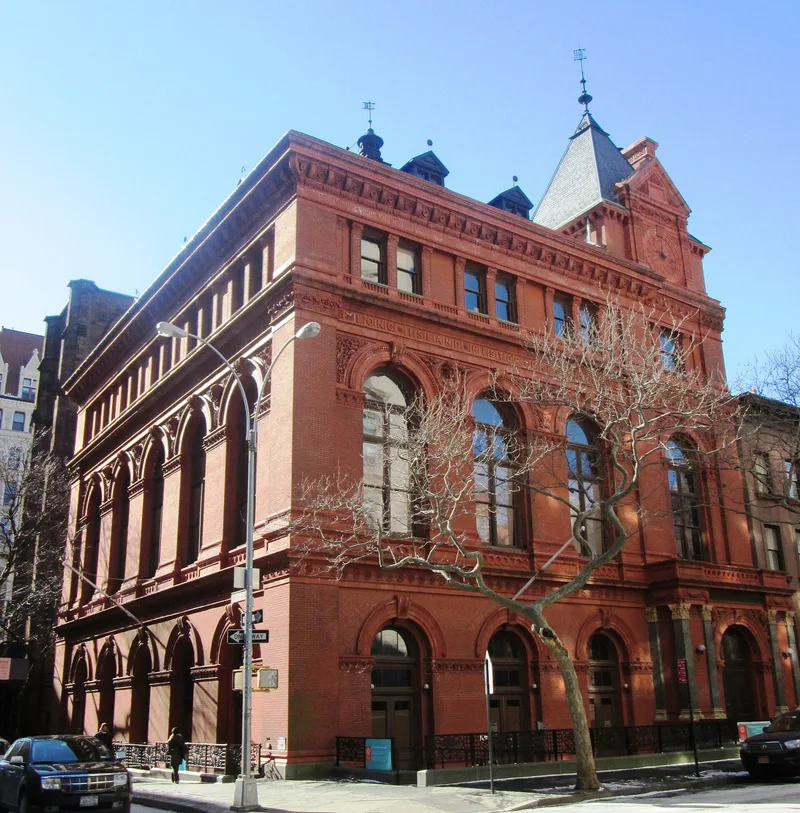
Brooklyn Heights is a 140-acre residential district on a bluff across the East River from lower Manhattan. Its tree-shaded streets, bluestone walks and rows of brick and brownstone houses behind decorative iron fences developed after a steam ferry began running to Manhattan in 1814. Landowners divided their holdings into 25 by 100-foot lots, and the first village map was recorded in 1816. Building began around 1820 along Hicks Street and nearby cross streets. The houses and churches illustrate Federal, Greek Revival, Gothic Revival, Renaissance Revival, Ruskinian Gothic and Queen Anne styles, with Greek Revival the most common. Minard Lafever designed several churches and Packer Collegiate Institute here. Brooklyn Heights was the leading residential area of New York before Fifth Avenue rose to prominence. Local residents also protected it by securing the Esplanade, which carried the Brooklyn-Queens Expressway below the neighborhood. The district retains enough early fabric to serve as a record of nineteenth-century architectural change.
Machine-generated summary. This summary was generated by a language model from the official nomination document and has not been reviewed line by line by an editor. It may contain errors. Check the source document before relying on any detail. Source: nomination document (PDF) · catalog entry. Generated October 2026 (model claude-sonnet-5-5, prompt v1.0-2026-10-29).
| Period of significance | 1800-1899 |
|---|---|
| Styles | Federal, Greek Revival, Gothic Revival, Renaissance Revival, Romanesque Revival, Ruskinian Gothic, Queen Anne |
| Areas of significance | Architecture |
| Acreage | 140 |
| Boundary source | NPS cultural-resource GIS polygon |
| Full listing page | Brooklyn Heights Historic District (property record) |
What listing means for this property
This is a historic district. Buildings within its boundary are either contributing (they add to the district's significance) or non-contributing. Owners of contributing income-producing buildings can claim the 20% federal rehabilitation tax credit; homeowners should look at state credits. National Register districts impose no design review by themselves; a local historic district ordinance, if one exists, does (the difference explained).
General information, not legal or tax advice. Rules change; confirm with your State Historic Preservation Office or a qualified adviser.