South Loop Printing House District

Why it's listed
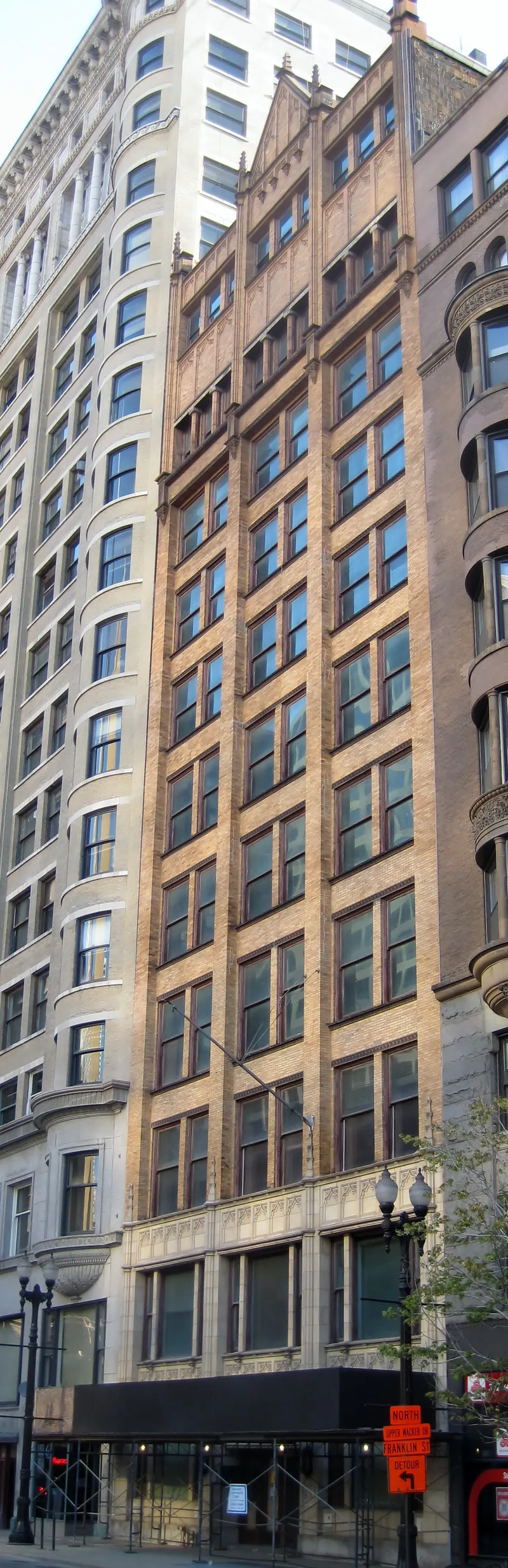
Centered on South Dearborn Street near Dearborn Station, this Chicago district of about 43 acres preserves the buildings of the city's printing industry. Development began after the Great Fire of 1871 and accelerated in 1883, when the Donohue Building opened in anticipation of the station. The railroad gave printers freight access and a way to distribute books, catalogs and maps nationwide. Narrow blocks admitted light to tall buildings and allowed long rows of presses. Firms such as Donohue and Henneberry, Rand McNally and the Lakeside Press clustered here, supported by paper suppliers, binders, engravers and mapmakers. A second wave of building followed the 1903 LaSalle Street station, and six more buildings arrived in the mid-1920s. The architecture ranges from small post-fire brick lofts to Romanesque Revival plants, Chicago School towers such as the Pontiac Building, and concrete-frame structures. Many designers were prominent Chicago architects. Neglect after World War II left the district's fabric largely intact, and it was listed for its commercial, industrial and architectural character.
Machine-generated summary. This summary was generated by a language model from the official nomination document and has not been reviewed line by line by an editor. It may contain errors. Check the source document before relying on any detail. Source: nomination document (PDF) · catalog entry. Generated October 2026 (model claude-sonnet-5-5, prompt v1.0-2026-10-29).
| Period of significance | 1883-1928 |
|---|---|
| Styles | Romanesque Revival, Chicago School and later concrete-frame functional loft buildings |
| Areas of significance | Industry, Commerce, Transportation, Architecture, Communications |
| Acreage | 43 |
| Boundary source | NPS cultural-resource GIS polygon |
| Full listing page | South Loop Printing House District (property record) |
What listing means for this property
This is a historic district. Buildings within its boundary are either contributing (they add to the district's significance) or non-contributing. Owners of contributing income-producing buildings can claim the 20% federal rehabilitation tax credit; homeowners should look at state credits. National Register districts impose no design review by themselves; a local historic district ordinance, if one exists, does (the difference explained).
General information, not legal or tax advice. Rules change; confirm with your State Historic Preservation Office or a qualified adviser.