Vineville Historic District

Why it's listed
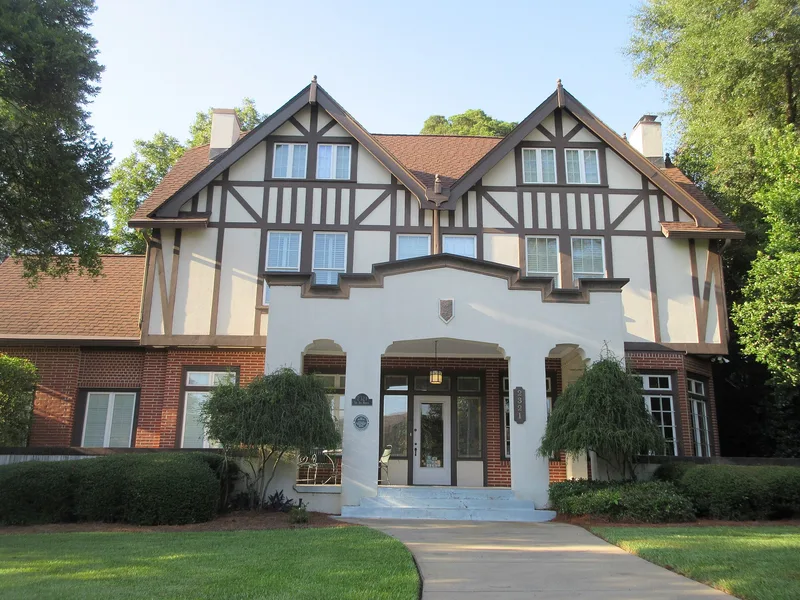
Vineville is a residential suburb of about 525 acres and more than 700 properties on a low plateau northwest of downtown Macon, Georgia. It began in the 1830s as a community of large plantation estates along the Forsyth Road, taking its name traditionally from the vineyards of Judge Christopher Strong. Over the nineteenth and early twentieth centuries the estates were subdivided into a compact suburb of long, narrow lots laid out in a rough grid on either side of Vineville Avenue. Houses range from mansions to modest cottages and include Plantation Plain and Federal examples as well as Victorian, Neoclassical, Bungalow and period revival styles. Some were designed by notable Georgia architects, including Neel Reid. Informally landscaped yards and tree-lined streets give the area a park-like character. The district was listed for its architecture, landscape architecture, community planning and local history, and for its role as home to many prominent Macon and Georgia figures. Few intrusions interrupt its continuity.
Machine-generated summary. This summary was generated by a language model from the official nomination document and has not been reviewed line by line by an editor. It may contain errors. Check the source document before relying on any detail. Source: nomination document (PDF) · catalog entry. Generated October 2026 (model claude-sonnet-5-5, prompt v1.0-2026-10-29).
| Styles | Plantation Plain, Federal, Victorian, Neoclassical, Bungalow and early-twentieth-century revival styles (Spanish Villa, English Tudor, Italian Renaissance, Georgian, Jacobean) |
|---|---|
| Areas of significance | Community Planning and Development, Landscape Architecture, Architecture, Social History |
| Acreage | 525 |
| Boundary source | NPS cultural-resource GIS polygon |
| Full listing page | Vineville Historic District (property record) |
What listing means for this property
This is a historic district. Buildings within its boundary are either contributing (they add to the district's significance) or non-contributing. Owners of contributing income-producing buildings can claim the 20% federal rehabilitation tax credit; homeowners should look at state credits. National Register districts impose no design review by themselves; a local historic district ordinance, if one exists, does (the difference explained).
General information, not legal or tax advice. Rules change; confirm with your State Historic Preservation Office or a qualified adviser.