Greene Street Historic District

Why it's listed
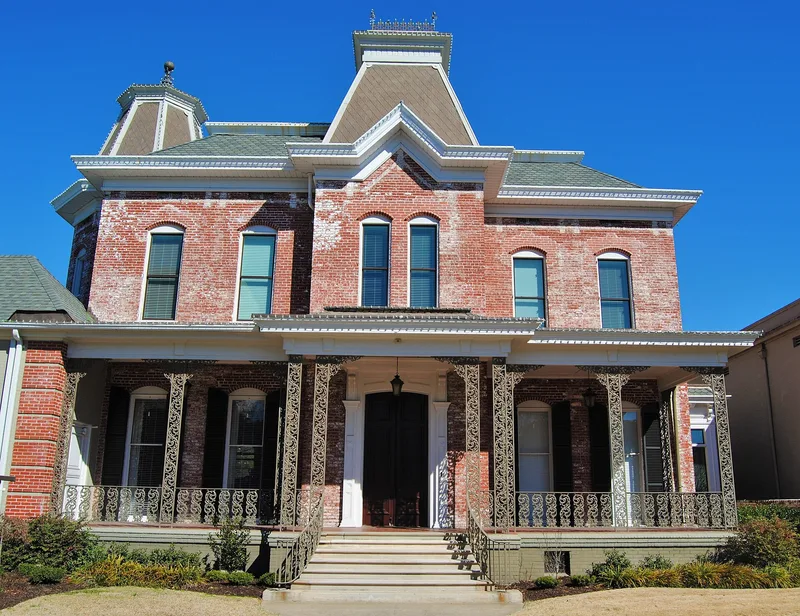
Greene Street in Augusta is a landscaped avenue about 168 feet wide, split into two roadways by a median averaging 45 feet across. The district covers nearly ten blocks, from the Gordon Highway overpass to the Augusta Canal bridge. The median holds trees, azaleas, walks, benches and 13 commemorative monuments, including the 1850 Signers' Monument honoring Georgia signers of the Declaration of Independence. Along the street are some 55 significant buildings dating from the early 19th to early 20th century, mostly residences, with several churches and a few commercial buildings. Styles range from the Federal-style Eve House of about 1820 to Greek Revival, Italianate and Queen Anne houses and churches such as St. James M.E., St. John M.E. and Sacred Heart. Modern buildings and parking lots were excluded from the boundaries, and the south side of the two westernmost blocks was left out because of a planned expressway extension. The divided avenue and its median tie the district together.
Machine-generated summary. This summary was generated by a language model from the official nomination document and has not been reviewed line by line by an editor. It may contain errors. Check the source document before relying on any detail. Source: nomination document (PDF) · catalog entry. Generated October 2026 (model claude-sonnet-5-5, prompt v1.0-2026-10-29).
| Styles | Mixed 19th and early 20th century styles including Federal, Greek Revival, Italianate, Second Empire, Queen Anne, Romanesque, Gothic Revival and Beaux Arts |
|---|---|
| Areas of significance | Community Planning and Development, Landscape Architecture, Architecture |
| Acreage | 30 |
| Boundary source | NPS cultural-resource GIS polygon |
| Full listing page | Greene Street Historic District (property record) |
What listing means for this property
This is a historic district. Buildings within its boundary are either contributing (they add to the district's significance) or non-contributing. Owners of contributing income-producing buildings can claim the 20% federal rehabilitation tax credit; homeowners should look at state credits. National Register districts impose no design review by themselves; a local historic district ordinance, if one exists, does (the difference explained).
General information, not legal or tax advice. Rules change; confirm with your State Historic Preservation Office or a qualified adviser.