Hanover County Courthouse Historic District

Why it's listed
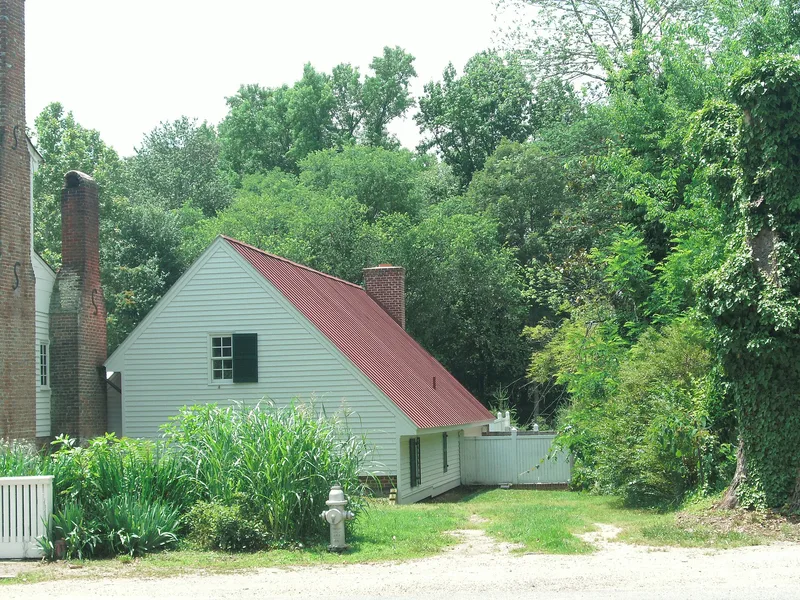
Hanover Court House is a small Virginia village that has changed little since the early nineteenth century. Its focal point is the court house of about 1735, a T-shaped, hipped-roof brick building laid in Flemish bond with a five-bay arcade, regarded as the classic example of colonial Virginia court house design. Around the shaded green stand an early nineteenth-century stone jail, a brick clerk's office, and a 1942 library built in colonial style. Across the old stage road, now Route 301, sits Hanover Tavern, a long frame building that served travelers since the eighteenth century and once belonged to John Shelton, father-in-law of Patrick Henry. Henry argued the Parsons' Cause in the court house in 1763. Lord Cornwallis was a patron of the tavern, and J.E.B. Stuart received his Confederate major general's commission in the village in 1862. The district was recognized because it preserves every essential element of a Virginia court house community, and the court house is still in use today.
Significance in brief: The settlement is presented as a classic, largely undisturbed example of a Virginia court house community, with all its essential elements preserved. The c. 1735 court house is called a major monument of colonial Virginia public architecture and was where Patrick Henry argued the Parsons' Cause in 1763. Hanover Tavern is noted as one of the best preserved eighteenth-century taverns in Virginia, with links to Patrick Henry, Lord Cornwallis and J.E.B. Stuart.
Machine-generated summary. This summary was generated by a language model from the official nomination document and has not been reviewed line by line by an editor. It may contain errors. Check the source document before relying on any detail. Source: nomination document (PDF) · National Archives catalog entry. NRHP reference 71000980, listed September 22, 1971. Summary generated October 2026 (model claude-sonnet-5-5, prompt v1.0-2026-10-29, confidence medium).
Key facts
| Address | US 301, Hanover |
|---|---|
| County | Hanover County |
| Listed | September 22, 1971 |
| Reference number | 71000980 |
| Resource type | District |
| Period of significance | 18th and 19th centuries (the 20th century is also checked in one version) |
| Architect / builder | Pamunkey Regional Library erected by Claiborne and Taylor of Richmond (1942); no architect named for the court house |
| Architectural style | Colonial Virginia court house design; library in Virginia colonial style |
| Areas of significance | Politics/Government, Architecture, Social History |
| Level of significance | State |
| Status (as stated in the nomination) | Buildings in the historic core are in good condition; the court house still serves its original function and the tavern is used as a restaurant-theater. |
| Acreage | 20 |
| Coordinates | 37.76222, -77.36655 (NPS GIS) |
What listing means for this property
This is a historic district. Buildings within its boundary are either contributing (they add to the district's significance) or non-contributing. Owners of contributing income-producing buildings can claim the 20% federal rehabilitation tax credit; homeowners should look at state credits. National Register districts impose no design review by themselves; a local historic district ordinance, if one exists, does (the difference explained).
General information, not legal or tax advice. Rules change; confirm with your State Historic Preservation Office or a qualified adviser.
Sources and further reading
- National Park Service, National Register of Historic Places database (snapshot May 2026), reference 71000980.
- Nomination form (PDF, National Archives) — catalog entry
- Wikipedia article (used for cross-checking only; text not reproduced here)
- Wikidata Q14712465
- This listing as JSON
Last updated October 2026. Found an error? See the editorial policy for how to report it.