Seaton, George Lewis, House
Also known as: Dhr#100-5015-0007

Why it's listed
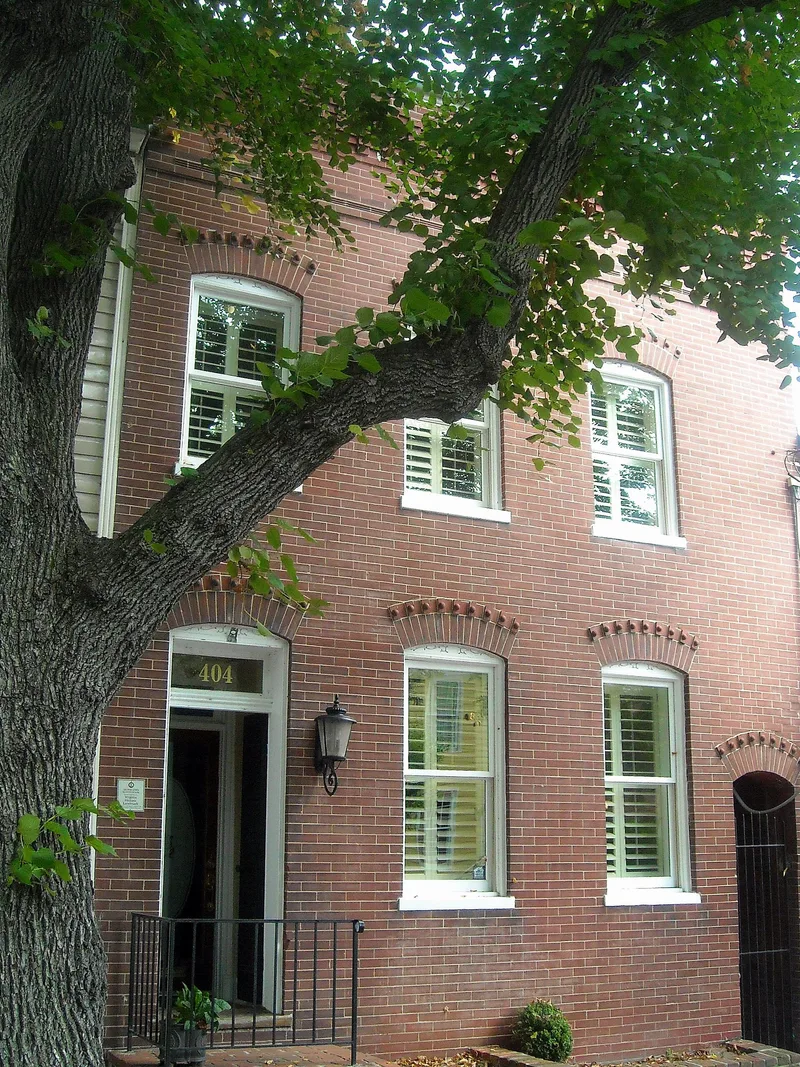
Located at 404 South Royal Street in Alexandria, this brick rowhouse sits in the heart of Hayti, the city's second oldest African American neighborhood. It has three bays, two stories and a side-hall plan, with a red-painted pressed brick facade, segmental brick window arches, a corbelled cornice and a horse alley beside the front. Tax records suggest it was built between 1861 and 1866 and substantially modified around 1900. George Lewis Seaton, born free in Alexandria in 1822, bought the property in 1866 and lived there until 1881. He was a master carpenter, builder, grocer, property owner and Radical Republican, and he was elected the first African American member of the Virginia General Assembly from north of the Rappahannock River. Archaeological testing recovered more than 2,000 artifacts in layers reaching back to the late eighteenth century, which may be the earliest material record of free Black residents in Alexandria. The house was listed for its link to Seaton and for this archaeological evidence.
Significance in brief: The house is tied to George Lewis Seaton, a free-born African American master carpenter, businessman and political leader who bought it in 1866 and lived there until his death in 1881. Archaeological deposits on the lot date back to about 1795 and may represent the earliest material record of free Black residents in Alexandria. The site documents the growth of the free African American community known as Hayti.
Machine-generated summary. This summary was generated by a language model from the official nomination document and has not been reviewed line by line by an editor. It may contain errors. Check the source document before relying on any detail. Source: nomination document (PDF) · National Archives catalog entry. NRHP reference 03001425, listed January 16, 2004. Summary generated October 2026 (model claude-sonnet-5-5, prompt v1.0-2026-10-29, confidence high).
Key facts
| Address | 404 S. Royal St., Alexandria (Independent City) |
|---|---|
| County | Alexandria |
| Listed | January 16, 2004 |
| Reference number | 03001425 |
| Resource type | Building |
| Period of significance | ca. 1795-1881 |
| Architect / builder | Unknown |
| Architectural style | Late Victorian |
| Criteria |
|
| Areas of significance | Black, Historic - Non-Aboriginal |
| Level of significance | Local |
| Status (as stated in the nomination) | Currently a single dwelling; recently renovated, with alterations to the interior and rear sections. |
| Acreage | 0.9 |
| Within district | Alexandria Historic District |
| Coordinates | 38.80282, -77.04385 (NPS GIS) |
What listing means for this property
National Register listing is honorary for a privately owned home: it does not by itself restrict what an owner may do with their own money, and it does not require public access. Restrictions come from local landmark or historic-district ordinances, which are separate (how they differ).
Owner-occupied houses are not eligible for the 20% federal rehabilitation tax credit, which applies to income-producing buildings, but many states offer credits for homeowners. Listing also opens the door to preservation easements and to buying a plaque. Start with what listing means for homeowners, renovating a listed house and selling one.
General information, not legal or tax advice. Rules change; confirm with your State Historic Preservation Office or a qualified adviser.
Sources and further reading
- National Park Service, National Register of Historic Places database (snapshot May 2026), reference 03001425.
- Nomination form (PDF, National Archives) — catalog entry
- Wikipedia article (used for cross-checking only; text not reproduced here)
- Wikidata Q5541713
- This listing as JSON
Last updated October 2026. Found an error? See the editorial policy for how to report it.