Stabler-Leadbeater Apothecary Shop

Why it's listed
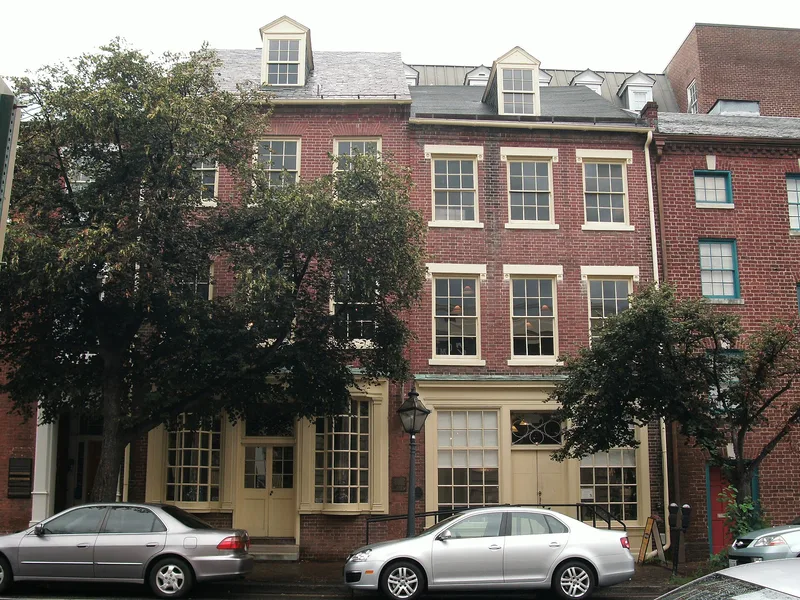
Two connected brick buildings at 105-107 S. Fairfax Street in Old Town Alexandria hold one of the oldest preserved apothecary shops in the United States. The south building, 107, was built around 1775 by Philip Dawe, a silver- and coppersmith, and Edward Stabler used it as an apothecary shop by 1796. The north building, 105, dates to about 1815 and was bought by Stabler in 1829 to serve as a warehouse. Inside 107, Gothic Revival shelves and counters installed in 1835 survive alongside hand-lettered wooden boxes, tins, and handblown bottles. The business operated under the Stabler name until 1852, then under his son-in-law John Leadbeater. Customers included George Washington, George Mason, Henry Clay, and Daniel Webster. After the shop was sold at auction in 1933, the Landmarks Society of Alexandria bought the buildings, and Thomas T. Waterman restored them in 1936-38. The shop opened as a museum in 1939, and 107 remains open as one today.
Significance in brief: The nomination argues it is among the oldest preserved apothecaries in the United States and the only one in Virginia to operate continuously from the 18th to the 20th centuries. Building 107 retains original storage boxes, tins, bottles, and Gothic Revival shelves and counters added in 1835. The shop was also patronized by George Washington and other notable figures, and is linked to J.E.B. Stuart delivering orders to Robert E. Lee.
Machine-generated summary. This summary was generated by a language model from the official nomination document and has not been reviewed line by line by an editor. It may contain errors. Check the source document before relying on any detail. Source: nomination document (PDF) · National Archives catalog entry. NRHP reference 82001796, listed November 24, 1982. Summary generated October 2026 (model claude-sonnet-5-5, prompt v1.0-2026-10-29, confidence medium).
Key facts
| Address | 105-107 S. Fairfax, Alexandria (Independent City) |
|---|---|
| County | Alexandria |
| Listed | November 24, 1982 |
| Reference number | 82001796 |
| Resource type | Building |
| Architect / builder | Built ca. 1775 by Philip Dawe (107); adapted as an apothecary by Edward Stabler; restored 1936-38 by Thomas T. Waterman. The form lists builder/architect as N/A. |
| Architectural style | Gothic Revival interior (1835) in the first-floor shop of 107 |
| Areas of significance | Commerce, Health/Medicine, Architecture |
| Level of significance | National |
| Status (as stated in the nomination) | Building 107 is open as a museum, and a consignment shop operates from 105. The form describes 107 as being in an excellent state of preservation. |
| Acreage | 0.9 |
| Within district | Alexandria Historic District |
| Coordinates | 38.80429, -77.04280 (NPS GIS) |
What listing means for this property
For an income-producing building, listing (individually or as a contributing building in a district) is the gateway to the 20% federal rehabilitation tax credit on qualified rehabilitation costs, often stackable with state credits. Work claiming the credit must follow the Secretary of the Interior's Standards and be approved in advance.
Listing does not restrict a private owner acting without federal money or permits; where federal funding or licensing is involved, Section 106 review applies.
General information, not legal or tax advice. Rules change; confirm with your State Historic Preservation Office or a qualified adviser.
Sources and further reading
- National Park Service, National Register of Historic Places database (snapshot May 2026), reference 82001796.
- Nomination form (PDF, National Archives) — catalog entry
- Wikipedia article (used for cross-checking only; text not reproduced here)
- Wikidata Q7595786
- This listing as JSON
Last updated October 2026. Found an error? See the editorial policy for how to report it.