East End Historic District

Why it's listed
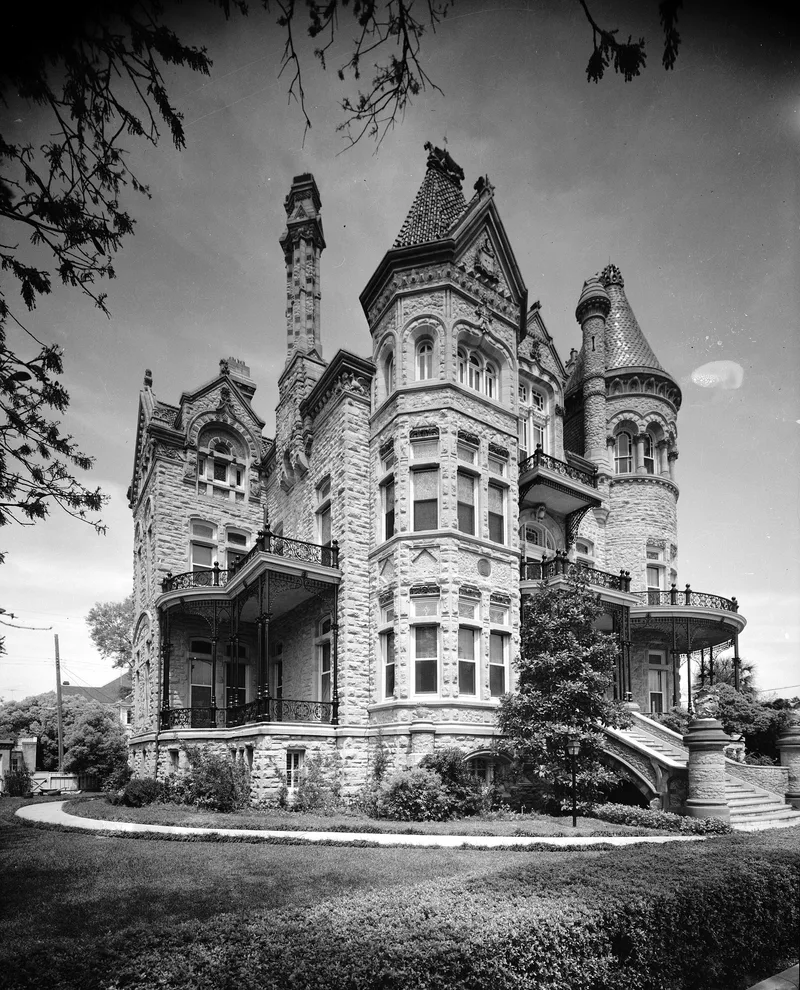
East of Galveston's downtown and beside the University of Texas Medical Branch, this district covers about 150 acres of mostly residential streets. It includes 32 complete city blocks and parts of 20 others. Roughly 35 buildings date from the Greek Revival period, 333 from the late Victorian era, and 95 from 1900 to 1917. Houses range from large mansions to small cottages and shotgun houses. Architect Nicholas Clayton designed many of them, and Alfred Muller, George Dickey and Brother Jiminez also worked here. Galveston was once the leading port in Texas, and the district records the wealth of its merchants, shippers, lawyers and industrialists. Its significance lies in the continuity of its blocks, where dwellings relate in material, texture and scale. The Gresham house, known as the Bishop's Palace, is the most prominent Victorian example. The area received historic zoning protection in 1970 after demolitions linked to medical school expansion. Residents formed an association in 1972 to address threats such as proposed development and a new access road.
Significance in brief: The nomination argues that it is the largest and most complete area of nineteenth-century homes in Galveston, which has the most intact concentration of preserved nineteenth-century buildings in Texas. It holds many Greek Revival and Victorian buildings, including works by Nicholas Clayton, Alfred Muller and others. It was also the home of many of the city's prominent merchants, lawyers, shippers and civic leaders.
Machine-generated summary. This summary was generated by a language model from the official nomination document and has not been reviewed line by line by an editor. It may contain errors. Check the source document before relying on any detail. Source: nomination document (PDF) · National Archives catalog entry. NRHP reference 75001979, listed May 30, 1975. Summary generated October 2026 (model claude-sonnet-5-5, prompt v1.0-2026-10-29, confidence medium).
Key facts
| Address | Irregular pattern including both sides of Broadway and Market Sts., Galveston |
|---|---|
| County | Galveston County |
| Listed | May 30, 1975 |
| Reference number | 75001979 |
| Resource type | District |
| Architect / builder | Nicholas J. Clayton; Alfred Muller; George E. Dickey (Dickey and Helmich); Brother Jiminez, S.J. |
| Architectural style | Greek Revival and Victorian |
| Areas of significance | Architecture, Social History |
| Level of significance | National |
| National Historic Landmark | Yes, designated May 11, 1976 |
| Status (as stated in the nomination) | Condition described as generally good; much of the district is stable, with some deteriorated pockets. It is occupied and used for residential, commercial, educational, religious and museum purposes. Historic zoning has applied since 1970. |
| Acreage | 150 |
| Coordinates | 29.30474, -94.78308 (NPS GIS) |
What listing means for this property
This is a historic district. Buildings within its boundary are either contributing (they add to the district's significance) or non-contributing. Owners of contributing income-producing buildings can claim the 20% federal rehabilitation tax credit; homeowners should look at state credits. National Register districts impose no design review by themselves; a local historic district ordinance, if one exists, does (the difference explained).
General information, not legal or tax advice. Rules change; confirm with your State Historic Preservation Office or a qualified adviser.
Sources and further reading
- National Park Service, National Register of Historic Places database (snapshot May 2026), reference 75001979.
- Nomination form (PDF, National Archives) — catalog entry
- Wikipedia article (used for cross-checking only; text not reproduced here)
- Wikidata Q5328304
- This listing as JSON
Last updated October 2026. Found an error? See the editorial policy for how to report it.