Tannery, The
Also known as: See Also:Central Bethlehem Historic District

Why it's listed
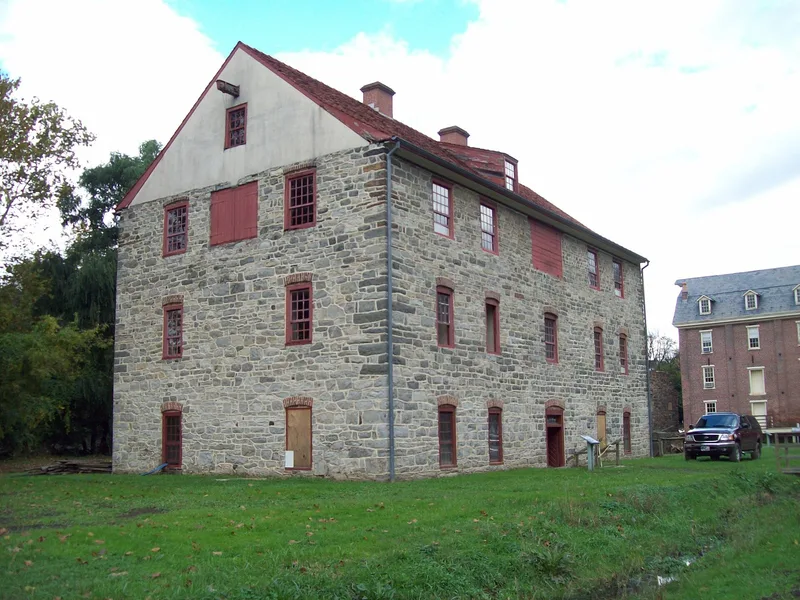
Limestone tannery in Bethlehem, Pennsylvania, completed in 1761 to replace an earlier log structure. Built by the Moravian community, it processed hides at a volume of more than 4,500 during its peak years from 1776 to 1784. Its roof was originally tiled, in keeping with the Germanic building traditions of Bethlehem, and archaeological excavation revealed liming and beaming areas and tanbark dumping grounds beside it. Tanning ceased in the 1870s, after which the building served as a tenement and, in the 1920s, as a laundry, which removed two interior walls. Historic Bethlehem Incorporated later reconstructed the tanning vats in the southern third of the building, along with chimneys, a fireplace and interior walls, and it reinstated red roof tiles. The tannery's location beside the Monocacy Creek and its proximity to the slaughterhouse and stockyards reflect the planned layout of the town's industrial complex.
Significance in brief: The building is significant for its association with the Moravian community's tanning trade, which supplied leather for shoemaking, harness-making and other needs in Bethlehem and nearby settlements. It is also cited as an example of 18th-century Germanic architecture in Bethlehem, and as part of a planned Industrial Complex along Monocacy Creek.
Machine-generated summary. This summary was generated by a language model from the official nomination document and has not been reviewed line by line by an editor. It may contain errors. Check the source document before relying on any detail. Source: nomination document (PDF) · National Archives catalog entry. NRHP reference 72001143, listed June 19, 1972. Summary generated October 2026 (model claude-haiku-5-5, prompt v1.1-2026-10-29, confidence medium).
Key facts
| Address | Within Bethlehem Historic Subdistrict A near Monocacy Creek, Bethlehem |
|---|---|
| County | Northampton County |
| Listed | June 19, 1972 |
| Reference number | 72001143 |
| Resource type | Building |
| Period of significance | 1761-1784 |
| Architectural style | 18th-century Germanic architecture |
| Criteria |
|
| Areas of significance | Industry, Community Planning and Development, Commerce, Architecture |
| Level of significance | State |
| Status (as stated in the nomination) | Reconstructed and restored as a museum; vacated in 1962 and later used for archaeological and architectural study. |
| Acreage | 3 |
| Within district | Historic Moravian Bethlehem Historic District |
| Coordinates | 40.61988, -75.38350 (NPS GIS) |
What listing means for this property
National Register listing is honorary: it recognises significance and does not restrict what a private owner may do without federal money or permits. It unlocks the 20% federal rehabilitation tax credit for income-producing buildings, state credits in many states, and Section 106 review when federal agencies are involved. See what listing means in practice.
General information, not legal or tax advice. Rules change; confirm with your State Historic Preservation Office or a qualified adviser.
Sources and further reading
- National Park Service, National Register of Historic Places database (snapshot May 2026), reference 72001143.
- Nomination form (PDF, National Archives) — catalog entry
- Wikipedia article (used for cross-checking only; text not reproduced here)
- Wikidata Q7768105
- This listing as JSON
Last updated October 2026. Found an error? See the editorial policy for how to report it.