Lancaster Historic District
Also known as: See Also:Lancaster Historic District (Boundary Increase); Lan
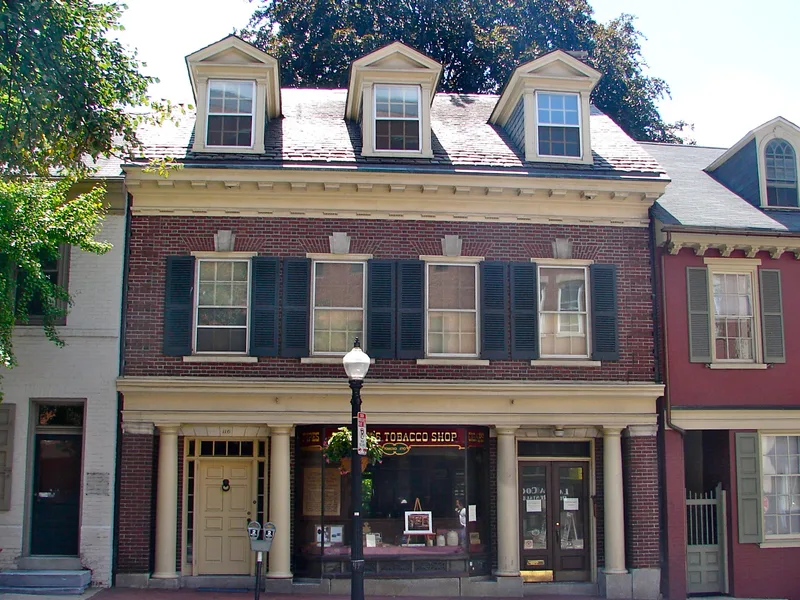

Why it's listed
Lancaster Historic District covers the oldest parts of central Lancaster, including the Adamstown area around Church Street and Howard Avenue. The town was laid out in the 1730s, and James Hamilton sold building lots from 1742 on, requiring each owner to erect a brick or stone dwelling of at least 16 feet square. The district contains a few surviving 18th-century houses of log, stone and brick, along with Georgian brick houses from the same period. Most of its buildings date from the mid-to-late 19th century and include brick row houses from about 1880 and townhouses with Classic Revival entrances, arched alley passages and corbelled cornices. Its significance rests on the surviving 18th-century fabric and the 19th-century townhouses that reflect Lancaster's growth as a trading, industrial and agricultural center. Notable associations include the Treaty of Lancaster in 1744 and the one-day session of Continental Congress in 1777.
Significance in brief: The nomination argues that the district contains some of the oldest sections of Lancaster, which was described as Colonial America's largest inland city, and that its buildings show the town's development as a prosperous trading and agricultural center. It cites surviving 18th-century houses, a range of 19th-century townhouses and Victorian commercial buildings, and associations with notable historical figures, including the Treaty of Lancaster and the brief sitting of Continental Congress in 1777.
Machine-generated summary. This summary was generated by a language model from the official nomination document and has not been reviewed line by line by an editor. It may contain errors. Check the source document before relying on any detail. Source: nomination document (PDF) · National Archives catalog entry. NRHP reference 79002256, listed November 15, 1979. Summary generated October 2026 (model claude-haiku-5-5, prompt v1.1-2026-10-29, confidence medium).
Key facts
| Address | Roughly bounded by Howard Ave., Queen, Church, Duke, Chestnut and Plum Sts., Lancaster |
|---|---|
| County | Lancaster County |
| Listed | November 15, 1979 |
| Reference number | 79002256 |
| Resource type | District |
| Period of significance | 1600-1899 |
| Architectural style | Victorian; Georgian; Classic Revival; Italianate; Federal; Greek Revival |
| Criteria |
|
| Areas of significance | Commerce, Politics/Government, Architecture, Religion |
| Level of significance | State |
| Status (as stated in the nomination) | Several buildings along Howard Avenue are described as deteriorating, and some commercial structures on King and Orange Streets are noted as lacking tenants. |
| Acreage | 75 |
| Within district | Lancaster City Historic District |
| Coordinates | 40.03723, -76.30161 (NPS GIS) |
What listing means for this property
This is a historic district. Buildings within its boundary are either contributing (they add to the district's significance) or non-contributing. Owners of contributing income-producing buildings can claim the 20% federal rehabilitation tax credit; homeowners should look at state credits. National Register districts impose no design review by themselves; a local historic district ordinance, if one exists, does (the difference explained).
General information, not legal or tax advice. Rules change; confirm with your State Historic Preservation Office or a qualified adviser.
Sources and further reading
- National Park Service, National Register of Historic Places database (snapshot May 2026), reference 79002256.
- Nomination form (PDF, National Archives) — catalog entry
- Wikipedia article (used for cross-checking only; text not reproduced here)
- Wikidata Q6483194
- This listing as JSON
Last updated October 2026. Found an error? See the editorial policy for how to report it.