Marlborough Village Historic District

Why it's listed
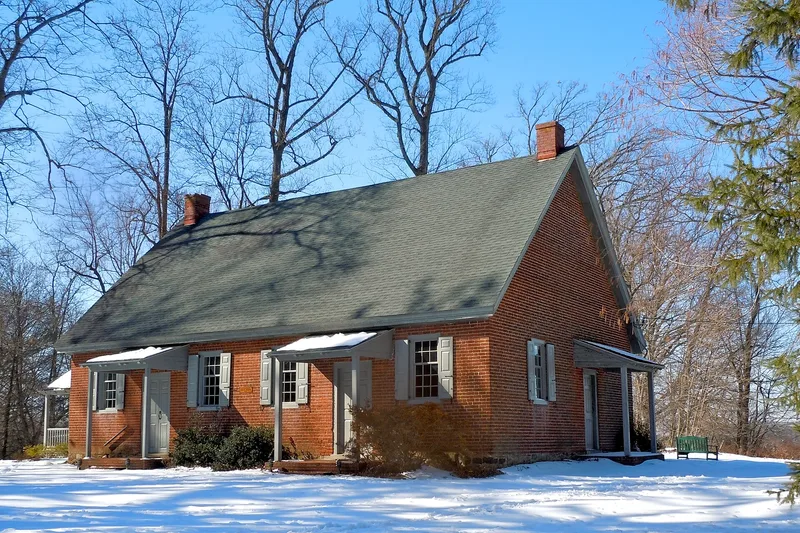
Marlborough Village is a rural Quaker crossroads hamlet in East Marlborough and Newlin Townships, Chester County, Pennsylvania, on 132 acres of rolling farmland. Its core is a Friends Meeting House dated 1801, built on land given by Richard Barnard and Isaac Baily, with a schoolroom added in 1878. Nearby stand a stone schoolmaster's house of 1829, a general store and residence of 1834 built by John Huey, and a row of five mid-19th century houses from 1840 to 1855 with Greek Revival detailing. The village is listed for its association with Quaker education and abolitionism, including the 1852 Marlborough Disturbance that led to the founding of Longwood Progressive Meeting. Its houses have changed little since the 1850s, and it is regarded as a clear picture of a country Quaker village. The farm that supplied the village lots dates to 1726 and was enlarged in 1771.
Significance in brief: The district is argued to reflect the social and educational life of a rural Quaker community, including its abolitionist controversies, and to preserve a largely unchanged mid-19th century village streetscape of vernacular houses. The Meeting House and its schoolroom are presented as the strongest architectural and educational evidence of that community.
Machine-generated summary. This summary was generated by a language model from the official nomination document and has not been reviewed line by line by an editor. It may contain errors. Check the source document before relying on any detail. Source: nomination document (PDF) · National Archives catalog entry. NRHP reference 95000130, listed March 8, 1995. Summary generated October 2026 (model claude-haiku-5-5, prompt v1.1-2026-10-29, confidence medium).
Key facts
| Address | 354--418 Marlborough Rd. and 901 and 940 Marlborough Springs Rd., East Marlborough and Newlin Townships, Kennett Square |
|---|---|
| County | Chester County |
| Listed | March 8, 1995 |
| Reference number | 95000130 |
| Resource type | District |
| Period of significance | 1771-1944 |
| Architectural style | Mid-19th Century/Greek Revival; Bungalow |
| Criteria |
|
| Areas of significance | Social History, Architecture |
| Level of significance | Local |
| Status (as stated in the nomination) | Integrity is described as excellent; the Meeting House remains in use for occasional services and the village has no commercial buildings. |
| Acreage | 132 |
| Coordinates | 39.90060, -75.70282 (NPS GIS) |
What listing means for this property
This is a historic district. Buildings within its boundary are either contributing (they add to the district's significance) or non-contributing. Owners of contributing income-producing buildings can claim the 20% federal rehabilitation tax credit; homeowners should look at state credits. National Register districts impose no design review by themselves; a local historic district ordinance, if one exists, does (the difference explained).
General information, not legal or tax advice. Rules change; confirm with your State Historic Preservation Office or a qualified adviser.
Sources and further reading
- National Park Service, National Register of Historic Places database (snapshot May 2026), reference 95000130.
- Nomination form (PDF, National Archives) — catalog entry
- Wikipedia article (used for cross-checking only; text not reproduced here)
- Wikidata Q6771688
- This listing as JSON
Last updated October 2026. Found an error? See the editorial policy for how to report it.