Trimbleville Historic District

Why it's listed
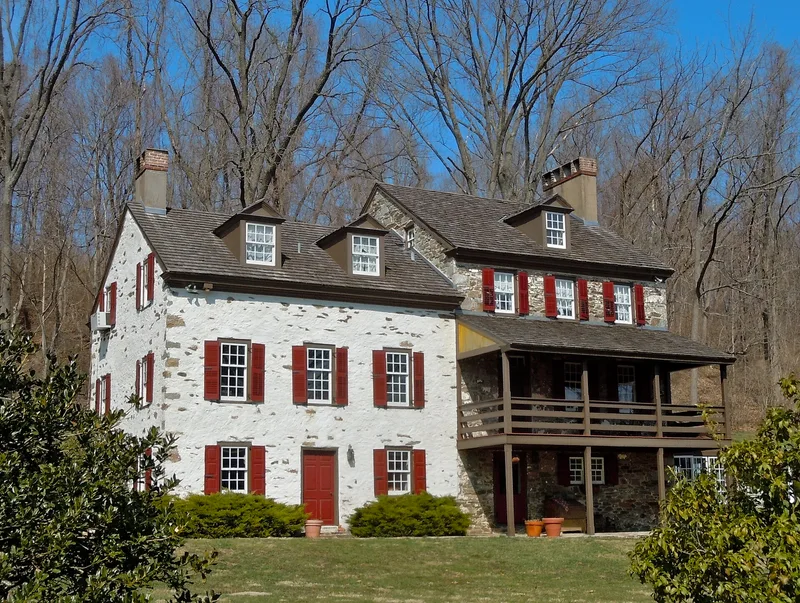
Trimbleville is a hamlet of stone houses, farm complexes and a mill on the West Branch of the Brandywine River in West Bradford and Pocopson townships. Settled by Quaker families, the site began with a grist and saw mill partnership and a fording place, and the Trimble family held the mill for generations. Most of the six principal buildings date from the late 1700s and early 1800s and are built of pointed stone with gable roofs and end chimneys. The hamlet is linked to the Battle of Brandywine, when more than 12,000 British troops crossed at Trimble's Ford on September 11, 1777. It also housed Greenwood Dell Boarding School, run by Jonathan Gause, whose most famous pupil was the writer Bayard Taylor. The surrounding landscape of meadows, hills and river has changed little since the mid-twentieth century, and the district illustrates rural Chester County life across more than two centuries.
Significance in brief: The nomination argues that Trimbleville reflects major themes in Chester County history, including settlement by a Quaker family, a mill seat operating for nearly 200 years, a five-generation family farm, the site of a distinguished private school, and a role in the 1777 Battle of Brandywine. It also describes the hamlet as an outstanding example of a rural Chester County landscape with minimal physical change since the mid-20th century.
Machine-generated summary. This summary was generated by a language model from the official nomination document and has not been reviewed line by line by an editor. It may contain errors. Check the source document before relying on any detail. Source: nomination document (PDF) · National Archives catalog entry. NRHP reference 85002377, listed September 16, 1985. Summary generated October 2026 (model claude-haiku-5-5, prompt v1.1-2026-10-29, confidence medium).
Key facts
| Address | Northbrook, Broad Run, and Camp Linden Rds., Pocopson & West Bradford Twps. |
|---|---|
| County | Chester County |
| Listed | September 16, 1985 |
| Reference number | 85002377 |
| Resource type | District |
| Architectural style | Rural vernacular architecture from the Colonial to Federal periods |
| Areas of significance | Industry, Military, Education, Exploration/Settlement, Architecture |
| Level of significance | Local |
| Status (as stated in the nomination) | The former homestead remains largely intact, and the mill tract is as William Trimble left it. |
| Acreage | 125 |
| Coordinates | 39.93111, -75.68221 (NPS GIS) |
What listing means for this property
This is a historic district. Buildings within its boundary are either contributing (they add to the district's significance) or non-contributing. Owners of contributing income-producing buildings can claim the 20% federal rehabilitation tax credit; homeowners should look at state credits. National Register districts impose no design review by themselves; a local historic district ordinance, if one exists, does (the difference explained).
General information, not legal or tax advice. Rules change; confirm with your State Historic Preservation Office or a qualified adviser.
Sources and further reading
- National Park Service, National Register of Historic Places database (snapshot May 2026), reference 85002377.
- Nomination form (PDF, National Archives) — catalog entry
- Wikipedia article (used for cross-checking only; text not reproduced here)
- Wikidata Q7842151
- This listing as JSON
Last updated October 2026. Found an error? See the editorial policy for how to report it.