Mexican War Streets Historic District (Boundary Increase)

Why it's listed
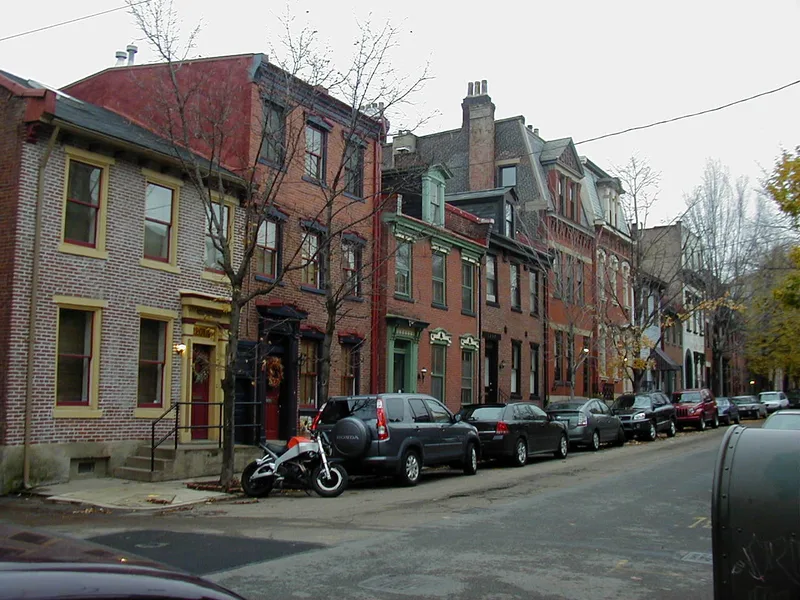
Closely built brick and stone houses on a narrow urban grid north of the Allegheny River mark this residential district on Pittsburgh's North Side. The streets were platted in 1848 in the Buena Vista Extension, named for generals and battles of the Mexican War, and most houses were built between then and about 1930. The boundary increase adds 317 buildings, 303 of them houses or apartment buildings, along Monterey, Armandale, Sherman, Veto and Arch Streets. Their architecture spans Greek Revival, Italianate, Second Empire, Queen Anne and Classical Revival styles. The district is listed for its concentration of these styles, which together show the taste of the community across the nineteenth century. Roughly three-quarters of the buildings are brick or stone, and about 15 percent have mansard roofs. Revitalization efforts beginning in the late 1960s helped preserve the older core.
Significance in brief: The nomination argues the boundary increase areas are significant as a cohesive concentration of residential buildings in a variety of architectural styles that reflect the architectural tastes of the community over the period of significance. The area was built up from 1848 to about 1930 and shares the historic background and visual character of the existing district.
Machine-generated summary. This summary was generated by a language model from the official nomination document and has not been reviewed line by line by an editor. It may contain errors. Check the source document before relying on any detail. Source: nomination document (PDF) · National Archives catalog entry. NRHP reference 08000845, listed September 4, 2008. Summary generated October 2026 (model claude-haiku-5-5, prompt v1.1-2026-10-29, confidence medium).
Key facts
| Address | Roughly bounded by Armandale St., Carrington St., Charlick Way, Reddour St., and W. N. Ave., Pittsburgh |
|---|---|
| County | Allegheny County |
| Listed | September 4, 2008 |
| Reference number | 08000845 |
| Resource type | District |
| Period of significance | 1848 - c. 1930 |
| Architectural style | Greek Revival, Italianate, Second Empire, Romanesque, Queen Anne, Classical Revival |
| Criteria |
|
| Areas of significance | Architecture |
| Level of significance | Local |
| Status (as stated in the nomination) | The boundary increase area includes empty lots along Federal Street where demolition occurred for redevelopment, and the district was subject to renovation and revitalization from the late 1960s. |
| Acreage | 25.7 |
| Within district | Mexican War Streets Historic District, |
| Coordinates | 40.45902, -80.01132 (NPS GIS) |
What listing means for this property
This is a historic district. Buildings within its boundary are either contributing (they add to the district's significance) or non-contributing. Owners of contributing income-producing buildings can claim the 20% federal rehabilitation tax credit; homeowners should look at state credits. National Register districts impose no design review by themselves; a local historic district ordinance, if one exists, does (the difference explained).
General information, not legal or tax advice. Rules change; confirm with your State Historic Preservation Office or a qualified adviser.
Sources and further reading
- National Park Service, National Register of Historic Places database (snapshot May 2026), reference 08000845.
- Nomination form (PDF, National Archives) — catalog entry
- Wikipedia article (used for cross-checking only; text not reproduced here)
- Wikidata Q6825998
- This listing as JSON
Last updated October 2026. Found an error? See the editorial policy for how to report it.