Mexican War Streets Historic District,

Why it's listed
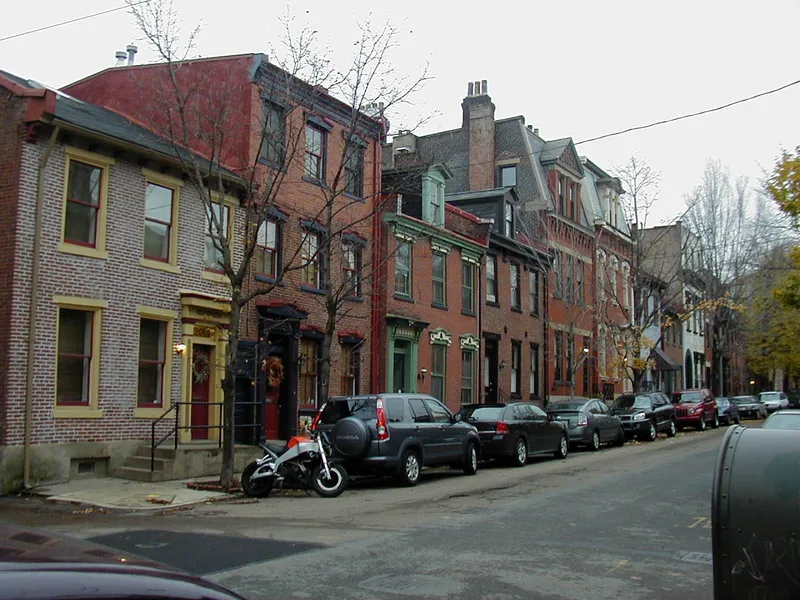
Pittsburgh's North Side holds a 100-acre district of brick and frame houses built mostly between 1846 and the 1860s, when a building boom followed the first construction of 1846-1847. The streets were named for battles of the Mexican War, and the houses range from Greek Revival and Italianate townhouses to a row of three-story Romanesque masonry houses on Buena Vista Street and early 20th century brick houses with corbelled cornices and stone belt courses. Most are two or three bays wide and two to four stories high, and many retain brick sidewalks. The neighborhood declined from the 1920s through the 1940s, and in 1966 the Pittsburgh History & Landmarks Foundation began buying the most deteriorated houses and restoring them. Its work included mixed-income housing, a method the nomination describes as new to preservation groups. Restored interiors kept original marble fireplaces, oak mantels and high ceilings, and the district is cited as an example of restoration combined with urban renewal.
Machine-generated summary. This summary was generated by a language model from the official nomination document and has not been reviewed line by line by an editor. It may contain errors. Check the source document before relying on any detail. Source: nomination document (PDF) · catalog entry. Generated October 2026 (model claude-haiku-5-5, prompt v1.1-2026-10-29).
| Period of significance | 1846-1847 |
|---|---|
| Styles | Greek Revival, Italianate, Second Empire, Richardson Romanesque, and early 20th century retardataire styles |
| Areas of significance | Architecture, Social History |
| Acreage | 27 |
| Boundary source | NPS cultural-resource GIS polygon |
| Full listing page | Mexican War Streets Historic District, (property record) |
What listing means for this property
This is a historic district. Buildings within its boundary are either contributing (they add to the district's significance) or non-contributing. Owners of contributing income-producing buildings can claim the 20% federal rehabilitation tax credit; homeowners should look at state credits. National Register districts impose no design review by themselves; a local historic district ordinance, if one exists, does (the difference explained).
General information, not legal or tax advice. Rules change; confirm with your State Historic Preservation Office or a qualified adviser.