King, George W., Mansion-Etowah
Also known as: Central Christian Church

Why it's listed
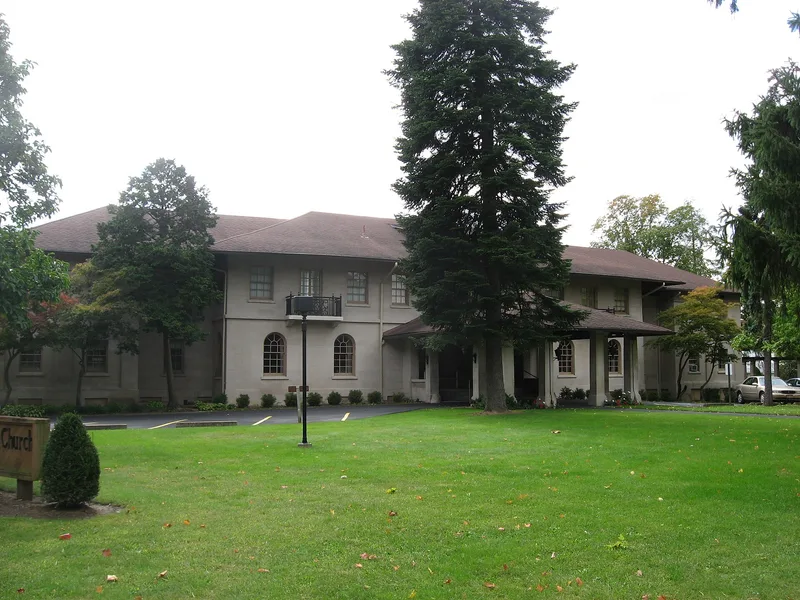
Etowah, the George W. King Mansion, is a two-story stone house on four acres at 429 Mount Vernon Avenue in Marion, Ohio. Philadelphia and New York architect Wilson Eyre designed it in 1905, and it was finished in 1908 with more than 55 rooms. Its Mediterranean-style features include a low hipped roof, semicircular windows, wrought iron balconies, and classical stone columns on the porches. Inside are carved wood paneling and ornate fireplace mantles. King was a founder and, from 1904 to 1917, president of the Marion Steam Shovel Company, whose machines included those used to dig the Panama Canal. The mansion is the only residence tied to him that still stands in Marion. After his death it hosted industrialists and, in 1923, prominent guests attending President Harding's funeral. His descendants lived there until 1948, when Central Christian Church acquired it. A rear sanctuary was added in 1953, and the house continues in church use.
Significance in brief: The nomination argues the house is the only remaining residence in Marion associated with George W. King, a founder and president of the Marion Steam Shovel Company, which made Marion a leading maker of earth-moving equipment. It also reflects the large estate lifestyle of prosperous industrialists in the early twentieth century.
Machine-generated summary. This summary was generated by a language model from the official nomination document and has not been reviewed line by line by an editor. It may contain errors. Check the source document before relying on any detail. Source: nomination document (PDF) · National Archives catalog entry. NRHP reference 95001331, listed November 22, 1995. Summary generated October 2026 (model claude-sonnet-5-5, prompt v1.0-2026-10-29, confidence high).
Key facts
| Address | 429 Mount Vernon Ave., Marion |
|---|---|
| County | Marion County |
| Listed | November 22, 1995 |
| Reference number | 95001331 |
| Resource type | Building |
| Period of significance | 1908-1930 |
| Architect / builder | Wilson Eyre, New York City |
| Architectural style | 20th Century Revival/Mediterranean |
| Criteria |
|
| Areas of significance | Industry |
| Level of significance | Local |
| Status (as stated in the nomination) | Used by Central Christian Church since 1948; the living rooms serve as classrooms and meeting spaces, and a rear sanctuary addition was built in 1953. |
| Acreage | 0.9 |
| Coordinates | 40.58506, -83.12039 (NPS GIS) |
What listing means for this property
National Register listing is honorary for a privately owned home: it does not by itself restrict what an owner may do with their own money, and it does not require public access. Restrictions come from local landmark or historic-district ordinances, which are separate (how they differ).
Owner-occupied houses are not eligible for the 20% federal rehabilitation tax credit, which applies to income-producing buildings, but many states offer credits for homeowners. Listing also opens the door to preservation easements and to buying a plaque. Start with what listing means for homeowners, renovating a listed house and selling one.
General information, not legal or tax advice. Rules change; confirm with your State Historic Preservation Office or a qualified adviser.
Sources and further reading
- National Park Service, National Register of Historic Places database (snapshot May 2026), reference 95001331.
- Nomination form (PDF, National Archives) — catalog entry
- Wikidata Q138569865
- This listing as JSON
Last updated October 2026. Found an error? See the editorial policy for how to report it.