Arlington Avenue District
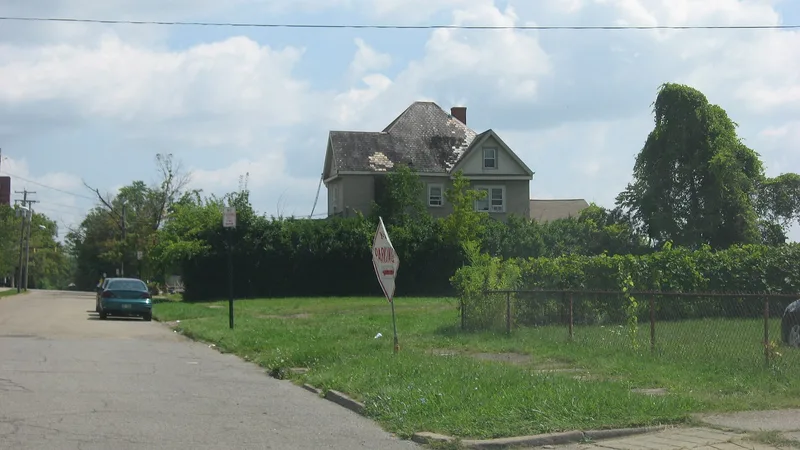

Why it's listed
Arlington Avenue District covers a single block of Arlington Avenue on the near west side of Youngstown, Ohio, and contains twenty-nine frame dwellings built mainly in the 1890s. The street was subdivided in 1890 and filled with houses during a period of growth driven by iron and then steel manufacturing, when the city's population rose from about 8,000 in 1870 to over 33,000 in 1890. The houses follow Queen Anne-related styles, with large projecting gables, turned porch posts and spindles, round and polygonal towers, and varied siding. No two are exactly alike, and nine were built as double houses. Number 359 has diagonal square bays that make it look octagonal, and number 312 has a veranda with pointed, round and flat arches. The district was recognized as a representative midwestern middle-class street of the 1890s and as one of the best surviving examples of its period in this part of Youngstown, though the individual houses are not highly distinguished.
Significance in brief: The district is significant as a representative group of Queen Anne-related houses typical of a middle-class midwestern street of the 1890s. The residents were not notable, but the houses show good design and great variety. On Youngstown's near west side it is described as one of the best remaining survivals of its period.
Machine-generated summary. This summary was generated by a language model from the official nomination document and has not been reviewed line by line by an editor. It may contain errors. Check the source document before relying on any detail. Source: nomination document (PDF) · National Archives catalog entry. NRHP reference 74001565, listed August 13, 1974. Summary generated October 2026 (model claude-sonnet-5-5, prompt v1.0-2026-10-29, confidence high).
Key facts
| Address | 304-373 Arlington Ave., Youngstown |
|---|---|
| County | Mahoning County |
| Listed | August 13, 1974 |
| Reference number | 74001565 |
| Resource type | District |
| Period of significance | 1890-1900 |
| Architectural style | Queen Anne-related styles |
| Areas of significance | Architecture, Social History |
| Level of significance | Local |
| Status (as stated in the nomination) | Condition is described as good to fair, with many houses poorly maintained but few seriously altered externally. The area was tentatively threatened by total-clearance urban renewal planning, and the map notes some demolished houses. |
| Acreage | 4 |
| Coordinates | 41.10777, -80.65287 (NPS GIS) |
What listing means for this property
This is a historic district. Buildings within its boundary are either contributing (they add to the district's significance) or non-contributing. Owners of contributing income-producing buildings can claim the 20% federal rehabilitation tax credit; homeowners should look at state credits. National Register districts impose no design review by themselves; a local historic district ordinance, if one exists, does (the difference explained).
General information, not legal or tax advice. Rules change; confirm with your State Historic Preservation Office or a qualified adviser.
Sources and further reading
- National Park Service, National Register of Historic Places database (snapshot May 2026), reference 74001565.
- Nomination form (PDF, National Archives) — catalog entry
- Wikipedia article (used for cross-checking only; text not reproduced here)
- Wikidata Q4792280
- This listing as JSON
Last updated October 2026. Found an error? See the editorial policy for how to report it.