Alliance Clay Product Company

Why it's listed
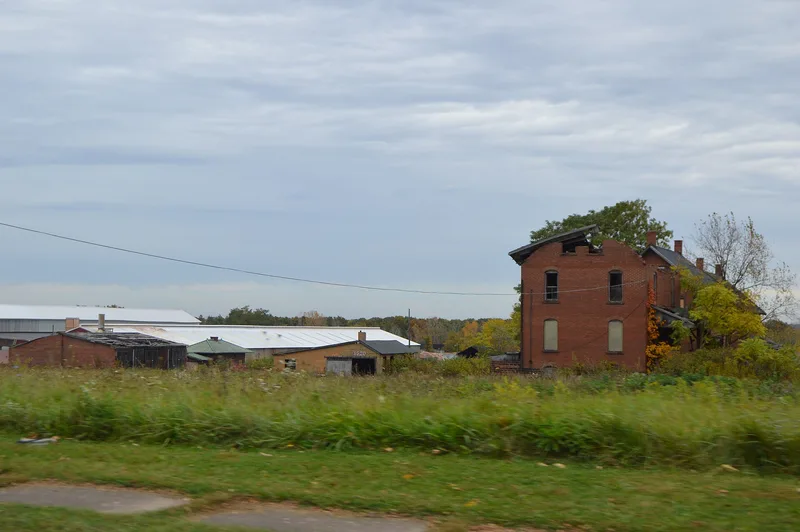
Brick manufacturing shaped this 71-acre complex on South Mahoning Avenue, just outside Alliance, Ohio. Founded in 1906 by James B. Wilcox, the Alliance Clay Product Company grew through three plants, built in 1906, 1914 and 1924, each with a similar layout of clay-handling, drying tunnels, kilns and storage. Eight beehive kilns remain at Plant No. 1, and five brick company houses from the 1920s still stand. By 1924 capacity reached 275,000 bricks daily. Paving bricks, especially the Speedway pavers, were the leading product as Ohio's roads expanded, and the firm also supplied face brick for churches, schools and hospitals, and for the Holland Tunnel and the Port Authority Bus Terminal in New York. The company employed about 340 workers by 1950 and closed in 1970 under the third generation of Wilcox leadership. Part of the property is now used for pallet making. The complex is valued as a representative regional industrial site.
Significance in brief: The company was an important brick manufacturer from 1906 to 1970 in an area long regarded as the brick-producing capital of the world. It succeeded for over sixty years in a highly competitive industry, and its surviving buildings represent twentieth-century clay product industrial architecture.
Machine-generated summary. This summary was generated by a language model from the official nomination document and has not been reviewed line by line by an editor. It may contain errors. Check the source document before relying on any detail. Source: nomination document (PDF) · National Archives catalog entry. NRHP reference 78002130, listed December 8, 1978. Summary generated October 2026 (model claude-sonnet-5-5, prompt v1.0-2026-10-29, confidence medium).
Key facts
| Address | 1500 S. Mahoning Ave., Alliance |
|---|---|
| County | Mahoning County |
| Listed | December 8, 1978 |
| Reference number | 78002130 |
| Resource type | District |
| Period of significance | 1900- |
| Areas of significance | Industry |
| Level of significance | Local |
| Status (as stated in the nomination) | Plant No. 2 storage shed is enclosed and used to make and repair pallets; the company closed in 1970; the nomination form marks the property as occupied and in commercial use. Plant No. 1 frame building has a deteriorated roof, and the beehive kilns are in good condition. |
| Acreage | 71.3 |
| Coordinates | 40.90377, -81.08245 (NPS GIS) |
What listing means for this property
This is a historic district. Buildings within its boundary are either contributing (they add to the district's significance) or non-contributing. Owners of contributing income-producing buildings can claim the 20% federal rehabilitation tax credit; homeowners should look at state credits. National Register districts impose no design review by themselves; a local historic district ordinance, if one exists, does (the difference explained).
General information, not legal or tax advice. Rules change; confirm with your State Historic Preservation Office or a qualified adviser.
Sources and further reading
- National Park Service, National Register of Historic Places database (snapshot May 2026), reference 78002130.
- Nomination form (PDF, National Archives) — catalog entry
- Wikipedia article (used for cross-checking only; text not reproduced here)
- Wikidata Q4732292
- This listing as JSON
Last updated October 2026. Found an error? See the editorial policy for how to report it.