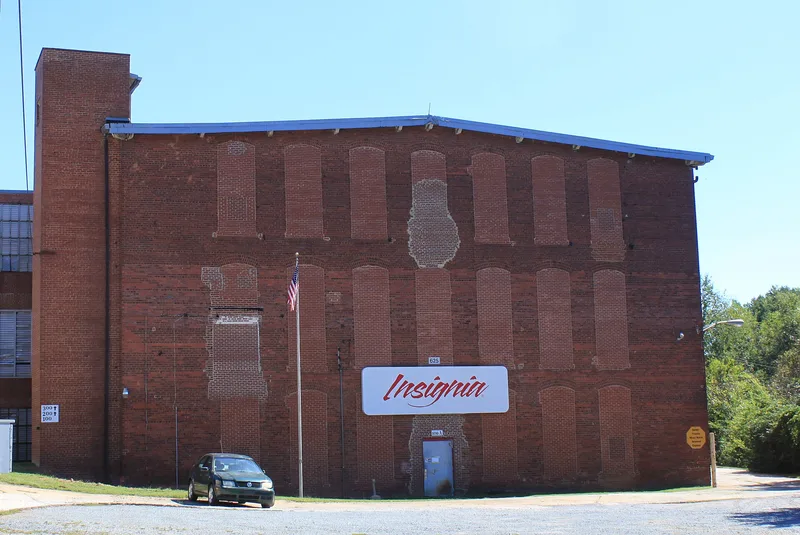
Coleman-Franklin-Cannon Mill
Also known as: Coleman Manufacturing Company; Franklin Cotton Mills; Cannon Mills Plant No. 9
Coleman-Franklin-Cannon Mill is a building in Concord, Cabarrus County, North Carolina, listed on the National Register of Historic Places on April 16, 2015 (reference number 15000161). The National Park Service records its significance in Architecture, Black and Industry at the local level.
Facts from the NPS National Register database (). Last updated . Sources for each fact.

Approximate location: the National Park Service places this pin arbitrarily within the property, not at a surveyed point (stated accuracy ±12 m).
Why it's listed
No readable nomination text is available for this listing yet (nominations after 2012 are held by the National Park Service rather than the National Archives). The facts below come from the National Park Service database.
Key facts
| Official database NPS National Register database, ref. 15000161 , checked | |
|---|---|
| Address | 625 Main St., SW., Concord |
| County | Cabarrus County |
| Listed | April 16, 2015 |
| Reference number | 15000161 |
| Resource type | Building |
| Areas of significance | Architecture, Black, Industry |
| Level of significance | Local |
| National Historic Landmark | No |
| Acreage | 6.6 |
| Official dataset NPS cultural-resource GIS (NRHP locations) | |
| Coordinates | 35.38695, -80.58896 |
What listing means for this property
For an income-producing building, listing (individually or as a contributing building in a district) is the gateway to the 20% federal rehabilitation tax credit on qualified rehabilitation costs, often stackable with state credits. Work claiming the credit must follow the Secretary of the Interior's Standards and be approved in advance.
Listing does not restrict a private owner acting without federal money or permits; where federal funding or licensing is involved, Section 106 review applies.
General information, not legal or tax advice. Rules change; confirm with your State Historic Preservation Office or a qualified adviser.
Sources and further reading
- National Park Service, National Register of Historic Places database (snapshot May 2026), reference 15000161.
- Wikipedia article (used for cross-checking only; text not reproduced here)
- Wikidata Q24436341
- This listing as JSON
Last updated November 2026. Found an error? See the editorial policy for how to report it.