Thomas Chapel A.M.E. Zion Church

Why it's listed
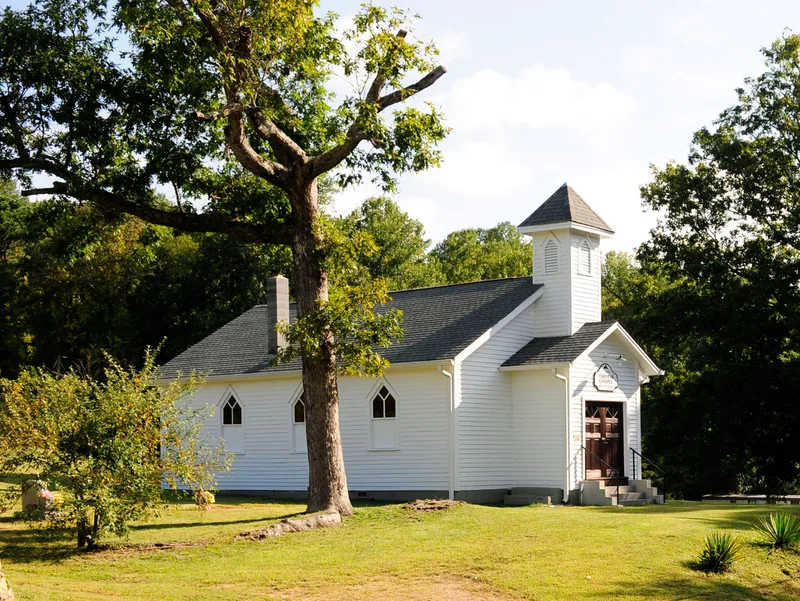
Built in 1922 on a hill west of downtown Black Mountain, Buncombe County, North Carolina, Thomas Chapel A.M.E. Zion Church is a frame, one-story, front-gable building roughly thirty-six by fifty feet, with weatherboard siding, an asphalt roof and a tall pyramidal-roofed bell tower over the south entry vestibule. Its pointed-arch windows, interior beaded board ceiling and low curving wood divider around the pulpit reflect a Gothic Revival influence. Church records indicate the builders were Ervin Kennedy, Thomas Lytle and Ed Stepp. The congregation traces its founding to families descended from enslaved people and free Black residents, and the land was deeded in trust for the church in 1892. The adjoining cemetery holds graves of founding families, including the Stepp, Lytle, Burnette and Daugherty families. The church is regarded as an intact example of its type in the region, and it was the focus of religious and social life for the Black community in the town during the early twentieth century.
Significance in brief: The nomination argues the church is locally significant under Criterion C as an intact example of a Gothic Revival-influenced church. It also places the building within the religious and social life of the Black community in Black Mountain, built by descendants of freed slaves. The associated cemetery is treated as meeting Criteria Consideration A because of the building's architectural significance.
Machine-generated summary. This summary was generated by a language model from the official nomination document and has not been reviewed line by line by an editor. It may contain errors. Check the source document before relying on any detail. Source: nomination document (PDF) · National Archives catalog entry. NRHP reference 09000262, listed April 30, 2009. Summary generated October 2026 (model claude-haiku-5-5, prompt v1.1-2026-10-29, confidence medium).
Key facts
| Address | 300 Cragmont Rd., Black Mountain |
|---|---|
| County | Buncombe County |
| Listed | April 30, 2009 |
| Reference number | 09000262 |
| Resource type | Building |
| Period of significance | 1922 |
| Architect / builder | Kennedy, Ervin; Lytle, Thomas; Stepp, Ed |
| Architectural style | Gothic Revival |
| Criteria |
|
| Areas of significance | Architecture |
| Level of significance | Local |
| Acreage | 1.3 |
| Coordinates | 35.61643, -82.33962 (NPS GIS) |
What listing means for this property
Religious properties are listed for their architectural or historical significance, not their religious use. Listing is honorary and does not restrict the congregation's use of the building. The federal rehabilitation credit is generally unavailable unless part of the building is income-producing; some state programmes and preservation grants do cover religious buildings. Federal funding or permits trigger Section 106 review.
General information, not legal or tax advice. Rules change; confirm with your State Historic Preservation Office or a qualified adviser.
Sources and further reading
- National Park Service, National Register of Historic Places database (snapshot May 2026), reference 09000262.
- Nomination form (PDF, National Archives) — catalog entry
- Wikipedia article (used for cross-checking only; text not reproduced here)
- Wikidata Q18158765
- This listing as JSON
Last updated October 2026. Found an error? See the editorial policy for how to report it.