Foster Memorial A.M.E. Zion Church

Why it's listed
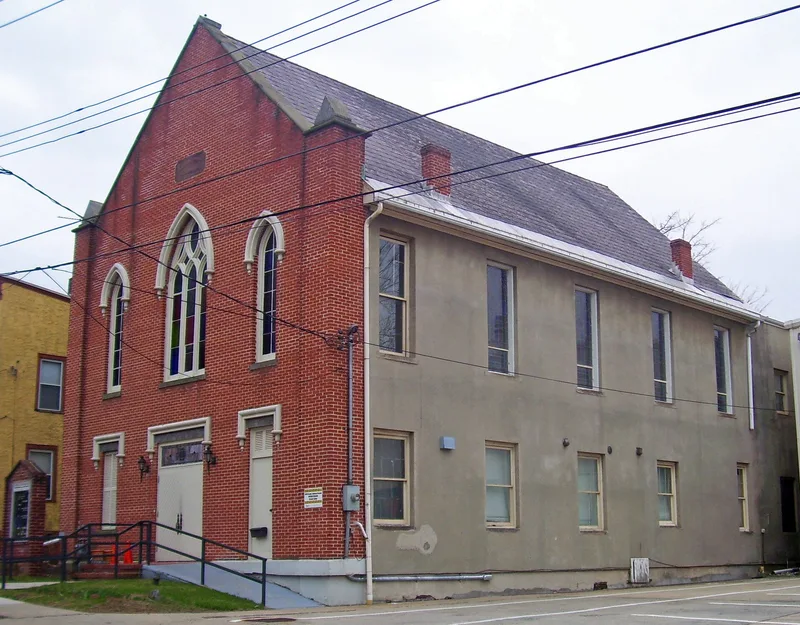
Foster Memorial African Methodist Episcopal Zion Church sits on Wildey Street in Tarrytown, New York, a short distance from the Hudson River. Completed in 1865 and built by James Bird, a local builder-architect, the two-story brick church has a fieldstone foundation, a gable roof and three lancet windows on its main facade. Later work includes a coating of artificial stone veneer, a simulated slate roof, stained glass and a 1960s cinder block addition, though some early interior features survive. The congregation was organized in 1860 by Henry and Amanda Foster, Reverend Jacob Thomas and Hiram Jimerson, and the church was built with funds raised in the community. It is considered the oldest black church in continuous use in Westchester County. Its members took part in underground railway activity, and the church long served as a center of social and religious life for Black residents of Tarrytown. Amanda Foster, honored as "Mother of the Church," is closely tied to its founding.
Significance in brief: It is described as the oldest black church in continuous use in Westchester County and possibly one of the oldest in New York State. Built by free blacks, its congregation took part in the underground railway and served as a social link for Black residents settling in Tarrytown. It is also associated with Amanda Foster, called "Mother of the Church."
Machine-generated summary. This summary was generated by a language model from the official nomination document and has not been reviewed line by line by an editor. It may contain errors. Check the source document before relying on any detail. Source: nomination document (PDF) · National Archives catalog entry. NRHP reference 82003414, listed June 3, 1982. Summary generated October 2026 (model claude-sonnet-5-5, prompt v1.0-2026-10-29, confidence high).
Key facts
| Address | 90 Wildey St., Tarrytown |
|---|---|
| County | Westchester County |
| Listed | June 3, 1982 |
| Reference number | 82003414 |
| Resource type | Building |
| Period of significance | 1865 |
| Architect / builder | James Bird |
| Areas of significance | Black, Religion |
| Level of significance | Local |
| Status (as stated in the nomination) | Occupied and in use by its congregation as a religious building; the form notes many twentieth-century alterations, and condition is marked fair. |
| Acreage | 0.9 |
| Coordinates | 41.08001, -73.86188 (NPS GIS) |
What listing means for this property
Religious properties are listed for their architectural or historical significance, not their religious use. Listing is honorary and does not restrict the congregation's use of the building. The federal rehabilitation credit is generally unavailable unless part of the building is income-producing; some state programmes and preservation grants do cover religious buildings. Federal funding or permits trigger Section 106 review.
General information, not legal or tax advice. Rules change; confirm with your State Historic Preservation Office or a qualified adviser.
Sources and further reading
- National Park Service, National Register of Historic Places database (snapshot May 2026), reference 82003414.
- Nomination form (PDF, National Archives) — catalog entry
- Wikipedia article (used for cross-checking only; text not reproduced here)
- Wikidata Q5473725
- This listing as JSON
Last updated October 2026. Found an error? See the editorial policy for how to report it.