Mexico Village Historic District

Why it's listed
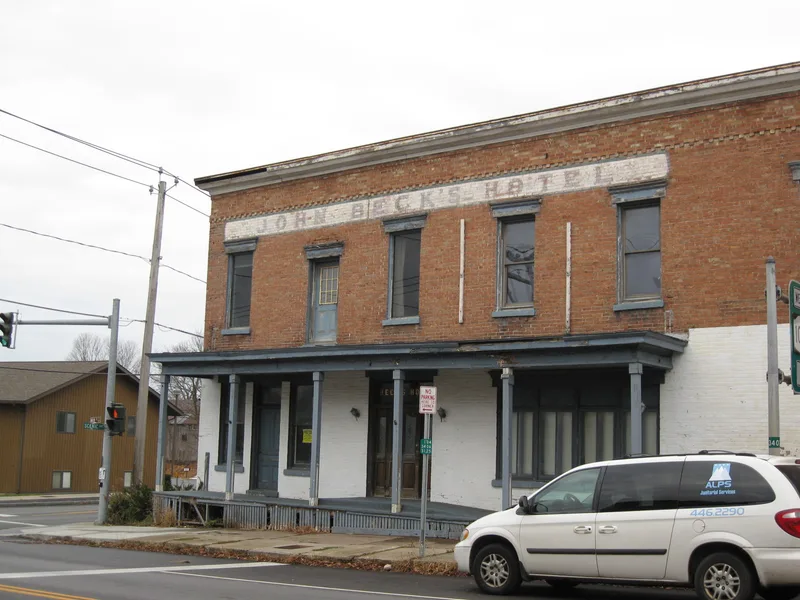
Mexico Village Historic District covers about 18 acres in the center of the village of Mexico, Oswego County, New York, along parts of Main, Jefferson, Church and Spring Streets. It includes 80 contributing resources: 33 houses, 23 commercial buildings, 17 outbuildings and 3 structures, dating from 1829 to 1926. Main Street holds rows of attached brick commercial blocks, including Beck's Hotel, built in 1897. Four churches stand on Church Street, and the residences range from late Federal and Greek Revival houses to Italianate, Queen Anne and Colonial Revival examples, many with carriage houses. The district reflects Mexico's growth as a crossroads and market community with good mill sites. Its population peaked around the 1870s and then changed little, so little new construction followed and the historic character survives. The boundaries enclose the most intact streetscapes and leave out areas altered by new construction.
Significance in brief: The district reflects the prosperity of Mexico as an important rural crossroads and market community in the nineteenth and early twentieth centuries (Criterion A, commerce). It also contains well-preserved, representative examples of New York vernacular building traditions and distinctive period styles (Criterion C, architecture). The district retains a high degree of integrity.
Machine-generated summary. This summary was generated by a language model from the official nomination document and has not been reviewed line by line by an editor. It may contain errors. Check the source document before relying on any detail. Source: nomination document (PDF) · National Archives catalog entry. NRHP reference 91000528, listed June 20, 1991. Summary generated October 2026 (model claude-sonnet-5-5, prompt v1.0-2026-10-29, confidence high).
Key facts
| Address | Main, Jefferson, Church and Spring Sts., Mexico |
|---|---|
| County | Oswego County |
| Listed | June 20, 1991 |
| Reference number | 91000528 |
| Resource type | District |
| Period of significance | 1829-1926 |
| Architect / builder | Various |
| Architectural style | Greek Revival, Italianate |
| Criteria |
|
| Areas of significance | Commerce, Architecture |
| Level of significance | Local |
| Status (as stated in the nomination) | Residences, commercial buildings and churches remain in use; many have siding changes, replacement windows or altered storefronts, but none has lost its historic appearance. A former bank is used as village offices and a former office as a museum. |
| Acreage | 18 |
| Coordinates | 43.45857, -76.22971 (NPS GIS) |
What listing means for this property
This is a historic district. Buildings within its boundary are either contributing (they add to the district's significance) or non-contributing. Owners of contributing income-producing buildings can claim the 20% federal rehabilitation tax credit; homeowners should look at state credits. National Register districts impose no design review by themselves; a local historic district ordinance, if one exists, does (the difference explained).
General information, not legal or tax advice. Rules change; confirm with your State Historic Preservation Office or a qualified adviser.
Sources and further reading
- National Park Service, National Register of Historic Places database (snapshot May 2026), reference 91000528.
- Nomination form (PDF, National Archives) — catalog entry
- Wikipedia article (used for cross-checking only; text not reproduced here)
- Wikidata Q6826233
- This listing as JSON
Last updated October 2026. Found an error? See the editorial policy for how to report it.