Substation 7

Why it's listed
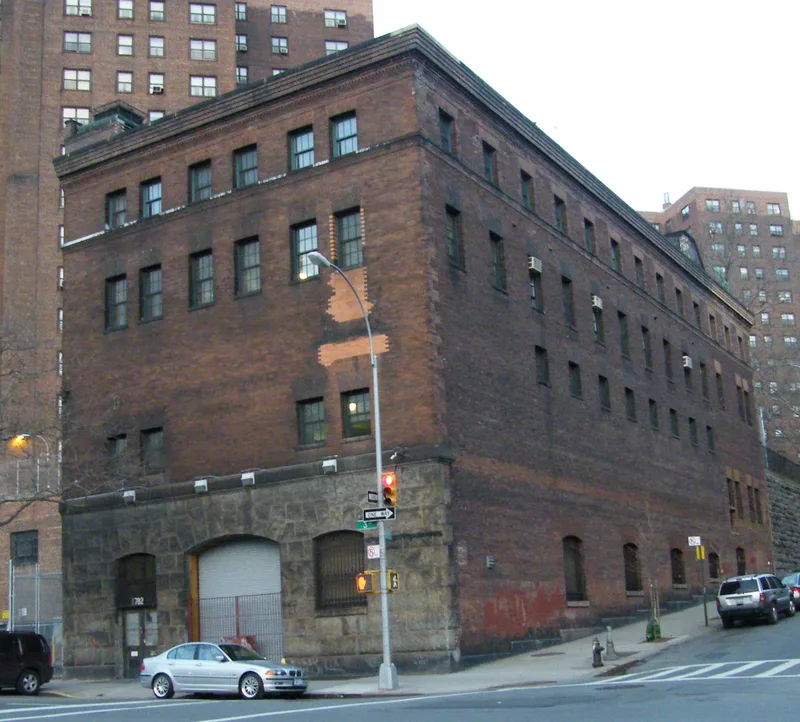
Substation 7 is a four-story brick and stone building at Third Avenue and East 99th Street in East Harlem, Manhattan. Built in 1902 by the Manhattan Elevated Railway Company, it was one of seven substations the company built in Manhattan between 1899 and 1903. Its job was to convert high-voltage alternating current from a central powerhouse into direct current for the trains' third rails. The building has a rough-cut granite base, red-orange brick upper stories, sandstone sills, quoins and an elaborate terra cotta cornice. Its classical facade masks its industrial function. It first powered part of the Third Avenue Elevated and, after 1918, also supplied the Lexington Avenue Subway. Many windows have since been bricked up or fitted with louvers, and the portal now has a metal roll-down gate. The substation was decommissioned in 1985 and its machinery removed in 1992. It survives as one of the oldest substations in the system, standing among much later apartment towers.
Significance in brief: It is one of the oldest surviving substations in the New York subway system and is significant for transportation and for community planning and development. It is also significant for engineering and for its largely intact classical facade, which masks the building's function. It powered part of the Third Avenue Elevated and, after 1918, the Lexington Avenue Subway.
Machine-generated summary. This summary was generated by a language model from the official nomination document and has not been reviewed line by line by an editor. It may contain errors. Check the source document before relying on any detail. Source: nomination document (PDF) · National Archives catalog entry. NRHP reference 06000027, listed February 9, 2006. Summary generated October 2026 (model claude-sonnet-5-5, prompt v1.0-2026-10-29, confidence high).
Key facts
| Address | 1782 Third Avenue, New York |
|---|---|
| County | Manhattan |
| Listed | February 9, 2006 |
| Reference number | 06000027 |
| Resource type | Structure |
| Period of significance | 1902 |
| Architect / builder | Manhattan Elevated Railway Company |
| Architectural style | Late 19th & 20th Century Revivals/Beaux-Arts |
| Criteria |
|
| Areas of significance | Transportation, Architecture, Engineering, Community Planning and Development |
| Level of significance | Local |
| Status (as stated in the nomination) | Decommissioned in 1985; original machinery including three rotary converters removed in 1992; now used for storage, offices and crew quarters of the Transit System. |
| Acreage | 0.9 |
| Coordinates | 40.78717, -73.94832 (NPS GIS) |
What listing means for this property
National Register listing is honorary: it recognises significance and does not restrict what a private owner may do without federal money or permits. It unlocks the 20% federal rehabilitation tax credit for income-producing buildings, state credits in many states, and Section 106 review when federal agencies are involved. See what listing means in practice.
General information, not legal or tax advice. Rules change; confirm with your State Historic Preservation Office or a qualified adviser.
Sources and further reading
- National Park Service, National Register of Historic Places database (snapshot May 2026), reference 06000027.
- Nomination form (PDF, National Archives) — catalog entry
- Wikipedia article (used for cross-checking only; text not reproduced here)
- Wikidata Q16900829
- This listing as JSON
Last updated October 2026. Found an error? See the editorial policy for how to report it.