Duck Mill

Why it's listed
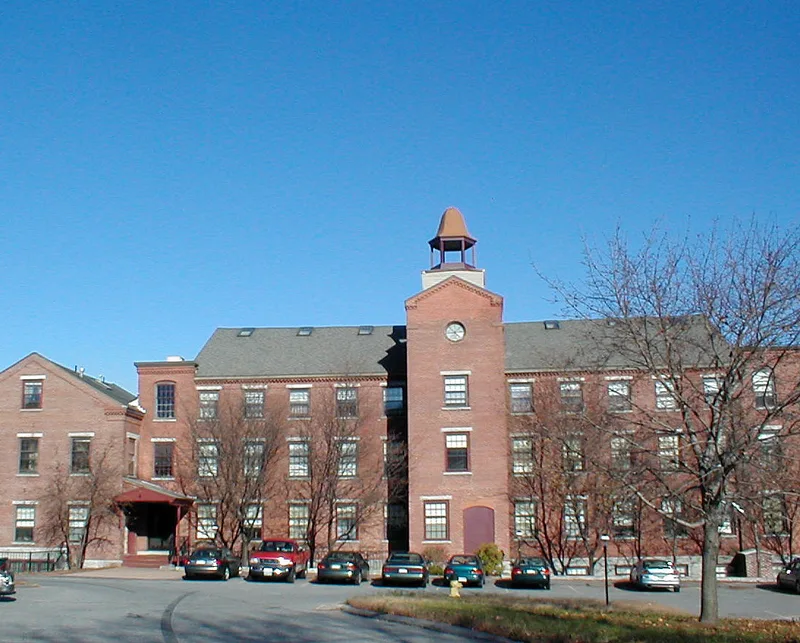
Duck Mill is a brick textile complex on Duck Mill Road in South Fitchburg, Massachusetts. George Blackburn built the three-story main mill in 1844 on the site of an earlier cotton factory that had burned. Over the next eight decades, a machine shop, picker house, boiler and engine rooms, cloth room, weave shed and other additions were attached, giving the complex ten connected parts. Power came first from the Nashua River through a raceway, later supplemented by steam and electricity. The mill was the only one in Fitchburg making heavy cotton duck, supplying belting cloth to local paper makers, canvas goods during the Civil War, and sail cloth for schooners. It closed in 1947 after more than a century of cotton manufacturing, then housed a bag-filling machine company, apron makers and plastics firms. It was listed for its link to Fitchburg's cotton industry and for its architecture, which records how a mill evolved. Conversion to apartments began in 1983.
Significance in brief: The nomination ties the mill to cotton manufacturing, Fitchburg's leading nineteenth-century industry, and to Blackburn, a prominent local industrialist. The 1844 building is a well-preserved example of New England mill construction from 1820 to 1850. Its many additions document how a mill changed over time. It was also the only Fitchburg mill making heavy canvas duck.
Machine-generated summary. This summary was generated by a language model from the official nomination document and has not been reviewed line by line by an editor. It may contain errors. Check the source document before relying on any detail. Source: nomination document (PDF) · National Archives catalog entry. NRHP reference 85000982, listed May 9, 1985. Summary generated October 2026 (model claude-sonnet-5-5, prompt v1.0-2026-10-29, confidence high).
Key facts
| Address | 60 Duck Mill Rd., Fitchburg |
|---|---|
| County | Worcester County |
| Listed | May 9, 1985 |
| Reference number | 85000982 |
| Resource type | Building |
| Period of significance | 1800-1899, 1900- (specific dates 1844, 1853, 1878, 1893, 1900, 1907, 1910, 1926) |
| Architectural style | Typical New England textile factory (1820-1850 type) |
| Criteria |
|
| Areas of significance | Industry, Commerce, Architecture |
| Level of significance | Local |
| Status (as stated in the nomination) | Work in progress; the mill was being converted to apartment units following a 1983 purchase. |
| Acreage | 2.5 |
| Within district | Dudley Hill Historic District |
| Coordinates | 42.04570, -71.92952 (NPS GIS) |
What listing means for this property
For an income-producing building, listing (individually or as a contributing building in a district) is the gateway to the 20% federal rehabilitation tax credit on qualified rehabilitation costs, often stackable with state credits. Work claiming the credit must follow the Secretary of the Interior's Standards and be approved in advance.
Listing does not restrict a private owner acting without federal money or permits; where federal funding or licensing is involved, Section 106 review applies.
General information, not legal or tax advice. Rules change; confirm with your State Historic Preservation Office or a qualified adviser.
Sources and further reading
- National Park Service, National Register of Historic Places database (snapshot May 2026), reference 85000982.
- Nomination form (PDF, National Archives) — catalog entry
- Wikipedia article (used for cross-checking only; text not reproduced here)
- Wikidata Q5311462
- This listing as JSON
Last updated October 2026. Found an error? See the editorial policy for how to report it.