African Meetinghouse
Also known as: First African Baptist Church; African Baptist Church Society
African Meetinghouse is a building in Boston, Suffolk County, Massachusetts, listed on the National Register of Historic Places on October 7, 1971 (reference number 71000087). It is also a National Historic Landmark, designated May 30, 1974. The National Park Service records its significance in Black, Architecture, Religion and Social History at the national level.
Facts from the NPS National Register database (); nomination summary October 2026. Last updated . Sources for each fact.

The pin is a point inside the NPS boundary polygon, not a surveyed location.
Why it's listed
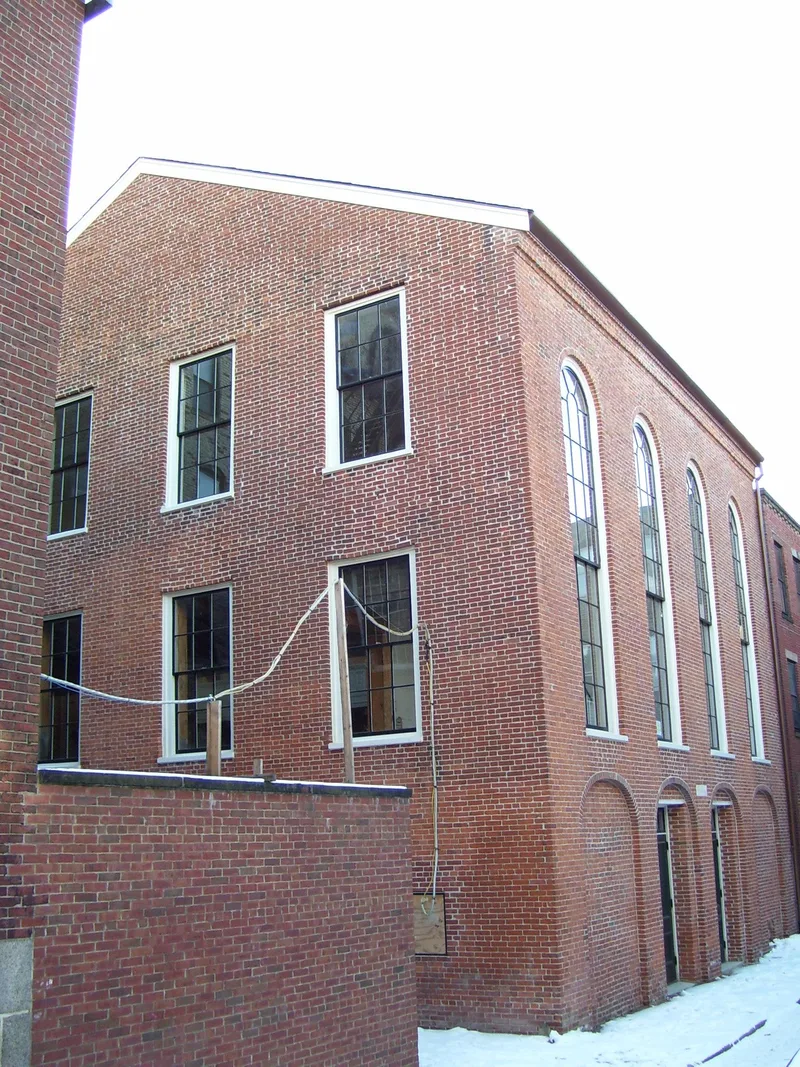
Built in 1806 entirely by black labor, this red brick meeting house on Smith Court, on the north slope of Beacon Hill, measures 40 by 48 feet and follows the Federal style. Its street facade has four elliptical arches, with entrance doors in the two center arches, topped by tall arched windows. Inside, a double stairway curves up to the gallery, and the original pews and raised altar platform survive. The building housed the First African Baptist Church, organized in 1805 by Reverend Thomas Paul and about twenty others as Boston's first black church. It served as the main gathering place for the city's black community and later hosted the founding of the New England Anti-Slavery Society under William Lloyd Garrison in 1832. It is considered the oldest surviving Afro-American church building in the country. A Jewish congregation used it after about 1900. The Museum of Afro American History bought it in 1972 and is restoring it following a 1973 fire.
Significance in brief: It is described as the oldest surviving Afro-American church building in the United States. It housed Boston's first black church, founded in 1805 under Reverend Thomas Paul, and became the focal point of the city's black community. It was also where William Lloyd Garrison organized the New England Anti-Slavery Society in 1832.
Machine-generated summary. This summary was generated by a language model from the official nomination document and has not been reviewed line by line by an editor. It may contain errors. Check the source document before relying on any detail. Source: nomination document (PDF) · National Archives catalog entry. NRHP reference 71000087, listed October 7, 1971. Summary generated October 2026 (model claude-sonnet-5-5, prompt v1.0-2026-10-29, confidence high).
Key facts
| Official database NPS National Register database, ref. 71000087 , checked | |
|---|---|
| Address | 8 Smith St., Boston |
| County | Suffolk County |
| Listed | October 7, 1971 |
| Reference number | 71000087 |
| Resource type | Building |
| Areas of significance | Black, Architecture, Religion, Social History |
| Level of significance | National |
| National Historic Landmark | Yes, designated May 30, 1974 |
| Acreage | 0.5 |
| Official document, machine-extracted Nomination form (National Archives) , checked | |
| Period of significance | 1806 - c. 1900 |
| Architect / builder | Built by black laborers and craftsmen (no individual architect named) |
| Architectural style | Federal |
| Status (as stated in the nomination) | Owned by the Museum of Afro American History, which bought it in 1972 and is restoring it after a February 1973 fire damaged the roof and part of the interior; it is to become a museum and library. Condition listed as fair. |
| Official dataset NPS cultural-resource GIS (NRHP locations) | |
| Coordinates | 42.35996, -71.06547 |
| Computed Computed from NPS GIS district boundaries | |
| Within district | Beacon Hill Historic District |
What listing means for this property
Religious properties are listed for their architectural or historical significance, not their religious use. Listing is honorary and does not restrict the congregation's use of the building. The federal rehabilitation credit is generally unavailable unless part of the building is income-producing; some state programmes and preservation grants do cover religious buildings. Federal funding or permits trigger Section 106 review.
General information, not legal or tax advice. Rules change; confirm with your State Historic Preservation Office or a qualified adviser.
Questions about African Meetinghouse
When was African Meetinghouse added to the National Register of Historic Places?
African Meetinghouse was listed on October 7, 1971. Its National Register reference number is 71000087.
Is African Meetinghouse a National Historic Landmark?
Yes. African Meetinghouse is a National Historic Landmark, designated May 30, 1974, in addition to being listed on the National Register.
Where is African Meetinghouse?
8 Smith St., Boston, Suffolk County, Massachusetts; coordinates 42.35996, -71.06547.
Why is African Meetinghouse historically significant?
According to a machine-generated summary of its nomination form: It is described as the oldest surviving Afro-American church building in the United States. It housed Boston's first black church, founded in 1805 under Reverend Thomas Paul, and became the focal point of the city's black community. It was also where William Lloyd Garrison organized the New England Anti-Slavery Society in 1832. Check the nomination document before relying on any detail.
Who designed or built African Meetinghouse?
The nomination form names Built by black laborers and craftsmen (no individual architect named) as architect or builder (extracted by machine from the nomination; check the source document).
Is African Meetinghouse in a historic district?
Yes. Its location falls within the Beacon Hill Historic District, itself listed on the National Register. (Computed from National Park Service boundary data; the district nomination's own list of contributing resources may differ.)
Where can I read the original nomination for African Meetinghouse?
The nomination form is a public record held by the National Archives: nomination document (PDF).
Sources and further reading
- National Park Service, National Register of Historic Places database (snapshot May 2026), reference 71000087.
- Nomination form (PDF, National Archives) — catalog entry
- Wikipedia article (used for cross-checking only; text not reproduced here)
- Wikidata Q3329655
- This listing as JSON
Last updated November 2026. Found an error? See the editorial policy for how to report it.