Wilmington Centre Village Historic District

Why it's listed
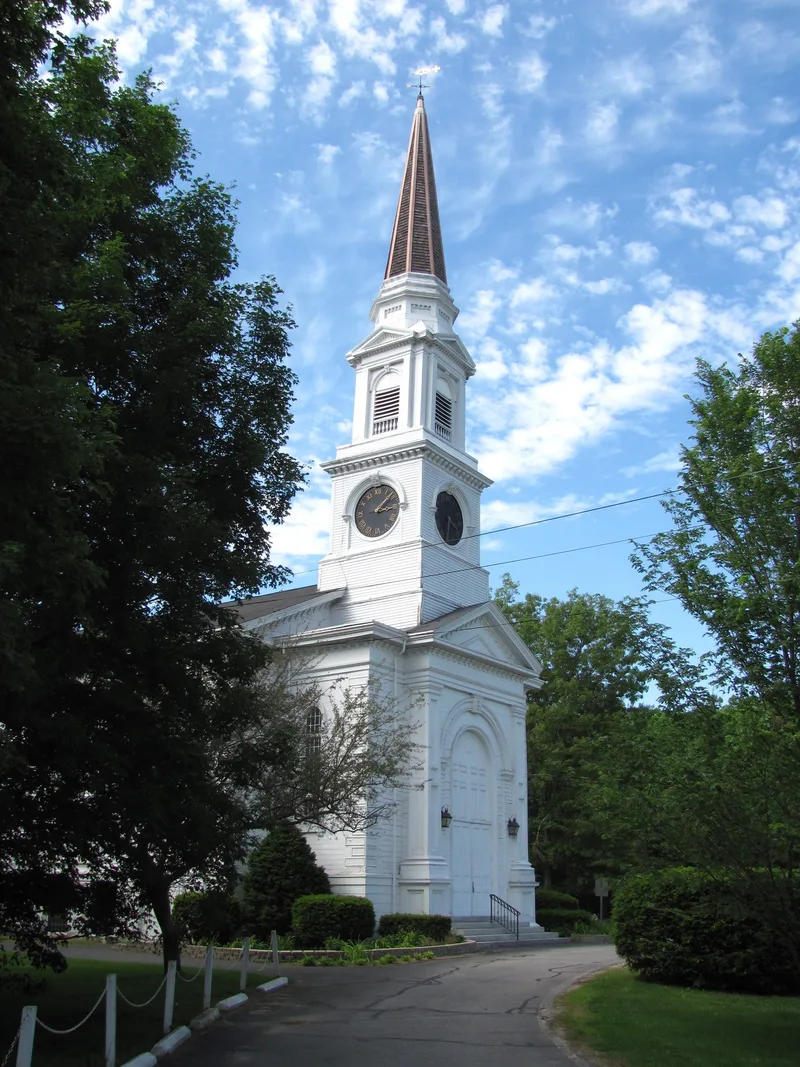
Wilmington Centre Village is a 110-acre district at the heart of the town, organized along Middlesex Avenue and around the Town Common. It includes 25 contributing buildings, three sites, one structure and one object, mostly houses, churches and schools from the 1700s to the mid-twentieth century. Architectural styles range from a single Georgian house to Federal and Greek Revival homes, a Queen Anne residence, and the Italianate-style First Congregational Church of 1865. The Old Burial Ground, established in 1731, and Wildwood Cemetery preserve early gravestones, and an early nineteenth-century town pound survives. The district was the town's religious and civic focus from the first meetinghouse of the 1730s onward and became a long-standing center for schools, with buildings spanning 1839 to 1935. Bakehouses operated by the Bond family supported growth in the mid-1800s. The district was recognized for its architecture and its role in the town's community development between 1731 and 1941.
Significance in brief: The district contains some of Wilmington's finest nineteenth-century residential and institutional buildings, the town's first burial ground, an early pound and a concentration of school buildings. It reflects the town's religious, civic and educational center from the 1730s onward. It is listed for architecture and community planning and development.
Machine-generated summary. This summary was generated by a language model from the official nomination document and has not been reviewed line by line by an editor. It may contain errors. Check the source document before relying on any detail. Source: nomination document (PDF) · National Archives catalog entry. NRHP reference 92000246, listed April 8, 1992. Summary generated October 2026 (model claude-sonnet-5-5, prompt v1.0-2026-10-29, confidence high).
Key facts
| Address | Roughly, Middlesex Dr. and Church St. from Adams St. to Wildwood Cemetery, Wilmington |
|---|---|
| County | Middlesex County |
| Listed | April 8, 1992 |
| Reference number | 92000246 |
| Resource type | District |
| Period of significance | 1731-1941 |
| Architect / builder | Horner, Halsey B.; Wilson, Edward F. |
| Architectural style | Federal, Greek Revival, Queen Anne, Victorian Vernacular |
| Criteria |
|
| Areas of significance | Community Planning and Development, Architecture |
| Level of significance | Local |
| Status (as stated in the nomination) | Most buildings remain largely unaltered. The Former Town Hall remains in use by the town, and Wildwood Cemetery is still active. |
| Acreage | 110 |
| Coordinates | 42.55726, -71.15964 (NPS GIS) |
What listing means for this property
This is a historic district. Buildings within its boundary are either contributing (they add to the district's significance) or non-contributing. Owners of contributing income-producing buildings can claim the 20% federal rehabilitation tax credit; homeowners should look at state credits. National Register districts impose no design review by themselves; a local historic district ordinance, if one exists, does (the difference explained).
General information, not legal or tax advice. Rules change; confirm with your State Historic Preservation Office or a qualified adviser.
Sources and further reading
- National Park Service, National Register of Historic Places database (snapshot May 2026), reference 92000246.
- Nomination form (PDF, National Archives) — catalog entry
- Wikipedia article (used for cross-checking only; text not reproduced here)
- Wikidata Q8022749
- This listing as JSON
Last updated October 2026. Found an error? See the editorial policy for how to report it.