Piety Corner Historic District

Why it's listed
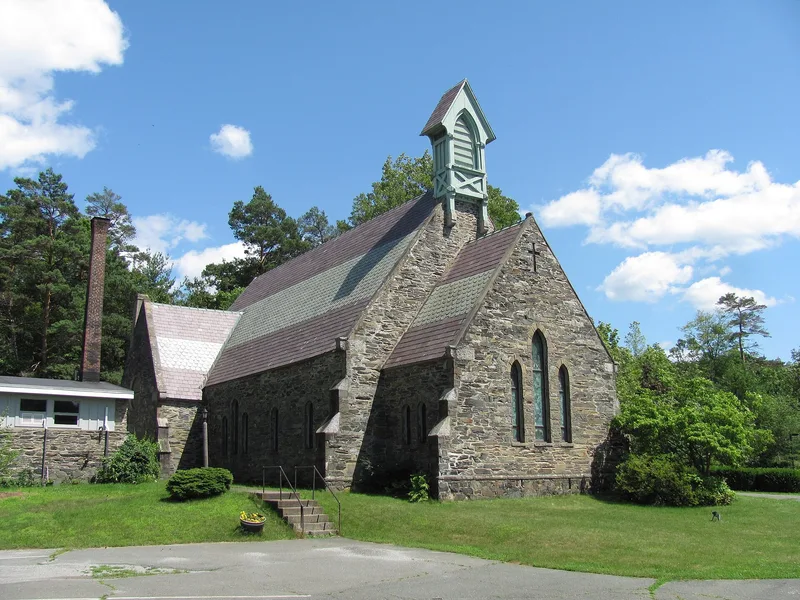
Piety Corner is a cluster of houses and a few institutional buildings around Lexington and Bacon streets in Waltham, Massachusetts. The district covers about 65.6 acres and includes 48 resources, 33 of them contributing. Its buildings date from about 1819 to the 1910s and show Federal, Italianate, Mansard, Carpenter Gothic, Queen Anne and Colonial Revival styles. Settlement began in the late seventeenth century, and the name refers to the church deacons who lived nearby in the eighteenth century. After about 1820 a Swedenborgian congregation took root here, building a chapel and a school whose 1864 mansard-roofed buildings appear to be the first of that style in Waltham. Later, large Colonial Revival houses were built for well-to-do families. Boundaries were drawn to exclude newer buildings, leaving what the nomination describes as the largest grouping of well-preserved historic buildings in the city. The area remains residential, though Totten Pond Road, built in 1960, carries heavy traffic.
Significance in brief: The district holds the largest grouping of well-preserved historic buildings in Waltham, with many of the city's best examples of several architectural styles. The area was settled in the seventeenth century, was the center of the Swedenborgian movement in Waltham in the later nineteenth century, and was a desirable address for prominent citizens in the early twentieth century.
Machine-generated summary. This summary was generated by a language model from the official nomination document and has not been reviewed line by line by an editor. It may contain errors. Check the source document before relying on any detail. Source: nomination document (PDF) · National Archives catalog entry. NRHP reference 89001499, listed March 9, 1990. Summary generated October 2026 (model claude-sonnet-5-5, prompt v1.0-2026-10-29, confidence medium).
Key facts
| Address | Roughly Bacon and Lexington Sts., Waltham |
|---|---|
| County | Middlesex County |
| Listed | March 9, 1990 |
| Reference number | 89001499 |
| Resource type | District |
| Period of significance | 1820-1915 |
| Architectural style | Federal, Italianate, Mansard, Carpenter Gothic, Queen Anne, Colonial Revival, Georgian Revival, English Country Gothic |
| Criteria |
|
| Areas of significance | Community Planning and Development, Architecture, Religion |
| Level of significance | Local |
| Status (as stated in the nomination) | General condition is stated as good; present use is residential and institutional. Totten Pond Road, laid out in 1960, brings continual heavy traffic. |
| Acreage | 65.6 |
| Coordinates | 42.38809, -71.23831 (NPS GIS) |
What listing means for this property
This is a historic district. Buildings within its boundary are either contributing (they add to the district's significance) or non-contributing. Owners of contributing income-producing buildings can claim the 20% federal rehabilitation tax credit; homeowners should look at state credits. National Register districts impose no design review by themselves; a local historic district ordinance, if one exists, does (the difference explained).
General information, not legal or tax advice. Rules change; confirm with your State Historic Preservation Office or a qualified adviser.
Sources and further reading
- National Park Service, National Register of Historic Places database (snapshot May 2026), reference 89001499.
- Nomination form (PDF, National Archives) — catalog entry
- Wikipedia article (used for cross-checking only; text not reproduced here)
- Wikidata Q7193110
- This listing as JSON
Last updated October 2026. Found an error? See the editorial policy for how to report it.