Old Cambridge Historic District
Also known as: See Also: Stoughton, Mary Fisk, House
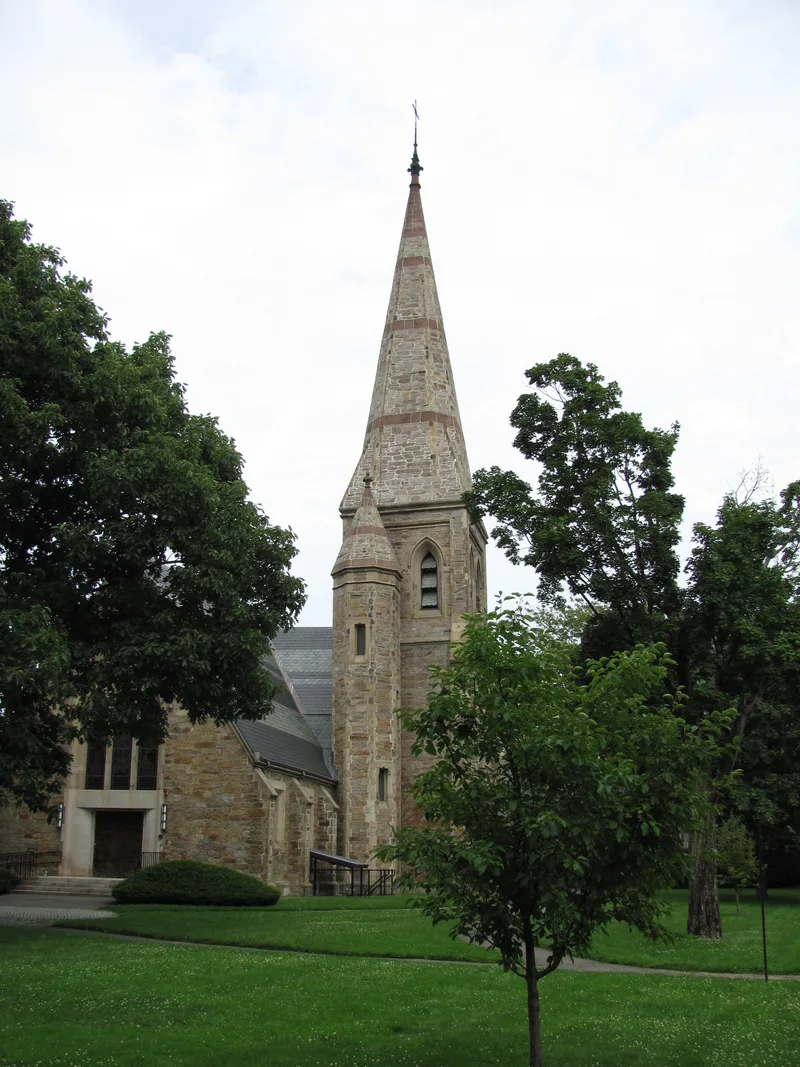

Why it's listed
Old Cambridge is a 52-acre residential and institutional district in Cambridge, Massachusetts, centered on Brattle and Mason Streets and Elmwood Avenue. The route follows the Watertown Path, an ancient way that predates the founding of Newtowne in 1630. In the mid-eighteenth century, prominent Loyalists built mansions along it, giving the street the nickname "Tory Row." During the Siege of Boston in 1775-1776 the houses served as hospitals and barracks, and General Washington was quartered at the Vassall-Craigie-Longfellow House. Later residents included Henry Wadsworth Longfellow, James Russell Lowell and Elbridge Gerry. The Episcopal Theological School and Radcliffe College added major institutional buildings in the late nineteenth century. Houses by architects such as H. H. Richardson, Henry Van Brunt and McKim, Mead & White represent styles from Georgian to modern. The district was recognized for its historical associations, its architecture and the visual continuity of its landscaped streetscape, which includes Longfellow Park.
Significance in brief: The district follows the old Watertown Path, later nicknamed "Tory Row" for the mansions built there by Loyalists, and was used by the Continental Army during the Siege of Boston. It was home to many nationally known figures and contains work by major architects such as H. H. Richardson, Henry Van Brunt and McKim, Mead & White. The nomination also values the quality of the streetscape, with varied siting, fences, walls and trees.
Machine-generated summary. This summary was generated by a language model from the official nomination document and has not been reviewed line by line by an editor. It may contain errors. Check the source document before relying on any detail. Source: nomination document (PDF) · National Archives catalog entry. NRHP reference 83000821, listed June 30, 1983. Summary generated October 2026 (model claude-sonnet-5-5, prompt v1.0-2026-10-29, confidence medium).
Key facts
| Address | Irregular pattern along Brattle St., Cambridge |
|---|---|
| County | Middlesex County |
| Listed | June 30, 1983 |
| Reference number | 83000821 |
| Resource type | District |
| Architect / builder | Multiple, including Ware & Van Brunt, H. H. Richardson, McKim, Mead & White, A. W. Longfellow Jr., Henry Greenough, Winslow & Bigelow, Lois Lilley Howe, Cram & Wentworth |
| Architectural style | Mixed styles from all periods, including Georgian, Federal, Greek Revival, Gothic, Italianate, Mansard, Queen Anne, Shingle Style and Colonial Revival |
| Criteria |
|
| Areas of significance | Commerce, Education, Architecture |
| Level of significance | Local |
| Status (as stated in the nomination) | Condition is described as good to excellent; the area has mixed public, private and institutional ownership and mixed use. |
| Acreage | 52 |
| Coordinates | 42.37710, -71.13964 (NPS GIS) |
What listing means for this property
This is a historic district. Buildings within its boundary are either contributing (they add to the district's significance) or non-contributing. Owners of contributing income-producing buildings can claim the 20% federal rehabilitation tax credit; homeowners should look at state credits. National Register districts impose no design review by themselves; a local historic district ordinance, if one exists, does (the difference explained).
General information, not legal or tax advice. Rules change; confirm with your State Historic Preservation Office or a qualified adviser.
Sources and further reading
- National Park Service, National Register of Historic Places database (snapshot May 2026), reference 83000821.
- Nomination form (PDF, National Archives) — catalog entry
- Wikipedia article (used for cross-checking only; text not reproduced here)
- Wikidata Q7083578
- This listing as JSON
Last updated October 2026. Found an error? See the editorial policy for how to report it.