Conventual Church of St. Mary and St. John

Why it's listed
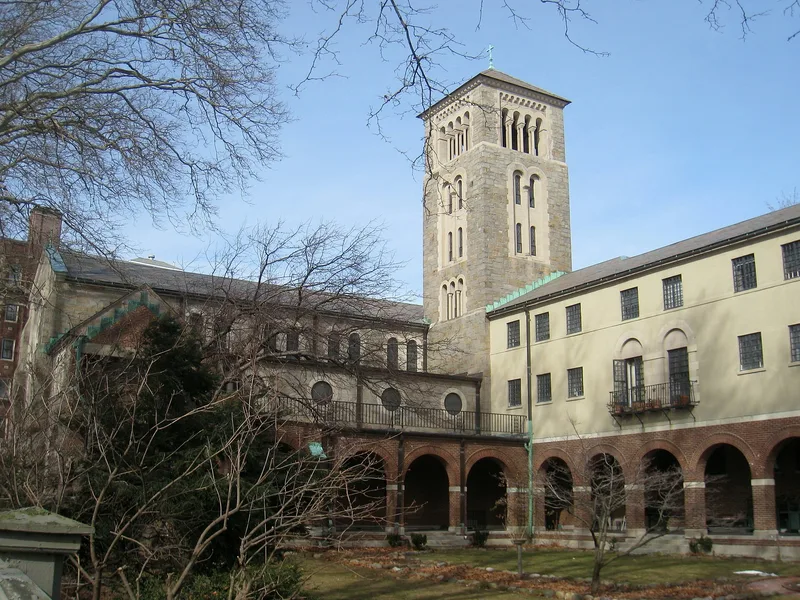
Set beside the Charles River at 980 Memorial Drive in Cambridge, this stone and stucco church was completed in 1936 for the Society of St. John the Evangelist. Cram & Ferguson designed it, and the work is credited to Ralph Adams Cram, described as the foremost American architect in the medieval revival vein. The building reproduces twelfth-century Burgundian forms with unusual accuracy, and it is regarded as the most archaeologically correct of Cambridge's medieval-style churches and the last in that series. Monastery buildings flank the church, and walled gardens add to its riverfront setting. Architectural Record featured the design in June 1941. The building has not been moved or altered and remains in use as a church. It was recognized for its architectural distinction, and the survey noted that its vulnerable location made prompt recognition desirable even though it was not yet fifty years old.
Significance in brief: The nomination calls it a distinguished Romanesque building and the last in a series of Medieval Revival churches in Cambridge. It is described as the most archaeologically correct of the city's medieval churches and one of the finest American reproductions of a medieval building, designed by Ralph Adams Cram. It was featured in Architectural Record in June 1941.
Machine-generated summary. This summary was generated by a language model from the official nomination document and has not been reviewed line by line by an editor. It may contain errors. Check the source document before relying on any detail. Source: nomination document (PDF) · National Archives catalog entry. NRHP reference 82001933, listed April 13, 1982. Summary generated October 2026 (model claude-sonnet-5-5, prompt v1.0-2026-10-29, confidence medium).
Key facts
| Address | 980 Memorial Dr., Cambridge |
|---|---|
| County | Middlesex County |
| Listed | April 13, 1982 |
| Reference number | 82001933 |
| Resource type | Building |
| Architect / builder | Cram & Ferguson |
| Architectural style | Medieval (Romanesque, accurate replica of twelfth-century Burgundian forms) |
| Criteria |
|
| Areas of significance | Architecture |
| Level of significance | State |
| Status (as stated in the nomination) | Still used as a church; the form lists the original and present use as church and notes it has not been altered or moved. |
| Acreage | 1.1 |
| Coordinates | 42.38022, -71.13634 (NPS GIS) |
What listing means for this property
Religious properties are listed for their architectural or historical significance, not their religious use. Listing is honorary and does not restrict the congregation's use of the building. The federal rehabilitation credit is generally unavailable unless part of the building is income-producing; some state programmes and preservation grants do cover religious buildings. Federal funding or permits trigger Section 106 review.
General information, not legal or tax advice. Rules change; confirm with your State Historic Preservation Office or a qualified adviser.
Sources and further reading
- National Park Service, National Register of Historic Places database (snapshot May 2026), reference 82001933.
- Nomination form (PDF, National Archives) — catalog entry
- Wikipedia article (used for cross-checking only; text not reproduced here)
- Wikidata Q5166343
- This listing as JSON
Last updated October 2026. Found an error? See the editorial policy for how to report it.