Ash Street Historic District
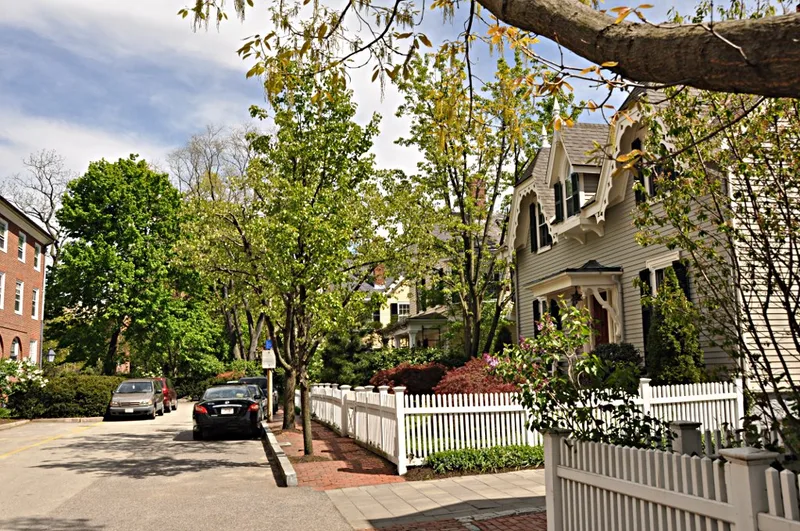

Why it's listed
Ash Street Historic District is a district in Cambridge, Middlesex County, Massachusetts, entered in the National Register of Historic Places in April 1982 as one of several districts in the Cambridge Multiple Resource Area. The surviving text is administrative rather than descriptive. It includes a folder locator card, a review log showing a decision dated April 13, 1982, and labels for photographs taken in November 1980. These labels refer to buildings on Ash Street, including numbers 12, 16 and 19, as well as 6 and 8 Ash Place, and to a property at 153 Mount Auburn Street. The document does not describe the buildings' age, architecture, builders or history, and it does not state why the district was judged significant. A reader would need the full nomination text and the multiple property cover sheet for those details.
Significance in brief: The supplied text contains no Section 7 or Section 8 narrative, so the reasons for its significance are not stated. It consists mainly of a folder locator card, a review log and photo labels from 1980.
Machine-generated summary. This summary was generated by a language model from the official nomination document and has not been reviewed line by line by an editor. It may contain errors. Check the source document before relying on any detail. Source: nomination document (PDF) · National Archives catalog entry. NRHP reference 82001916, listed April 13, 1982. Summary generated October 2026 (model claude-sonnet-5-5, prompt v1.0-2026-10-29, confidence low).
Key facts
| Address | Ash St. and Ash St. Place between Brattle and Mount Auburn Sts., Cambridge |
|---|---|
| County | Middlesex County |
| Listed | April 13, 1982 |
| Reference number | 82001916 |
| Resource type | District |
| Areas of significance | Architecture |
| Level of significance | State |
| Acreage | 2.9 |
| Coordinates | 42.38330, -71.12564 (NPS GIS) |
What listing means for this property
This is a historic district. Buildings within its boundary are either contributing (they add to the district's significance) or non-contributing. Owners of contributing income-producing buildings can claim the 20% federal rehabilitation tax credit; homeowners should look at state credits. National Register districts impose no design review by themselves; a local historic district ordinance, if one exists, does (the difference explained).
General information, not legal or tax advice. Rules change; confirm with your State Historic Preservation Office or a qualified adviser.
Sources and further reading
- National Park Service, National Register of Historic Places database (snapshot May 2026), reference 82001916.
- Nomination form (PDF, National Archives) — catalog entry
- Wikipedia article (used for cross-checking only; text not reproduced here)
- Wikidata Q4804468
- This listing as JSON
Last updated October 2026. Found an error? See the editorial policy for how to report it.