Salem Village Historic District
Also known as: Salem Village,Danvers Highlands; See Also:Derby Summerhouse

Why it's listed
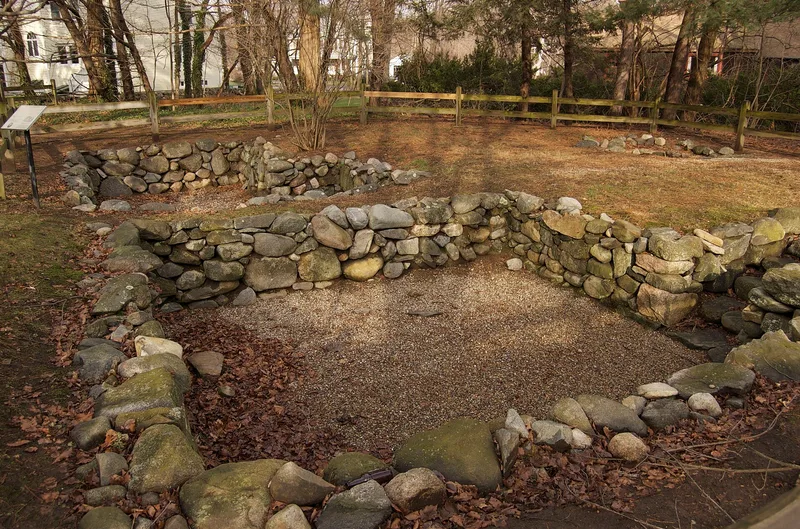
Salem Village Historic District in Danvers, Massachusetts, is a semi-rural neighborhood of 115 buildings along Centre Street and neighboring streets, covering about 275 acres. Most are private homes, among them more than 60 built before 1860 and eight from the 17th century. Predominant types are center-chimney Colonial houses, often with saltbox or Beverly jog additions, and 1½-story Greek Revival cottages from 1830 to 1860, many built by the local carpenter Josiah Mudge. The district also includes the Training Field, the Glen Magna gardens, the Endicott Estate and the Rebecca Nurse House. It was listed for its link to the 1692 witchcraft hysteria, which began in the village parsonage, and for its role in Danvers' political life, including Samuel Holten, a president of the Continental Congress. Farming, taverns and home shoe manufacturing add to its history, and the buildings together show how the village developed from the 17th century through the 19th.
Significance in brief: The nomination argues the district was central to the development of Danvers and is tied to the 1692 Salem witchcraft trials. It also shows a chronological progression of building styles from the 17th through the 20th centuries. Other themes include local politics, agriculture, the shoe industry, taverns and military history.
Machine-generated summary. This summary was generated by a language model from the official nomination document and has not been reviewed line by line by an editor. It may contain errors. Check the source document before relying on any detail. Source: nomination document (PDF) · National Archives catalog entry. NRHP reference 75000252, listed January 31, 1975. Summary generated October 2026 (model claude-sonnet-5-5, prompt v1.0-2026-10-29, confidence medium).
Key facts
| Address | Irregular pattern along Centre, Hobart, Ingersoll, and Collins Sts., as far N as Brentwood Circle, and S to Mello Pkwy., Danvers |
|---|---|
| County | Essex County |
| Listed | January 31, 1975 |
| Reference number | 75000252 |
| Resource type | District |
| Architect / builder | Josiah Mudge (local carpenter/builder of many Greek Revival houses); Samuel McIntyre (designer of the Derby Summerhouse, 1793) |
| Architectural style | Mixed: Colonial center-chimney and saltbox houses, Georgian, Federal, Greek Revival cottages, Mansard, Shingle Style-Colonial Revival |
| Areas of significance | Politics/Government, Architecture, Social History |
| Level of significance | National, Local |
| Status (as stated in the nomination) | Marked occupied and in excellent to good condition, with some alterations; most buildings are private residences, and five are historic house museums. It became a local historic district on March 11, 1974. |
| Acreage | 275 |
| Coordinates | 42.56627, -70.96341 (NPS GIS) |
What listing means for this property
This is a historic district. Buildings within its boundary are either contributing (they add to the district's significance) or non-contributing. Owners of contributing income-producing buildings can claim the 20% federal rehabilitation tax credit; homeowners should look at state credits. National Register districts impose no design review by themselves; a local historic district ordinance, if one exists, does (the difference explained).
General information, not legal or tax advice. Rules change; confirm with your State Historic Preservation Office or a qualified adviser.
Sources and further reading
- National Park Service, National Register of Historic Places database (snapshot May 2026), reference 75000252.
- Nomination form (PDF, National Archives) — catalog entry
- Wikipedia article (used for cross-checking only; text not reproduced here)
- Wikidata Q7404234
- This listing as JSON
Last updated October 2026. Found an error? See the editorial policy for how to report it.