Dighton Wharves Historic District

Why it's listed
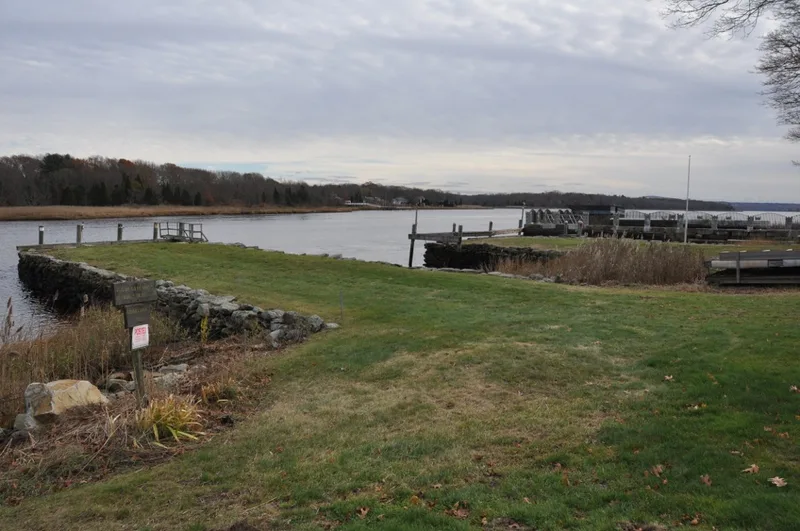
Four houses along Pleasant Street in Dighton, Massachusetts, and three dry-laid stone wharves reaching into the Taunton River make up this small waterfront district. The houses began as simple Georgian dwellings between about 1750 and 1800 and were later enlarged and restyled, three in Greek Revival and one in Italianate form. The wharves date from about 1760 to 1775 and once served ships bringing West Indian and European goods to a busy port, with chandleries and a carpenter shop on their surfaces. One wharf was the scene of the 1765 "Molasses Affair," when local men seized the cargo of the impounded sloop Polly. The house at 2298 Pleasant Street housed the customs office from 1809 until 1834, when Fall River took over the role. The district also holds nineteenth-century barns, stone walls and a marker for the Muddy Cove Bridge and ferry landing. Twenty-two of its twenty-three resources contribute to its character.
Significance in brief: The district preserves the houses and wharves tied to Dighton's shipbuilding and maritime trade from the colonial era through the early nineteenth century. One house served as the customs office from 1809 to 1834, and one wharf was the site of the 1765 "Molasses Affair" protest. The houses show Georgian origins reworked in Greek Revival and Italianate styles.
Machine-generated summary. This summary was generated by a language model from the official nomination document and has not been reviewed line by line by an editor. It may contain errors. Check the source document before relying on any detail. Source: nomination document (PDF) · National Archives catalog entry. NRHP reference 97000725, listed July 17, 1997. Summary generated October 2026 (model claude-sonnet-5-5, prompt v1.0-2026-10-29, confidence medium).
Key facts
| Address | 2298--2328 Pleasant St., Dighton |
|---|---|
| County | Bristol County |
| Listed | July 17, 1997 |
| Reference number | 97000725 |
| Resource type | District |
| Architectural style | Colonial: Georgian; Mid-19th Century: Greek Revival; Late Victorian: Italianate |
| Areas of significance | Architecture, Commerce, Entertainment/Recreation, Maritime History, Transportation |
| Level of significance | Local |
| Status (as stated in the nomination) | Described as in excellent condition and well maintained, with original design character largely intact; one noncontributing concrete block garage. The houses remain in domestic use and the wharves are used for a minimum of pleasure craft. |
| Acreage | 5.5 |
| Coordinates | 41.80864, -71.12060 (NPS GIS) |
What listing means for this property
This is a historic district. Buildings within its boundary are either contributing (they add to the district's significance) or non-contributing. Owners of contributing income-producing buildings can claim the 20% federal rehabilitation tax credit; homeowners should look at state credits. National Register districts impose no design review by themselves; a local historic district ordinance, if one exists, does (the difference explained).
General information, not legal or tax advice. Rules change; confirm with your State Historic Preservation Office or a qualified adviser.
Sources and further reading
- National Park Service, National Register of Historic Places database (snapshot May 2026), reference 97000725.
- Nomination form (PDF, National Archives) — catalog entry
- Wikipedia article (used for cross-checking only; text not reproduced here)
- Wikidata Q5275692
- This listing as JSON
Last updated October 2026. Found an error? See the editorial policy for how to report it.