Peoria Mineral Springs
Also known as: Spring Hill

Why it's listed
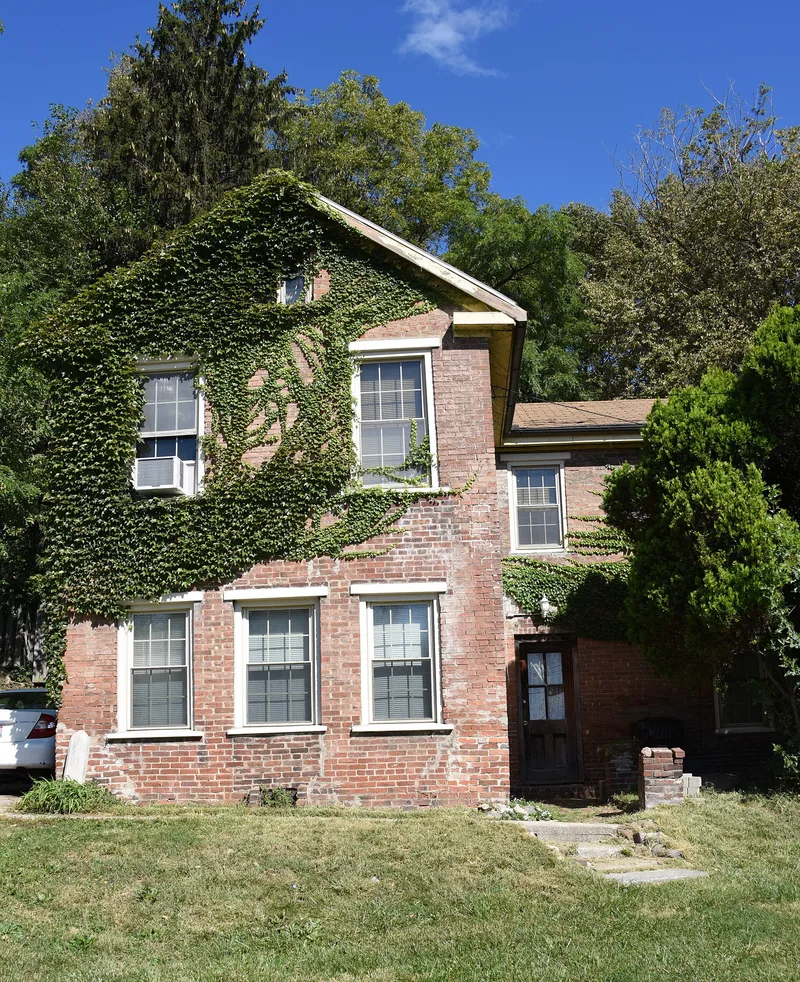
Peoria Mineral Springs occupies a hillside on the city's West Bluff, where three springs have flowed for thousands of years. Around 1843 a cave-like, barrel-vaulted brick reservoir was built into the slope to capture them for Peoria's first water company, chartered that February. Pipes carried the water roughly two miles, and the springs supplied the city for about 15 years, until a new source near the Illinois River met growing demand. Zealy Moss built a simple two-story brick house nearby around 1843-45, in a plain Federal style. It includes a bottling room where spring water was packaged and sold, and it later housed Lydia Moss Bradley, who founded Bradley University. The house was enlarged twice before 1869. Beside it, an 18-foot-wide cobblestone road, paved in 1886, runs 450 feet up the bluff. The springs still flow and are the last survivor of the area's natural springs.
Significance in brief: The reservoir captured three mineral springs that served as Peoria's first public water supply for about 15 years, from a charter granted in 1843. The Moss house contains the original bottling room where spring water was bottled and sold, and it was once home to Lydia Moss Bradley. The springs still flow and are described as the last link to the area's pre-historic water sources.
Machine-generated summary. This summary was generated by a language model from the official nomination document and has not been reviewed line by line by an editor. It may contain errors. Check the source document before relying on any detail. Source: nomination document (PDF) · National Archives catalog entry. NRHP reference 82002593, listed March 5, 1982. Summary generated October 2026 (model claude-sonnet-5-5, prompt v1.0-2026-10-29, confidence medium).
Key facts
| Address | 701 W. 7th Ave., Peoria |
|---|---|
| County | Peoria County |
| Listed | March 5, 1982 |
| Reference number | 82002593 |
| Resource type | District |
| Period of significance | 1843-1886 |
| Architect / builder | Zealy Moss |
| Architectural style | Simple, severe Federal style, or Post-colonial |
| Areas of significance | Industry, Commerce, Engineering, Architecture |
| Level of significance | Local |
| Status (as stated in the nomination) | The springs still flow. The house is occupied and in good condition, though altered, and restoration of porch trim and elements is under way. |
| Acreage | 0.9 |
| Within district | West Bluff Historic District |
| Coordinates | 40.69583, -89.60503 (NPS GIS) |
What listing means for this property
This is a historic district. Buildings within its boundary are either contributing (they add to the district's significance) or non-contributing. Owners of contributing income-producing buildings can claim the 20% federal rehabilitation tax credit; homeowners should look at state credits. National Register districts impose no design review by themselves; a local historic district ordinance, if one exists, does (the difference explained).
General information, not legal or tax advice. Rules change; confirm with your State Historic Preservation Office or a qualified adviser.
Sources and further reading
- National Park Service, National Register of Historic Places database (snapshot May 2026), reference 82002593.
- Nomination form (PDF, National Archives) — catalog entry
- Wikipedia article (used for cross-checking only; text not reproduced here)
- Wikidata Q7166148
- This listing as JSON
Last updated October 2026. Found an error? See the editorial policy for how to report it.