YMCA Hotel

Why it's listed
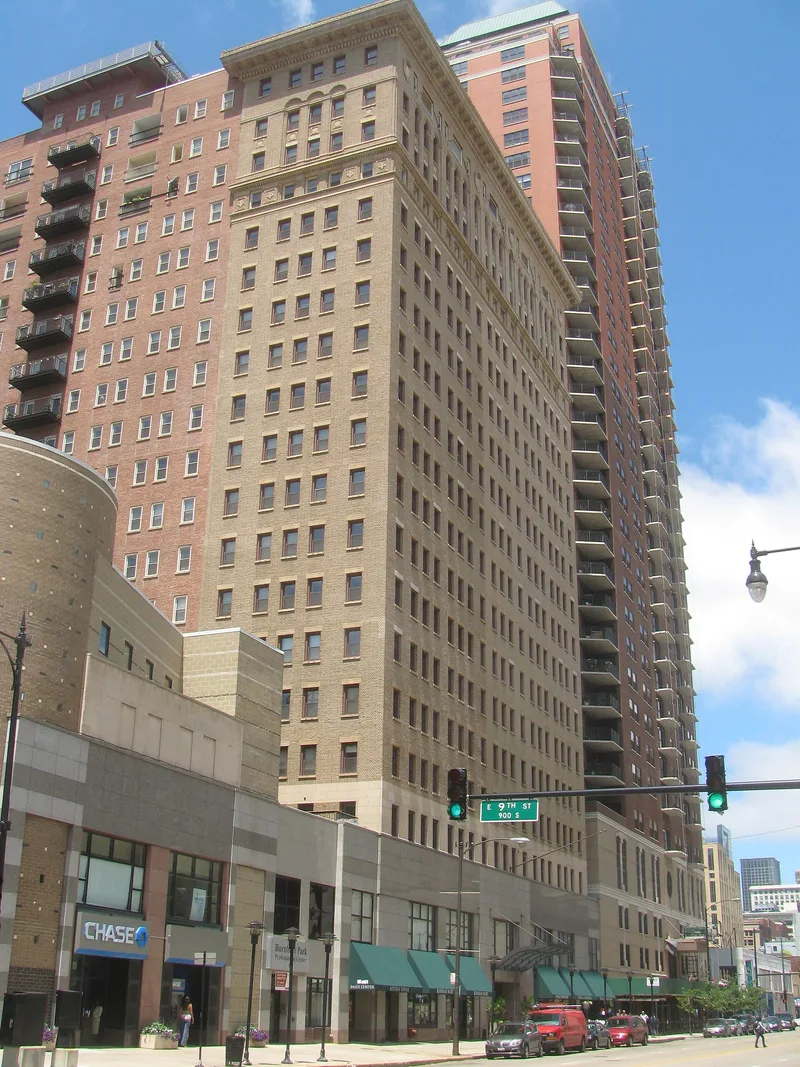
Rising nineteen stories on South Wabash Avenue in Chicago, this brick and terra cotta building opened in 1916 as a YMCA hotel and was extended southward in 1926. Its Italian Renaissance Revival design follows the tripartite base, shaft and cap arrangement common to Chicago skyscrapers, with a decorated cornice and arched upper stories. The hotel was meant to give young men arriving from farms and small towns a clean, low-cost place to stay for a few weeks while they found work and permanent housing. Unlike other YMCA dormitories, it was open to all young men and offered counseling, loans, religious services and social events. General Secretary Loring Messer pushed the idea, and Julius Rosenwald and nine other civic leaders provided the funding after a report on squalid lodging houses. The ground floors were refaced in 1956 and the interior was converted to apartments and commercial space in 1986-87, but the upper exterior remains largely intact.
Significance in brief: The nomination argues the hotel was a unique social experiment, the first in Chicago to combine inexpensive, clean temporary lodging with YMCA social services for young men newly arrived from rural areas. It qualifies under Criterion A for its role in social reform efforts against harsh urban conditions in rapidly growing Chicago. It qualifies under Criterion B for its link to ten prominent industrialists and philanthropists, including Julius Rosenwald, who funded it.
Machine-generated summary. This summary was generated by a language model from the official nomination document and has not been reviewed line by line by an editor. It may contain errors. Check the source document before relying on any detail. Source: nomination document (PDF) · National Archives catalog entry. NRHP reference 89001202, listed August 30, 1989. Summary generated October 2026 (model claude-sonnet-5-5, prompt v1.0-2026-10-29, confidence high).
Key facts
| Address | 820--828 S. Wabash Ave., Chicago |
|---|---|
| County | Cook County |
| Listed | August 30, 1989 |
| Reference number | 89001202 |
| Resource type | Building |
| Period of significance | 1916-1930 |
| Architect / builder | Berlin, Robert C.; Rogers, James G. (Significant person listed: Rosenwald, Julius et. al.) |
| Architectural style | Late Nineteenth Century Revival / Italian Renaissance |
| Criteria |
|
| Areas of significance | Social History |
| Level of significance | Local |
| Status (as stated in the nomination) | Described as in good condition. Rehabilitated in 1986-87 into apartments on floors 3 through 16, with commercial space and parking on floors 1 and 2. |
| Acreage | 0.9 |
| Coordinates | 41.86737, -87.62096 (NPS GIS) |
What listing means for this property
For an income-producing building, listing (individually or as a contributing building in a district) is the gateway to the 20% federal rehabilitation tax credit on qualified rehabilitation costs, often stackable with state credits. Work claiming the credit must follow the Secretary of the Interior's Standards and be approved in advance.
Listing does not restrict a private owner acting without federal money or permits; where federal funding or licensing is involved, Section 106 review applies.
General information, not legal or tax advice. Rules change; confirm with your State Historic Preservation Office or a qualified adviser.
Sources and further reading
- National Park Service, National Register of Historic Places database (snapshot May 2026), reference 89001202.
- Nomination form (PDF, National Archives) — catalog entry
- Wikipedia article (used for cross-checking only; text not reproduced here)
- Wikidata Q8045951
- This listing as JSON
Last updated October 2026. Found an error? See the editorial policy for how to report it.