St. Luke's Hospital Complex

Why it's listed
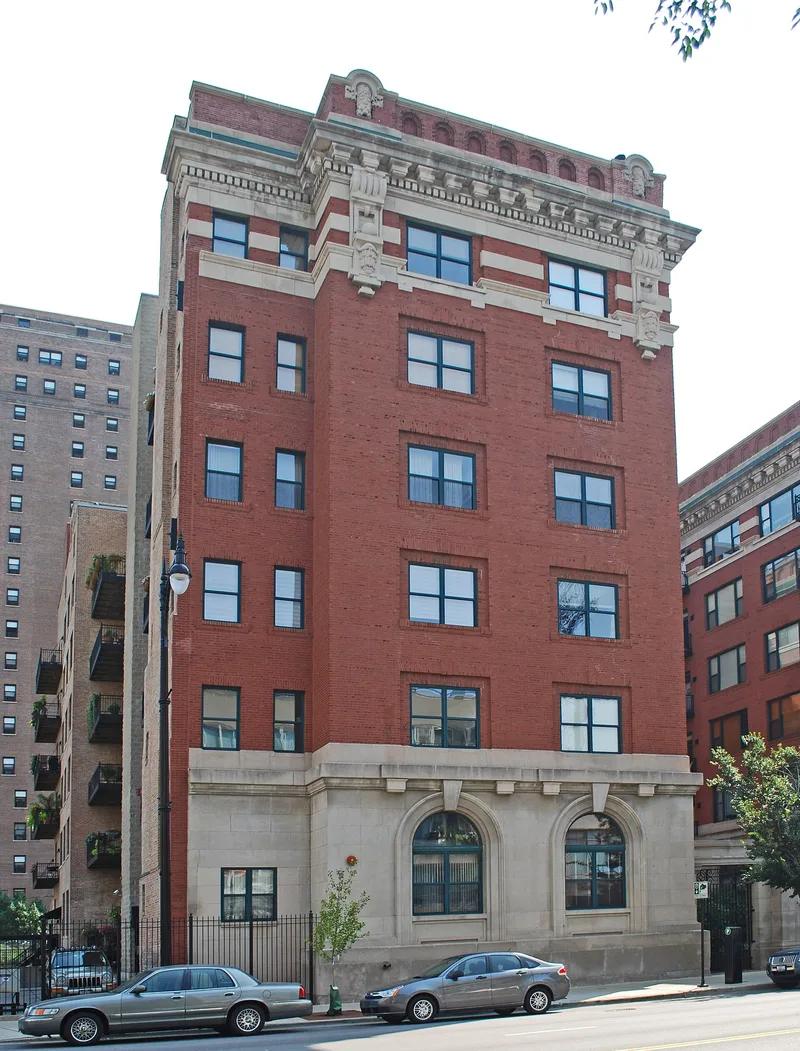
Eight red brick buildings with sandstone and limestone details make up this hospital complex on the block south of 14th Street between Michigan and Indiana Avenues in Chicago. St. Luke's Hospital began in 1864 as a charity of Grace Episcopal Church and has occupied the site since 1871. The surviving buildings date mainly from 1908 to 1949 and include the six-story George Smith Memorial Building for private patients, a nineteen-story Main Building completed in 1925, a small Gothic-style church, a nurses' home and a clinic wing. The Main Building applied skyscraper design to hospital use, raising capacity from 400 to 600 beds on the same land and taking advantage of views toward the lakefront civic monuments. Together the buildings record the move from charity hospitals to care open to all classes, the giving of wealthy Prairie Avenue families, and the work of leading Chicago architects. Several later or altered buildings are treated as non-contributing. The complex was vacant when documented.
Significance in brief: The nomination argues the complex is Chicago's intact ensemble of early twentieth-century hospital buildings. It charts the shift from charity-based to broadly public hospital care and reflects the philanthropy of leading Chicago families. It also shows the work of major Chicago architectural firms and the adaptation of hotel and skyscraper models to hospital design.
Machine-generated summary. This summary was generated by a language model from the official nomination document and has not been reviewed line by line by an editor. It may contain errors. Check the source document before relying on any detail. Source: nomination document (PDF) · National Archives catalog entry. NRHP reference 82000392, listed November 24, 1982. Summary generated October 2026 (model claude-sonnet-5-5, prompt v1.0-2026-10-29, confidence medium).
Key facts
| Address | 1435 S. Michigan Ave., 1400 Block S. Indiana Ave., Chicago |
|---|---|
| County | Cook County |
| Listed | November 24, 1982 |
| Reference number | 82000392 |
| Resource type | Building |
| Period of significance | 1900-1950 |
| Architect / builder | Various; Frost & Granger, Tallmadge & Watson, and Schmidt, Garden & Erickson are named as architectural firms; Charles S. Frost is named for the Main Building; Treat & Foltz designed the earlier 1880s pavilions. |
| Architectural style | Free adaptation of Renaissance motifs (Smith Building); classical skyscraper design (Main Building); free adaptation of French and English Gothic (Grace Episcopal Church) |
| Criteria |
|
| Areas of significance | Health/Medicine, Architecture |
| Level of significance | Local |
| Status (as stated in the nomination) | Listed as vacant and unoccupied, with work in progress as a residential conversion as of August 1982; condition fair, and the Schweppe Nurses Home interior has suffered vandalism. |
| Acreage | 4 |
| Coordinates | 41.86322, -87.62314 (NPS GIS) |
What listing means for this property
For a publicly owned building or structure, listing mainly matters when federal funds, permits or licences are involved: projects then go through Section 106 review so effects on the property are considered. Listing also strengthens applications for preservation grants and, for leased income-producing uses, can enable the federal rehabilitation tax credit.
Noted as vacant in the nomination. Nomination documents can be decades old; current status may differ. If you are considering buying an empty listed property, read the due-diligence checklist.
General information, not legal or tax advice. Rules change; confirm with your State Historic Preservation Office or a qualified adviser.
Sources and further reading
- National Park Service, National Register of Historic Places database (snapshot May 2026), reference 82000392.
- Nomination form (PDF, National Archives) — catalog entry
- Wikipedia article (used for cross-checking only; text not reproduced here)
- Wikidata Q7589802
- This listing as JSON
Last updated October 2026. Found an error? See the editorial policy for how to report it.