Fort Monroe

Why it's listed
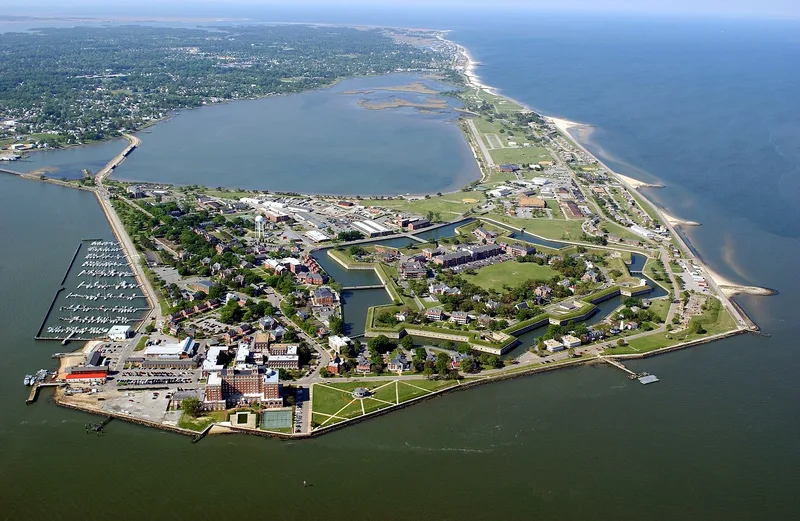
Fort Monroe occupies Old Point Comfort in Hampton, Virginia, where a seven-sided stone fortress was built between 1819 and 1847. General Simon Bernard, once an aide to Napoleon I, designed it to protect the channel from Chesapeake Bay into Hampton Roads. The walls are ten feet thick at the base, and the fort covers sixty-three acres. The wider district includes Quarters No. 1, Engineer Wharf, the 1802 Old Point Comfort Lighthouse, and Endicott-era batteries built between 1892 and 1906. During the Civil War the fort stayed in Union hands, became a refuge for escaped slaves after General Benjamin Butler's 1861 declaration, and held Jefferson Davis as a prisoner from 1865. The Army's first artillery school opened here in 1824 and remained, with closures, until 1946. Its batteries show the shift from masonry fortification to detached coastal guns. Robert E. Lee and Edgar Allan Poe both served at the post as young men.
Machine-generated summary. This summary was generated by a language model from the official nomination document and has not been reviewed line by line by an editor. It may contain errors. Check the source document before relying on any detail. Source: nomination document (PDF) · catalog entry. Generated October 2026 (model claude-sonnet-5-5, prompt v1.0-2026-10-29).
| Period of significance | 1819-1946 |
|---|---|
| Areas of significance | Military, Politics/Government |
| Acreage | 400 |
| Boundary source | NPS cultural-resource GIS polygon |
| Full listing page | Fort Monroe (property record) |
What listing means for this property
This is a historic district. Buildings within its boundary are either contributing (they add to the district's significance) or non-contributing. Owners of contributing income-producing buildings can claim the 20% federal rehabilitation tax credit; homeowners should look at state credits. National Register districts impose no design review by themselves; a local historic district ordinance, if one exists, does (the difference explained).
General information, not legal or tax advice. Rules change; confirm with your State Historic Preservation Office or a qualified adviser.