Fifth and Main Downtown Historic District

Why it's listed
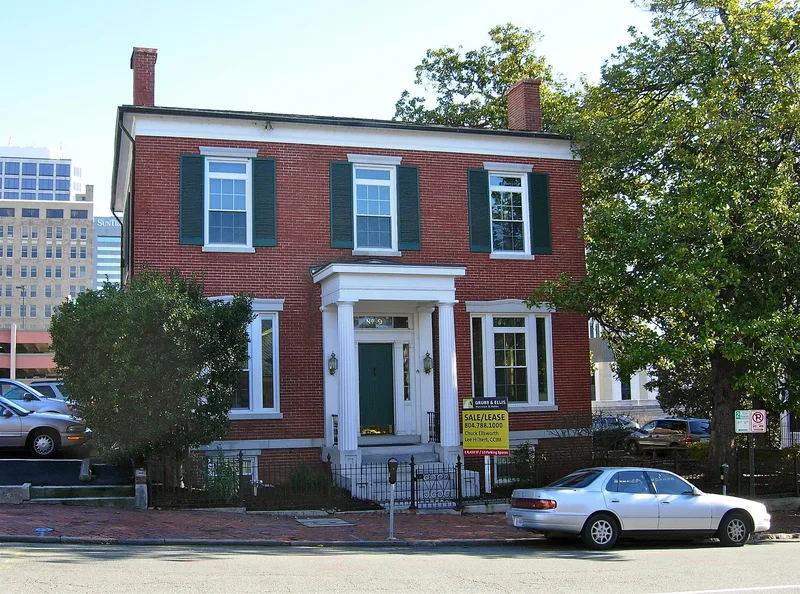
Richmond's Fifth and Main Downtown Historic District sits in the central business district and covers parts of East Franklin and East Main streets and the nearby cross streets. From about 1800 to 1920, Franklin and Fifth streets formed one of the city's most fashionable residential neighborhoods, lined with mansions and row houses. In the early twentieth century, most of those homes were demolished and replaced by small shops and office buildings, some rising as high as eleven stories, in revival styles drawn from Italy, Spain and the early United States. A few older buildings survive, including the Federal-style Hancock-Wirt-Caskie House of 1808, the Greek Revival Barret House of 1844 and Second Presbyterian Church of 1848, designed by Minard Lafever. Richmond firms such as Noland and Baskervill and Carneal and Johnson designed several of the commercial buildings. Street trees, wide sidewalks and closely set buildings give the district an intimate scale and much of its early twentieth century character.
Machine-generated summary. This summary was generated by a language model from the official nomination document and has not been reviewed line by line by an editor. It may contain errors. Check the source document before relying on any detail. Source: nomination document (PDF) · catalog entry. Generated October 2026 (model claude-sonnet-5-5, prompt v1.0-2026-10-29).
| Styles | Federal, Greek Revival, Classical Revival, Colonial Revival, Italian Renaissance, Tudor Revival |
|---|---|
| Areas of significance | Architecture, Community Planning and Development |
| Acreage | 11.5 |
| Boundary source | NPS cultural-resource GIS polygon |
| Full listing page | Fifth and Main Downtown Historic District (property record) |
What listing means for this property
This is a historic district. Buildings within its boundary are either contributing (they add to the district's significance) or non-contributing. Owners of contributing income-producing buildings can claim the 20% federal rehabilitation tax credit; homeowners should look at state credits. National Register districts impose no design review by themselves; a local historic district ordinance, if one exists, does (the difference explained).
General information, not legal or tax advice. Rules change; confirm with your State Historic Preservation Office or a qualified adviser.