Buckingham Historic District (Boundary Increase)

Why it's listed
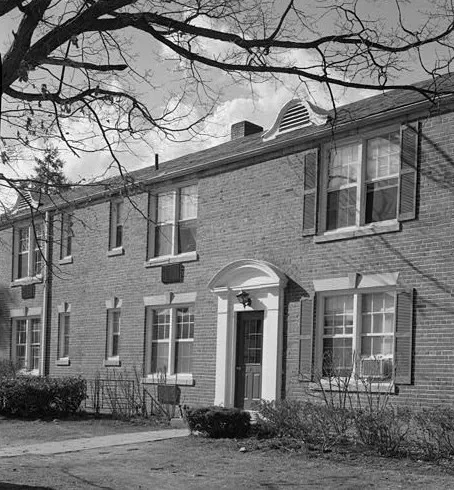
Buckingham is a garden apartment community in Arlington, Virginia, developed in six phases between 1937 and 1953. The expanded district adds 83 contributing buildings, mostly two-story brick-clad tile apartment buildings with slate roofs and Colonial Revival detailing. Henry Wright designed the exterior and site plan, with Allan F. Kamstra overseeing most of the construction. Buildings cover less than twenty percent of the land. They are arranged along angled streets and around U-shaped courtyards, with landscaped parks, interior footpaths and tree-lined streets planted on former farmland. The district also holds a small commercial center near Glebe Road and Pershing Drive, with shops, a theater, a drugstore and a post office, as well as two gatehouses and a superintendent's house. The nomination presents the complex as a notable example of planned garden-community design, built for middle-income tenants. The developer tested tenant preferences and changed the plan accordingly, for example by dropping interior garages. Most of the original character remains intact.
Machine-generated summary. This summary was generated by a language model from the official nomination document and has not been reviewed line by line by an editor. It may contain errors. Check the source document before relying on any detail. Source: nomination document (PDF) · catalog entry. Generated October 2026 (model claude-sonnet-5-5, prompt v1.0-2026-10-29).
| Styles | Late 19th and 20th Century Revivals/Colonial Revival; Tudor Revival |
|---|---|
| Areas of significance | Architecture, Community Planning and Development, Landscape Architecture |
| Acreage | 95 |
| Boundary source | NPS cultural-resource GIS polygon |
| Full listing page | Buckingham Historic District (Boundary Increase) (property record) |
What listing means for this property
This is a historic district. Buildings within its boundary are either contributing (they add to the district's significance) or non-contributing. Owners of contributing income-producing buildings can claim the 20% federal rehabilitation tax credit; homeowners should look at state credits. National Register districts impose no design review by themselves; a local historic district ordinance, if one exists, does (the difference explained).
General information, not legal or tax advice. Rules change; confirm with your State Historic Preservation Office or a qualified adviser.